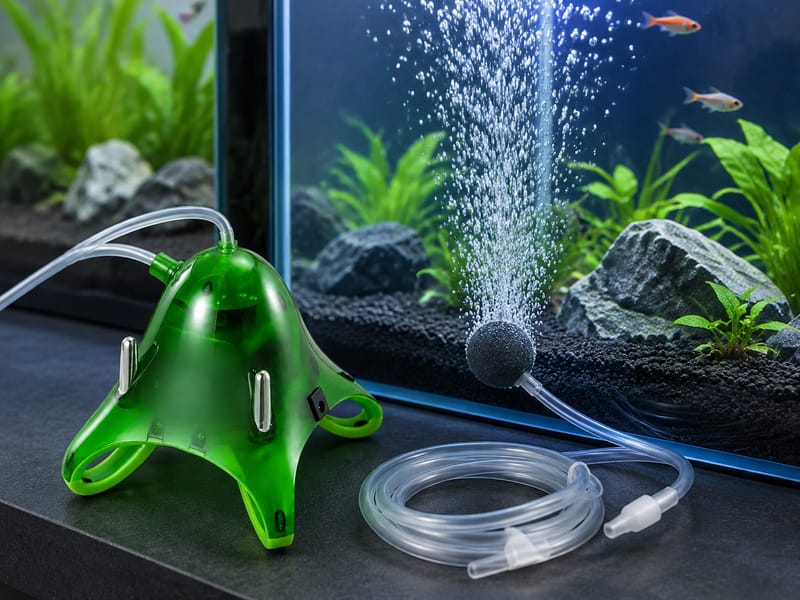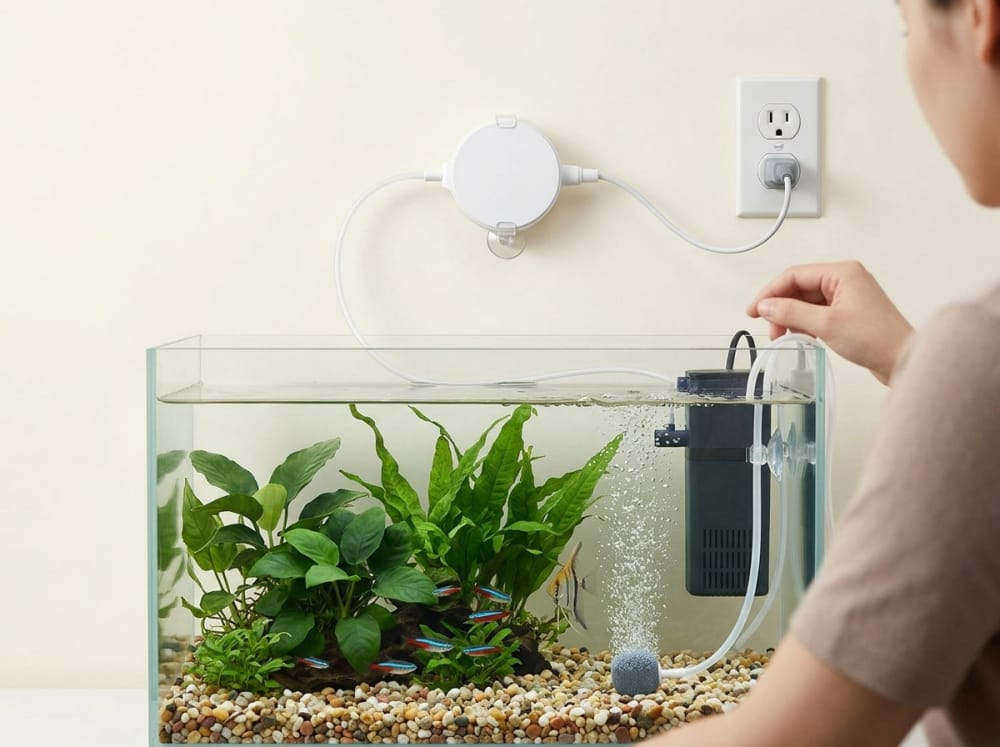
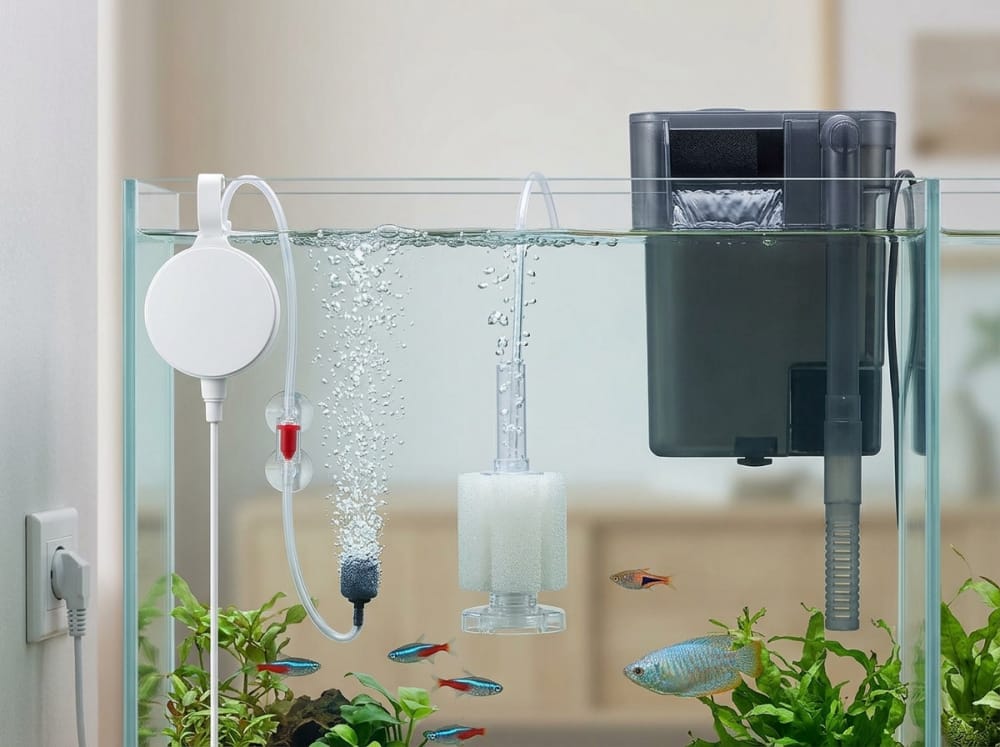
Mini aquarium air pumps support stable oxygenation in small tanks, quarantine systems, desktop aquariums, shrimp habitats, and transport containers by pushing air through tubing and into an air stone or diffuser. In the United States, hobbyists and commercial users in cities such as Los Angeles, Miami, Houston, Seattle, and New York often compare compact pumps not only by airflow, but also by bubble size, power draw, durability, noise, and compatibility with local retail and maintenance needs. A well-matched pump system does more than make bubbles. It improves circulation patterns, supports gas exchange at the water surface, helps prevent dead zones, and creates more predictable dissolved oxygen conditions for fish, shrimp, plants, and beneficial bacteria.
For buyers evaluating compact aeration systems, the most practical approach is to look at total oxygen delivery, not just liters per minute printed on the box. Air compression behavior, diffuser resistance, tubing length, water depth, outlet count, and back-pressure all affect final performance. This is why many U.S. aquarium retailers and maintenance contractors prefer to test pumps as part of a full aeration assembly rather than as standalone devices. If you are comparing a mini aquarium air pump for the U.S. market, it helps to understand the engineering principles behind compression, flow control, diffusion, and acoustic management before making a purchasing decision.
The U.S. market for mini and mid-sized air pumps continues to grow as more consumers build nano aquariums, home office tanks, betta setups, classroom systems, and portable fish transport kits. Independent aquarium stores in Portland, Austin, Orlando, and San Diego increasingly serve customers who want compact, quiet equipment that works reliably in apartments, dorms, and office environments. At the same time, professional users in aquaculture support, aquatic retail, bait holding, and ornamental fish logistics need stable output and low failure rates. This technical guide explains how these systems work, where performance is gained or lost, and how to choose the right pump configuration for the intended application in the United States.
Air Pump Working Principle
A mini aquarium air pump typically operates through electromagnetic vibration. When alternating current energizes a magnetic coil, the magnetic field pulls and releases an armature connected to a flexible diaphragm. This repeated movement changes the volume inside a compression chamber. As the chamber expands, it draws in ambient air through an inlet valve. As it contracts, it pushes the air forward through an outlet valve and into airline tubing. The result is a pulsed but continuous stream of pressurized air that can feed one or more diffusers.
This basic operating cycle may appear simple, yet the final outcome depends on precise control of diaphragm elasticity, valve response time, chamber geometry, housing rigidity, and vibration damping. In low-cost pumps, weaker diaphragm material or inconsistent valve seating can reduce pressure stability over time. In higher-performance units, the design emphasizes steady oscillation, lower mechanical losses, and better resistance to heat and wear. For small aquariums in American homes, this often means the difference between a pump that remains quiet and reliable for years and one that becomes weak or noisy after a short service life.
The air pump working principle also explains why compact pumps are rated by both airflow and pressure capability. A pump may show high free-flow output when disconnected from water depth and diffuser resistance, but once connected to a fine-pore air stone in a deeper tank, actual delivered air volume can drop sharply. U.S. buyers often encounter this when using a pump sold for a 5-gallon setup in a taller 10-gallon tank or when adding a check valve, gang valve, and long tubing run. Every restriction adds load, and the pump must have enough compression strength to overcome it.
From an engineering perspective, three design factors deserve special attention:
| Design Factor | Function | Impact on Performance | Why It Matters in U.S. Use Cases |
|---|---|---|---|
| Electromagnetic coil | Creates the oscillating magnetic force | Determines response stability and energy efficiency | Important for long daily run times in homes and stores |
| Diaphragm material | Converts vibration into air displacement | Affects pressure consistency and service life | Useful for continuous-duty desktop and quarantine tanks |
| Inlet/outlet valves | Direct one-way airflow | Controls compression efficiency | Reduces wasted motion and weak bubbling |
| Pump chamber geometry | Shapes compression cycle | Influences output smoothness and pressure | Helps maintain reliable performance with air stones |
| Housing and feet | Support structure and isolate vibration | Limits resonance and noise | Important in apartments, offices, and classrooms |
| Thermal design | Manages internal heat | Improves lifespan during extended use | Relevant in warm states such as Texas and Florida |
The table shows that the core mechanism is only one part of performance. The surrounding mechanical system determines how efficiently the pump converts electrical energy into usable airflow under real aquarium conditions. This is especially important in the United States, where users may run compact pumps continuously in climate-controlled indoor spaces or seasonally in garages, fish rooms, and mobile retail settings.
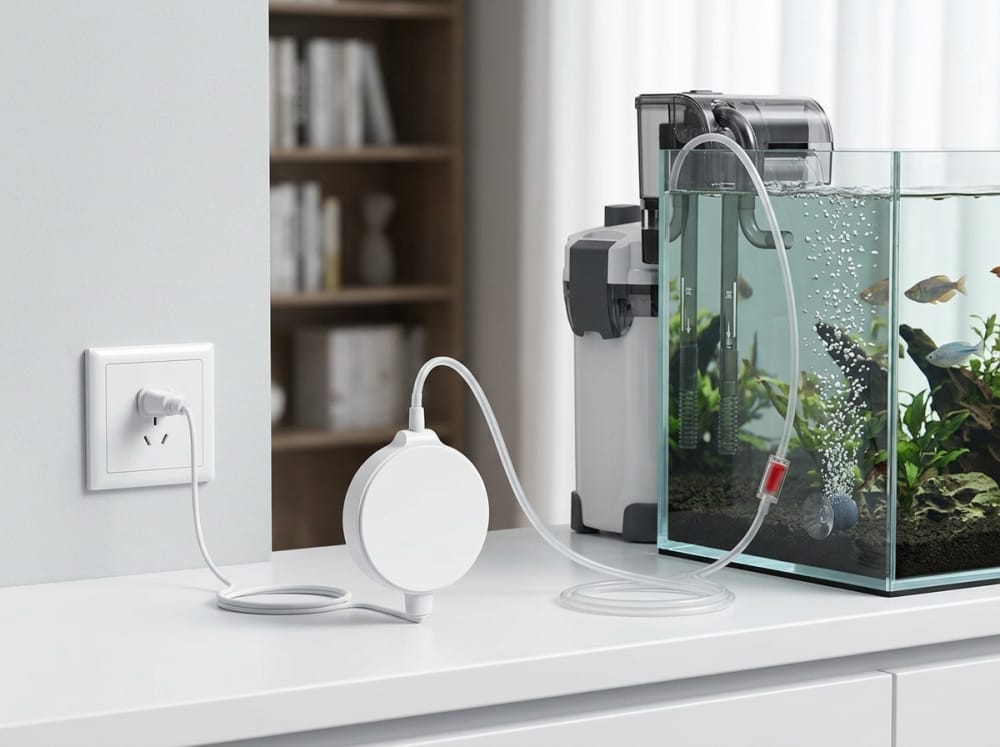
Air Compression & Output Flow
Air compression and output flow define how effectively the pump moves air from the room into the water. Compression is the pump’s ability to build pressure against resistance, while output flow is the volume of air delivered over time. A strong pump system balances both. Excessive free-air flow with low pressure may produce attractive specifications in advertising, yet under actual use it can struggle with deeper tanks or finer diffusers. High pressure with limited flow can also be inefficient for broader aeration needs.
In mini aquarium systems, output flow is influenced by tubing diameter, hose length, manifold splits, outlet count, diffuser porosity, and water depth. Every additional component creates some pressure drop. For example, a small pump operating in a New York apartment on a 5-gallon shrimp tank may deliver excellent performance through a short line and a single coarse air stone. The same pump feeding a dual outlet splitter and two fine diffusers in a classroom setup in Chicago may show visibly weaker bubbles at each end because the required pressure and distribution load are higher.
Airflow should be evaluated at the operating point, not at the unrestricted point. Serious buyers frequently ask for data showing pressure-flow performance curves. These curves indicate how airflow changes as back-pressure rises. They are useful because an aquarium is never a zero-resistance environment. Fine bubble generators, deep nano columns, and dual-line systems all shift the pump away from its free-flow condition.
| System Variable | Low Resistance Condition | High Resistance Condition | Expected Output Change |
|---|---|---|---|
| Tubing length | 1 to 2 feet | 6 to 10 feet | Longer runs reduce effective flow |
| Water depth | Shallow nano tank | Tall aquarium or holding vessel | Deeper placement requires more pressure |
| Diffuser type | Coarse stone | Fine-pore ceramic stone | Fine pores need stronger compression |
| Outlet configuration | Single line | Split dual lines | Shared flow lowers volume per branch |
| Valve accessories | No check or gang valves | Multiple valves installed | Added components increase resistance |
| Maintenance condition | Clean diffuser | Partially clogged diffuser | Dirty media sharply reduces delivery |
This table explains why rated output alone is not enough. In field applications across the United States, maintenance staff often solve weak aeration simply by shortening tubing, cleaning diffusers, or upgrading to a pump with better pressure retention. For e-commerce buyers, detailed product pages that explain pressure behavior are more valuable than simple airflow labels.
The line chart reflects a realistic growth pattern in the U.S. mini aquarium air pump market, driven by nano aquarium adoption, home aquascaping, online specialty retail, and demand for quieter household equipment. Growth is especially visible in metro regions where small-space living is common, including Boston, San Francisco, Seattle, and Washington, D.C.
Bubble Diffusion Technology
Bubble diffusion technology determines how compressed air becomes bubbles in water and how those bubbles behave after release. The diffuser, often an air stone, micro-porous ceramic element, or engineered membrane, breaks incoming airflow into bubbles of different sizes. Bubble size affects residence time, contact area, circulation profile, and visual appearance. Smaller bubbles usually offer more total surface area for a given air volume, which can improve oxygen transfer under the right conditions. Larger bubbles rise faster and may create stronger vertical circulation but less contact area.
Fine bubble diffusion is often preferred in nano and planted systems because it can provide more even aeration and a refined visual effect. However, fine-pore stones increase back-pressure, so the pump must be capable of sustaining the required compression. Coarse bubble diffusers are easier for weaker pumps to operate and can be useful in bait holding containers, temporary isolation tanks, and low-cost retail packages, but they may not maximize oxygen dissolution efficiency.
Bubble behavior is also affected by water chemistry, temperature, salinity, and tank shape. In warm water conditions common in southern states, dissolved oxygen saturation is naturally lower, which can increase the practical value of efficient diffusion. In marine or brackish auxiliary systems around Gulf Coast and Atlantic trade hubs such as Houston, Tampa, and Savannah, buyers should consider that salt exposure and mineral scaling may shorten diffuser life if maintenance is inconsistent.
| Diffuser Type | Typical Bubble Character | Pressure Requirement | Best Use |
|---|---|---|---|
| Coarse mineral stone | Larger, faster-rising bubbles | Low | Basic home tanks and temporary holding |
| Fine ceramic stone | Small, uniform bubbles | Medium to high | Nano aquariums and stable display systems |
| Flexible membrane diffuser | Consistent bubble field | Medium | Compact multi-purpose aeration |
| Cylindrical air stone | Vertical plume pattern | Medium | Corner placement and tube-fed systems |
| Disc diffuser | Wide radial bubble spread | Medium to high | Shallow broad-bottom tanks |
| Micro-pore specialty diffuser | Very fine bubble cloud | High | Advanced oxygen transfer applications |
The explanation behind this table is simple: bubble diffusion is a system decision, not a single-part decision. A strong diffuser paired with an underpowered pump will underperform, while a capable pump paired with a poorly selected stone may waste energy or generate excessive turbulence. In the U.S. market, smart system matching matters more than selecting the most expensive component.
Surface Gas Exchange Mechanics
Although bubbles attract the most attention, much of the oxygenation effect in aquariums comes from surface gas exchange. When bubbles rise, they disturb the water column and break the surface tension, increasing contact between water and air. This improves oxygen entry and helps carbon dioxide escape. The bubble itself contributes some oxygen transfer during ascent, but the strongest overall effect often comes from the circulation pattern it creates at the surface.
Surface gas exchange mechanics depend on agitation, water movement, temperature, stocking density, and tank cover design. A tightly covered aquarium in a warm room can trap humid air and reduce effective gas turnover above the water line. Likewise, a decorative setup with limited circulation may develop oxygen-poor zones even when some bubbling is visible. This is one reason experienced retailers in inland U.S. cities such as Denver and Phoenix often recommend evaluating the whole habitat, not only the air pump label.
Mini air pumps are especially useful in tanks with modest filtration, sponge filters, breeding boxes, transport containers, and hospital tanks. In each case, the goal is not simply to create bubbles but to maintain exchange at the interface between water and air. Strong surface rippling, when balanced correctly, improves oxygen replenishment without causing severe stress to small fish or shrimp.
Important variables include:
| Condition | Effect on Gas Exchange | Practical Interpretation | Recommended Response |
|---|---|---|---|
| Warm water | Lowers oxygen solubility | Tank needs stronger oxygen support | Use efficient diffusion and good surface motion |
| Heavy stocking | Raises oxygen demand | Higher respiration load | Increase aeration capacity margin |
| Dense plant mass at night | May consume oxygen after lights out | Nighttime oxygen dips are possible | Run stable nighttime aeration |
| Closed lid with poor airflow | Restricts fresh air exchange above water | Surface transfer efficiency declines | Improve ventilation if safe for livestock |
| Dirty water surface film | Creates diffusion barrier | Gas transfer becomes less effective | Increase surface disturbance and maintenance |
| Weak circulation zones | Produces uneven oxygen distribution | Localized stress may occur | Reposition diffuser or add flow support |
The table clarifies that air pumps work as part of a larger oxygen management strategy. In many U.S. aquarium service visits, visible bubbling is present but dissolved oxygen remains suboptimal because the surface is not being renewed effectively or because the system is overloaded by heat, stocking, or maintenance neglect.
The bar chart highlights where mini pump demand is strongest in the United States. Home nano tanks and shrimp systems lead because users increasingly want compact, low-noise aeration in smaller living spaces, while quarantine and retail uses remain stable due to continuous need for simple, dependable oxygen support.
Oxygen Transfer Efficiency
Oxygen transfer efficiency measures how effectively a pump and diffuser system moves oxygen from air into water. It is influenced by bubble surface area, contact time, water mixing, and the difference between current dissolved oxygen and saturation potential. In aquarium practice, oxygen transfer efficiency is not usually measured with industrial precision, but the principle is highly relevant. Two pumps with the same airflow rating may deliver very different biological results depending on pressure stability, diffuser type, and tank geometry.
Higher efficiency generally comes from a combination of appropriate pressure, fine yet sustainable diffusion, clean equipment, and strong but not excessive circulation. If bubble plumes are too violent in a small aquarium, the system may create stress, splash, salt creep, or unnecessary energy use. If aeration is too weak, fish may congregate near the surface and bacterial processes in filter media may decline. The correct target is steady oxygen support matched to bioload and water conditions.
In the U.S. market, oxygen transfer efficiency matters in several industries beyond home aquariums. Ornamental fish importers near ports in Los Angeles and Miami use compact air pumps for temporary holding and acclimation. Educational facilities use them in classroom science tanks. Aquatic retailers depend on predictable oxygenation to reduce livestock losses. Mobile service companies use them in transport bins and backup systems where reliability is essential.
| Setup Scenario | Expected Efficiency Level | Main Limitation | Improvement Method |
|---|---|---|---|
| Weak pump with coarse stone | Low to moderate | Limited contact area | Upgrade diffuser or pump pressure |
| Balanced pump with fine ceramic stone | Moderate to high | Potential clogging over time | Regular cleaning schedule |
| Dual outlet with poor balancing | Moderate | Uneven flow distribution | Add control valve adjustment |
| Shallow tank with strong surface ripple | Moderate to high | Possible turbulence stress | Lower output if livestock is sensitive |
| Overstocked warm tank | Low in practice | Demand exceeds transfer rate | Increase aeration and reduce load |
| Clean system with matched diffuser | High for aquarium scale | Normal wear over time | Monitor performance and replace consumables |
The explanation here is that oxygen transfer efficiency is achieved through system matching and maintenance. Product selection should focus on consistent operating performance rather than isolated airflow claims. This is especially true when buyers need dependable service across seasons and variable indoor temperatures in the United States.
The area chart illustrates a clear trend shift toward quieter, more efficient compact pumps. By 2026, this trend is expected to accelerate due to stronger consumer preference for low-noise home equipment, higher electricity awareness, and broader sustainability expectations in U.S. retail channels.
Single vs Dual Outlet Systems
Single and dual outlet pump systems serve different needs. A single outlet design is typically simpler, more compact, and easier to optimize for one tank or one diffuser. It often delivers stronger pressure to one point, making it a strong choice for nano aquariums, sponge filters, isolation tanks, and desktop displays. A dual outlet design divides airflow into two channels, allowing a user to aerate two positions in one tank or two separate small tanks, but the output per branch depends on internal pump capacity and balancing.
In practice, dual outlet systems are attractive for U.S. retailers, breeders, and maintenance technicians who need flexibility. A small fish store in Atlanta may use one compact dual outlet unit to support adjacent holding cubes. A shrimp breeder in Sacramento may split lines across two breeding boxes. However, if the pump is only marginally rated, each branch may become underpowered once diffusers load the system. This is why outlet count should never be evaluated separately from total pressure and airflow retention.
Buyers should also consider whether both outlets are truly independent or simply a shared internal chamber split after compression. In shared systems, one branch can dominate if the resistance differs. For example, a shallower tank line may receive more air than a deeper one unless valves are used to balance flow.
| System Type | Main Advantage | Main Limitation | Best Buyer Profile |
|---|---|---|---|
| Single outlet | Strong focused output | Limited expansion | Nano tank owners and desktop users |
| Single outlet with splitter | Flexible low-cost branching | Flow imbalance risk | Occasional dual-use hobbyists |
| Built-in dual outlet | Convenient two-line setup | Lower output per branch if undersized | Retailers and small breeders |
| Dual outlet with valve control | Better line balancing | More components and resistance | Users needing adjustable delivery |
| High-pressure single outlet | Handles fine diffusers well | Not ideal for multiple tanks | Advanced planted or shrimp systems |
| Mid-sized dual system | Good multi-point coverage | Larger footprint | Service companies and display maintenance |
The practical message is that the right choice depends on the application. Single outlet systems often outperform expectations in one-tank use, while dual outlet systems offer operational efficiency when total pump capacity is sufficient. Many U.S. buyers achieve better results by sizing up slightly rather than running a dual outlet pump near its limit.
Noise Reduction Engineering
Noise reduction engineering is one of the most important differentiators in mini aquarium air pumps sold in the United States. Compact tanks are commonly placed in bedrooms, kitchens, offices, dorm rooms, and reception areas where even moderate vibration can become annoying. Pump noise usually comes from three sources: electromagnetic vibration, housing resonance, and transmitted vibration through furniture or hard surfaces.
To reduce sound, better pumps use balanced internal structures, elastic mounting points, reinforced housings, precision diaphragms, and anti-slip feet that absorb vibration before it reaches the table or stand. Air path design also matters. A poorly shaped chamber can create pulsing or fluttering sounds, while rigid housings may amplify mechanical oscillation. The result is that two pumps with similar airflow may sound dramatically different in the same room.
Noise perception is also influenced by installation. Pumps placed directly on hollow cabinets tend to sound louder due to resonance. Hanging a pump or placing it on a soft isolation pad can reduce noise significantly. In urban apartments from Brooklyn to Seattle, users often prioritize pumps that maintain low acoustic output during nighttime operation.
Strong noise control is closely tied to manufacturing precision. After years of specialization in mini and mid-sized air pumps and air stones, some manufacturers refine tolerances, chamber alignment, and material selection to keep output stable while limiting vibration. This kind of technological capability matters because quiet operation is not the result of a single add-on; it depends on the entire engineering stack. On the manufacturing side, consistent assembly, diaphragm quality control, and endurance testing help ensure the sound profile remains stable after long use. From a service standpoint, responsive support, clear model matching, and application guidance help buyers avoid overloading a compact unit, which is a common cause of noise complaints.
The comparison chart shows the key priorities U.S. buyers often use when evaluating suppliers and product lines. Quiet operation ranks highest because mini pumps are frequently used in close-living environments, followed by output stability and value consistency, which determine whether the product performs well over time instead of only on day one.
Choosing the Right Pump System
Choosing the right pump system starts with a direct answer: match the pump to the real operating load, not just the tank volume. Buyers should consider tank depth, livestock sensitivity, diffuser type, required outlet count, desired noise level, and maintenance habits. A desktop betta tank with a small sponge filter in Minneapolis needs different airflow characteristics than a dual-box shrimp breeding setup in San Jose or a bait holding bucket in coastal Louisiana.
The U.S. market includes several product types: ultra-compact single outlet pumps for nano tanks, silent home-use models for living spaces, transport pumps for temporary oxygen support, dual outlet units for multi-point aeration, and mid-sized systems for retail and light commercial use. Each category serves different applications across home aquatics, aquatic retail, ornamental fish distribution, educational displays, quarantine systems, and mobile service operations.
When comparing local suppliers or online sourcing options, buyers often look for dependable stock availability near logistics corridors such as Los Angeles, Houston, New Jersey, and Savannah because these hubs affect lead time and inventory continuity. Local aquarium shops may provide faster troubleshooting, while direct specialized suppliers can offer better technical matching and component consistency. For long-term value, product selection should include replacement diaphragm availability, diffuser compatibility, electrical compliance for the U.S. market, and realistic support response.
For companies focused specifically on mini and mid-sized air pumps and air stones, specialization itself becomes an advantage. A decade of concentrated engineering work can improve blueprint accuracy, airflow-path tuning, and diffuser pairing. Manufacturing capability becomes visible in consistent batch quality, repeatable assembly, and reliable material control. Service capability matters just as much in the United States, where distributors, retailers, and project buyers expect fast communication, clear product selection advice, and steady fulfillment across recurring orders. In a market where many vendors try to offer everything, specialized pump makers often deliver better precision because they concentrate on one category and refine it deeply.
Buying advice can be simplified into a practical checklist:
| Buying Question | Why It Matters | Preferred Answer | Buyer Benefit |
|---|---|---|---|
| What is the real operating depth? | Depth affects pressure load | Known before purchase | Prevents underpowered selection |
| What diffuser will be used? | Bubble fineness changes resistance | Matched to pump pressure | Improves oxygen delivery |
| How many outlets are needed? | Shared flow lowers branch output | Only as many as required | Maintains stable aeration |
| Is low noise a priority? | Room placement affects comfort | Yes for indoor living spaces | Better daily user experience |
| Is maintenance easy? | Dirty stones reduce performance | Replaceable and accessible parts | Longer service life |
| Can the supplier support repeat orders? | Important for retail and service users | Reliable inventory and communication | Lower operational risk |
The table explains how a disciplined buying process reduces performance problems. Most dissatisfaction comes from mismatch: too much focus on price, too little attention to pressure, noise, or diffuser load. Smart selection improves oxygenation, equipment life, and day-to-day user satisfaction.
Applications continue to diversify across the United States. Home hobbyists use mini pumps for small tropical setups, shrimp breeding, and hospital tanks. Retail stores use them in holding systems and backup aeration. Aquatic service firms rely on them during maintenance and transport. Educational institutions use them in classroom biology tanks. Small aquaculture support operations may also use compact units for fry care, temporary sorting, or specimen isolation. Each application rewards stable performance, efficient oxygen transfer, and low acoustic impact.
Case studies in the U.S. market often show that incremental design quality produces measurable results. A boutique aquarium retailer in Los Angeles may reduce livestock stress by switching from basic coarse-bubble kits to matched fine-diffusion pump systems. A maintenance provider in Dallas may lower callbacks by choosing quieter pumps with better vibration isolation for office installations. A shrimp breeder in Portland may improve survival during summer by moving to a stronger pressure-retaining pump paired with clean ceramic stones. In each example, the core lesson is the same: actual oxygenation quality depends on the full aeration chain.
Looking toward 2026, future trends will likely center on three themes. First, technology will continue moving toward quieter electromagnetic structures, lower wattage operation, better pressure efficiency, and improved material durability. Second, policy and compliance expectations in the United States may place greater emphasis on energy efficiency, product safety, and packaging transparency. Third, sustainability will influence both manufacturers and buyers, encouraging longer-life components, lower failure rates, reduced waste from disposable accessories, and more responsible materials selection. These trends favor suppliers that combine technical specialization with disciplined production and responsive customer support.
FAQ
Do bubbles themselves oxygenate the tank, or is it mainly the surface movement? Both matter, but in most aquarium setups the main oxygenation effect comes from increased surface gas exchange caused by water movement and surface disturbance.
Is a dual outlet pump always better than a single outlet model? No. A single outlet pump can perform better for one tank if it maintains stronger pressure and more stable airflow at the diffuser.
Why does my pump seem weaker after a few weeks? Common causes include clogged air stones, longer tubing runs, added accessories, worn diaphragms, or deeper placement than the pump can handle comfortably.
What type of pump is best for an apartment in the United States? A low-noise mini pump with good vibration isolation, stable pressure, and a matched diffuser is usually the best choice for apartment use.
How often should I replace or clean the air stone? It depends on mineral content and use intensity, but regular inspection is important because partial clogging can reduce oxygen transfer and increase pump strain.
What should commercial buyers prioritize? Commercial buyers should prioritize consistent batch quality, reliable supply, application support, and performance under real operating load rather than only headline airflow.