The most useful aquarium automation is not the device with the longest feature list. It is the layer that makes a critical routine consistent, detects a failure early, and still fails safely. In 2026, lighting timers, reliable temperature control, feeding schedules and actionable alerts matter more than a dashboard full of rarely used data.
The 2026 emphasis is local fallback: essential schedules should continue during an internet outage, manual overrides should remain available, and connected equipment should not turn one failed app into a complete life-support failure. The security recommendations below follow the risk-reduction principles in the NIST Cybersecurity for IoT program.
What smart aquarium automation can and cannot do
Automation can repeat schedules, monitor thresholds and notify an owner. It cannot judge fish behavior, identify every disease, clean clogged media or replace water testing. Treat it as an assistant, not an unattended life-support guarantee.
Start with lighting and feeding schedules
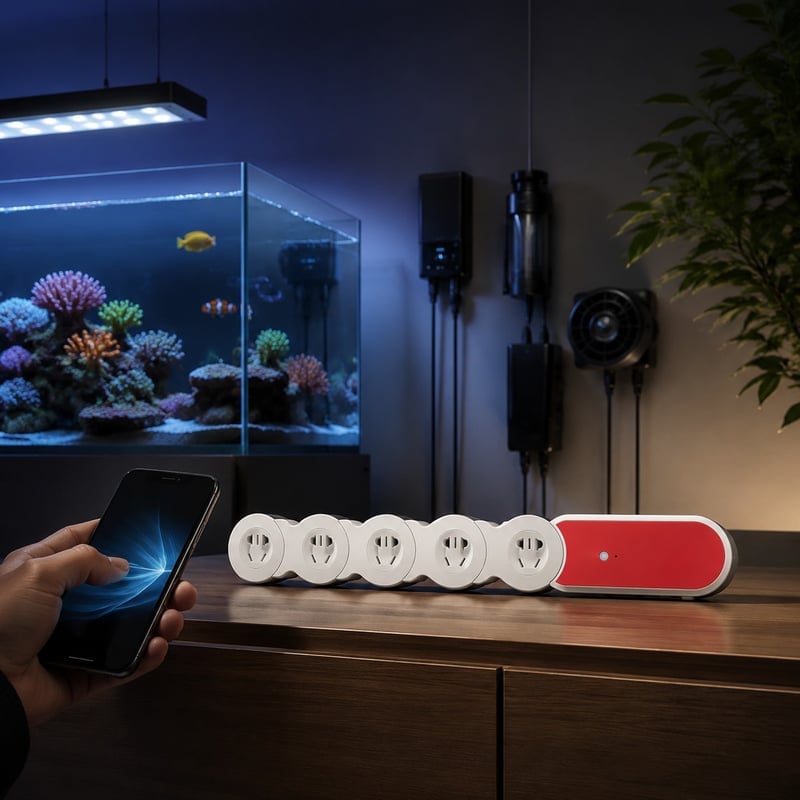
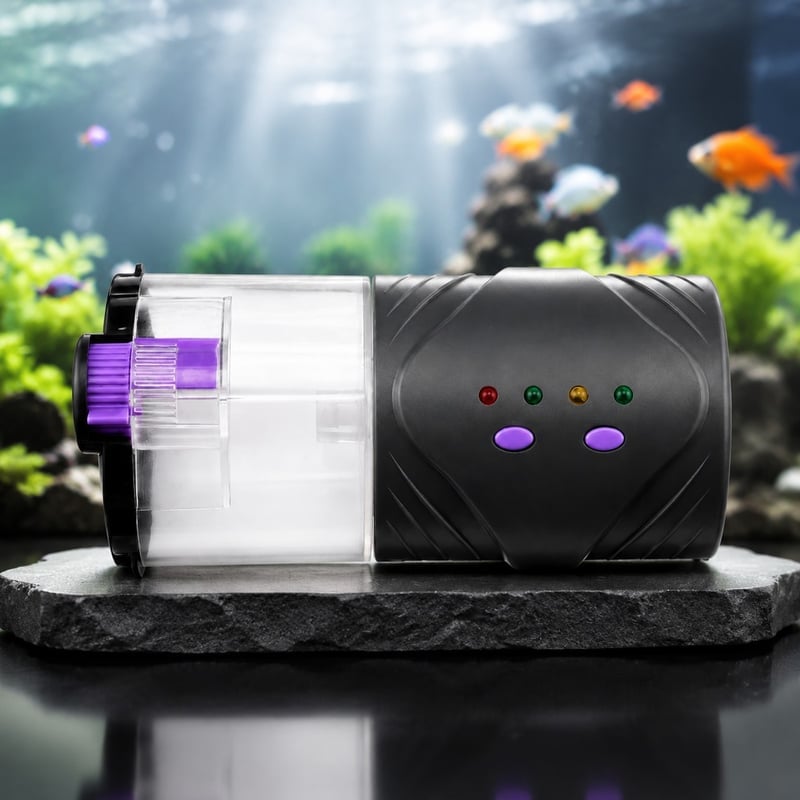
Stable photoperiods support plants and reduce one common algae trigger. A WiFi smart aquarium power strip can coordinate compatible loads, but critical schedules need a safe local fallback. An automatic fish feeder is useful during predictable absences, but portions must be tested into a container before use over the tank.
Temperature control and heater monitoring
A thermostat is the control; an independent thermometer is the check. Match wattage and installation to tank volume and room conditions. Compare an automatic shut-off heater with a separate digital aquarium thermometer, confirming placement, adjustment range, display behavior and restart behavior after power loss.
Filtration, flow and water-level alerts
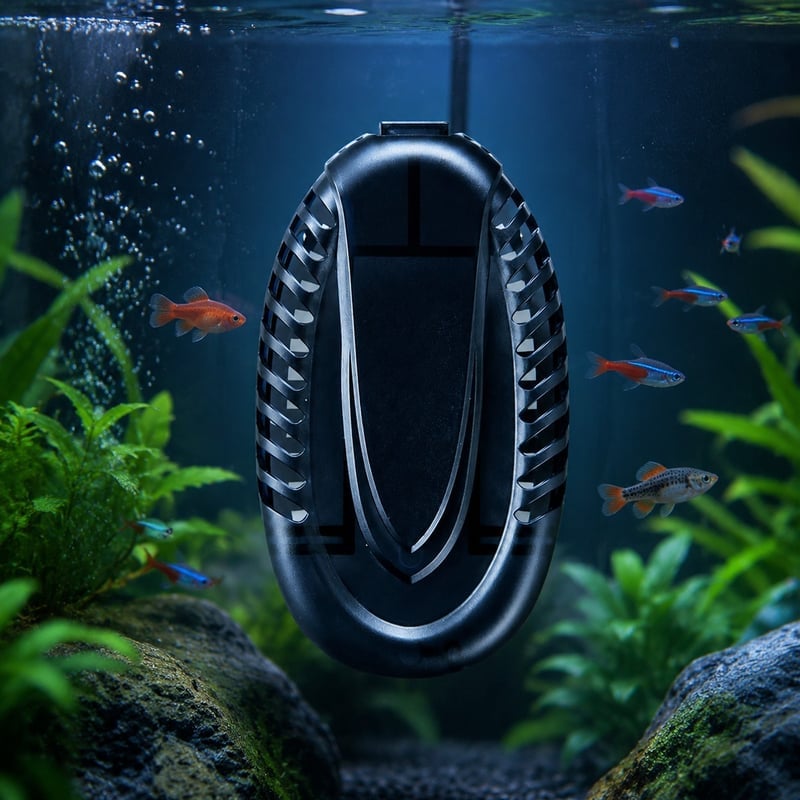
Automation cannot restore a blocked filter, but reduced-flow or water-level alerts can shorten response time. Filters must remain accessible for manual inspection. Avoid placing every pump on one remotely switched outlet: an accidental command could stop all circulation.
Sensors, controllers and remote notifications
Prioritize temperature, leak and water-level alerts because they describe conditions requiring action. pH and conductivity sensors can be valuable in specialized systems, but only when calibrated and interpreted in context. A sensor that is never cleaned becomes false confidence.
| Device layer | Main benefit | Safe fallback to confirm |
|---|---|---|
| Lighting timer | Repeatable photoperiod | Local schedule after internet loss |
| Automatic feeder | Consistent tested portions | Manual feeding and jam inspection |
| Heater controller | Temperature regulation | Independent thermometer and safe restart |
| Leak or level sensor | Early warning | Audible or local alarm and manual inspection |
| Smart power control | Coordinated schedules | Physical override and labeled outlets |
Build automation in safe layers
- Stabilize the aquarium manually.
- Automate one routine and observe it through several cycles.
- Add independent monitoring for critical controls.
- Define safe states after power, Wi-Fi or sensor failure.
- Keep manual overrides accessible and label every cable.
Maintenance, cybersecurity and manual checks
Use unique passwords, update supported controllers and isolate connected devices on a guest or IoT network where practical. Keep schedules documented locally. Weekly observation should still include livestock behavior, temperature, flow, noise, leaks and equipment cleanliness.
A buyer checklist for compatible devices
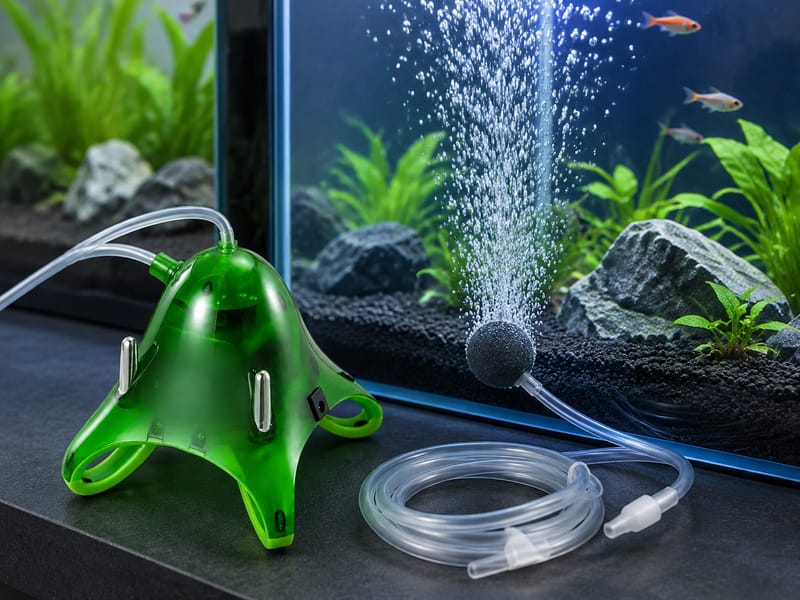
Confirm voltage and plug, aquarium size, load rating, water resistance, local fallback, alarm behavior, app support, replaceable parts and cleaning access. Battery-backed aeration may be more valuable than another app. WKAQOO can help professional buyers coordinate compatible aquarium equipment and private-label requirements; availability, specifications, certifications and commercial terms require confirmation for the intended market.
FAQ
Does a smart aquarium need Wi-Fi? No. Reliable local timers and controllers often deliver the most important benefits without cloud access.
Which device should be automated first? Usually lighting, because the task is repetitive and a missed schedule is not immediately life-threatening. Temperature should be controlled and independently checked from the start.
Sources and editorial method
Connected-device safety guidance was checked against the NIST resource linked above. Aquarium recommendations use failure-mode analysis: identify what a device controls, what happens after power or network loss, and how a person verifies the result. WKAQOO Editorial Team reviewed the article on 2026-08-20; always confirm current model functions and regional electrical requirements.