Buying aquarium air stones wholesale is not simply a matter of selecting the lowest unit cost. The right range must produce consistent bubbles with compatible pumps, fit common aquarium applications, hold up through shipping and use, and be easy for retailers or end users to understand.
For most wholesale programs, a practical assortment includes a small number of reliable shapes and sizes rather than many nearly identical options. Compare bubble pattern, required airflow, tubing connection, material consistency, packaging needs, and expected replacement cycle before committing to bulk quantities.
How Aquarium Air Stones Support Aeration
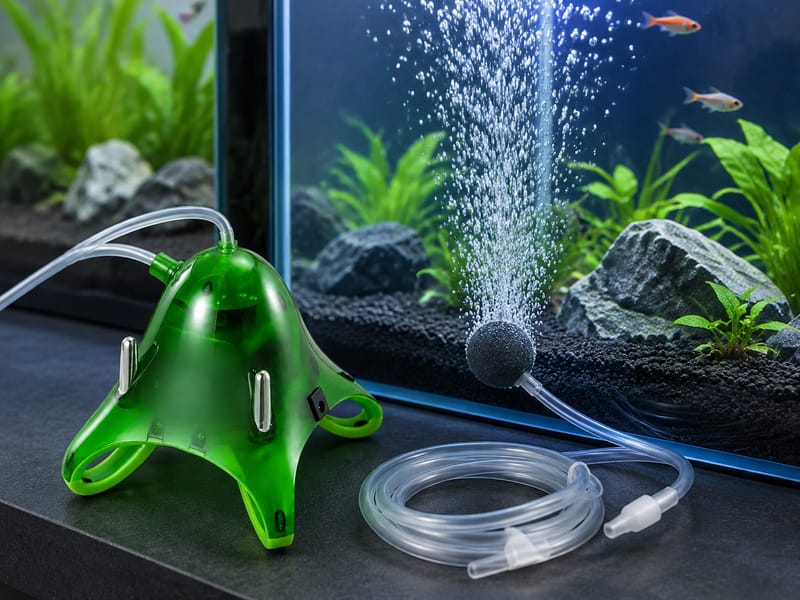
An aquarium air stone diffuses air from a pump into smaller bubbles. Those bubbles create water movement, disturb the surface, and can help improve gas exchange. Air stones are commonly used in freshwater aquariums, marine systems, quarantine tanks, breeding setups, sponge-filter installations, bait systems, and certain retail display applications.
The air stone itself does not add oxygen directly in the same way a chemical treatment would. Its value comes from moving water and increasing the air-to-water contact at the surface. Performance depends on the entire setup:
- Air pump output and pressure
- Tubing diameter and length
- Check valves, manifolds, and flow-control valves
- Water depth
- Air stone pore structure
- Fouling from algae, biofilm, mineral deposits, or debris
- Tank shape, stocking level, filtration, and surface movement
For a wholesale buyer, this means an air stone should not be evaluated in isolation. A disc that produces an attractive fine bubble pattern with a high-output pump may perform poorly when paired with a small pump, long airline run, or deep tank.
A balanced product range should help retailers serve common needs without encouraging unrealistic claims. Packaging and instructions should explain that pump capacity and system setup affect bubble output.
Comparing Disc, Cylinder, Ball, and Bar Shapes
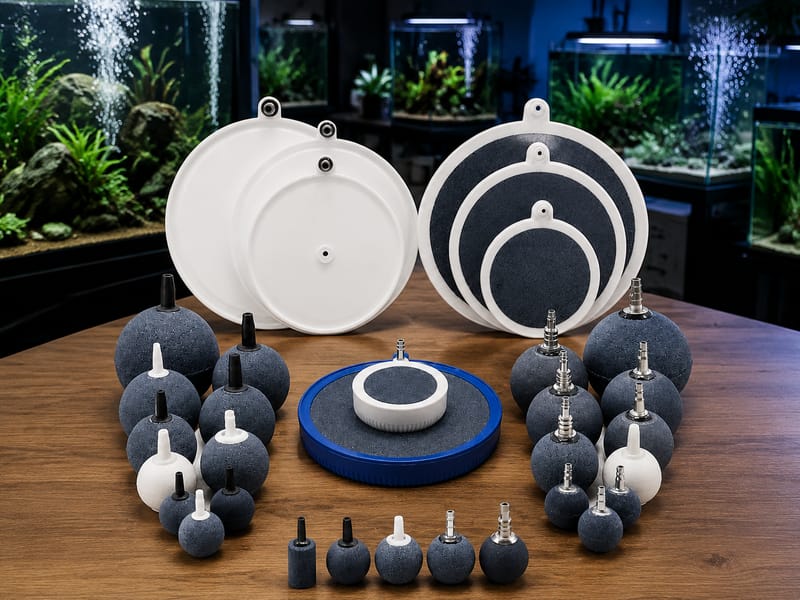
Air stone shape affects how bubbles are distributed, how the product fits into an aquarium, and which retail use case it best serves. No one shape is universally better; the right choice depends on placement, pump capacity, and the desired bubble pattern.
| Air Stone Shape | Typical Bubble Coverage | Common Uses | Main Buying Considerations |
|---|---|---|---|
| Disc | Broad, upward bubble field from a compact footprint | Display tanks, breeding tanks, decorative aeration | Diameter, flatness, weight, and airflow requirement |
| Cylinder | Concentrated bubbles from a simple form | General aquarium use, sponge filters, entry-level replacement sales | Length, diameter, fitting size, and consistency |
| Ball | Multi-directional bubbles in a compact unit | Small tanks, rounded aquascape layouts, novelty retail ranges | Bubble uniformity and secure placement |
| Bar | Linear curtain of bubbles across a longer area | Longer tanks, rear-wall placement, display applications | Straightness, pore consistency, support points, and required airflow |
Disc air stones
Disc-shaped stones are often selected when buyers want a broad bubble area without using a long bar. They can work well near the bottom of a tank, especially when a weighted base or stable placement prevents shifting.
Buyers should confirm whether the disc is intended to sit flat, whether an attachment or fitting is included, and how well it maintains even output across the surface. A disc with inconsistent porosity may bubble strongly in one area and weakly in another.
Cylinder air stones
Cylinders are a practical core SKU for aquarium retailers because they are familiar, compact, and easy to use with standard airline tubing. They are often suitable for basic aeration and replacement demand.
For a focused assortment, cylinder stones in a few clearly differentiated sizes can cover more demand than a large number of minor size variations. The key is to make size progression understandable on packaging and shelf labels.
Ball air stones
Ball shapes can provide a more dispersed bubble effect than a narrow cylinder. They may appeal to consumers looking for a compact decorative option, but their irregular shape can make placement less predictable.
Check whether the product remains stable underwater and whether the connection point is protected during packing. A shape that looks distinctive but is easily damaged in transit can create avoidable returns or complaints.
Bar air stones
Air stone bars create a linear bubble curtain and are commonly considered for larger or longer aquariums. They may be positioned along the back, side, or bottom of a tank depending on the layout.
Longer bars generally require careful compatibility guidance. As length increases, the pump may need to overcome greater airflow resistance to produce an even bubble pattern. A buyer should avoid pairing a long bar with vague “fits all pumps” language.
Pore Size, Bubble Output, and Airflow Resistance
Pore structure is one of the most important performance variables in aquarium air stones wholesale. Finer pores can create smaller bubbles and a more visually refined effect, but they may also create greater airflow resistance. Coarser pores may allow air to pass more easily but can produce larger, less uniform bubbles.
The best pore grade depends on the intended application:
- Fine bubble appearance: Useful where visual presentation is important, provided the pump has enough pressure.
- General-purpose aeration: Often benefits from a balance between bubble size, durability, and manageable resistance.
- High-output systems: May require stones designed to work with stronger pumps, deeper water, or multi-outlet configurations.
- Entry-level consumer use: Should be matched with common small air pumps and simple tubing setups.
A frequent sourcing mistake is assuming that “smaller bubbles” automatically means a better product. Very fine diffusion can be attractive, but if it restricts airflow excessively, users may see weak output or uneven bubbling. This can lead to complaints that are actually caused by a pump-and-stone mismatch.
When reviewing samples, inspect whether bubble output is reasonably even across the stone after it has been properly soaked and connected. New porous stones can initially hold air or require a short break-in period, so sample testing should follow the supplier’s recommended preparation method where provided.
Ask for confirmation of the intended pump range, recommended water depth, and any known limitations for the specific model. These details should be treated as model-specific rather than assumed across an entire category.
Matching Air Stones With Pumps, Tubing, and Tank Size
An air stone is only one component in an aeration system. Wholesale assortments work best when the air stone selection is planned alongside air pumps, airline tubing, check valves, connectors, and flow-control accessories.
A practical compatibility review should cover the following.
Pump output and pressure
Pump ratings are not always directly comparable across brands or operating conditions. Output may change with water depth, tubing length, outlet splitting, and restrictions in the system.
Rather than relying on a broad “recommended for X gallons” statement, request the pump’s operating information and test the actual pairing. A stone that performs well in a shallow sample tank may behave differently in a deeper aquarium or on a multi-outlet manifold.
Tubing and connector fit
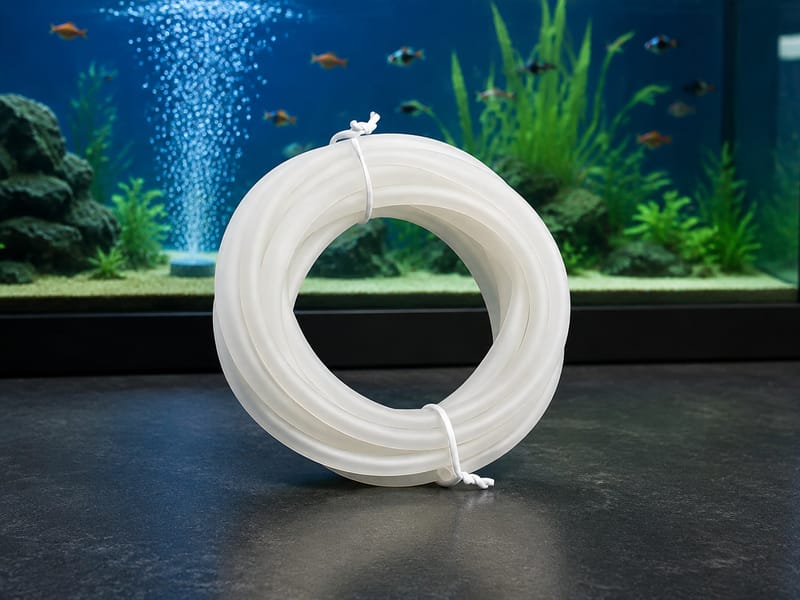
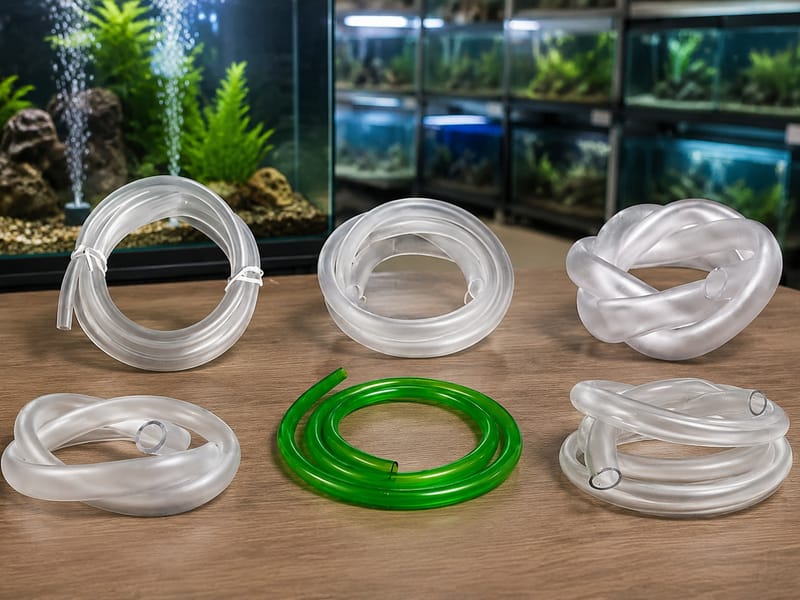
Confirm the airline tubing inner diameter and the air stone inlet or stem dimensions. A loose connection can leak air, while an overly tight fit can damage a brittle stem or frustrate users during installation.
For retail-ready programs, it is useful to standardize around tubing sizes commonly used by the intended product line. If your range includes multiple connection sizes, make the distinction highly visible on product packaging.
Check valves and water backflow
A check valve is often needed when an air pump is positioned below the aquarium waterline. It helps reduce the risk of water traveling backward through the airline tubing during a power interruption or pump failure.
Do not assume an air stone package includes a check valve unless the specific SKU confirms it. If accessories are sold separately, consider cross-merchandising them with air stones and air pumps.
Tank size and placement
Tank size is only a starting point. A long, shallow tank, a tall aquarium, a heavily stocked system, and a planted display may all need different water movement patterns.
A simple retail assortment might organize air stones by:
- Compact tanks and basic replacement use
- Standard community aquariums
- Long tanks or wide bubble-curtain applications
- Specialty uses such as breeding, quarantine, or sponge filtration
This approach is usually more useful than listing numerous vague tank-size claims.
For buyers building a wider aeration category, product references such as the WK112 product details and WK006 product details can be reviewed alongside the air stone range to confirm whether the category mix supports the intended retail program.
Material Durability, Cleaning, and Replacement Cycles
Most aquarium air stones are porous products that gradually collect mineral scale, algae, bacterial film, and suspended debris. As pores become blocked, bubble output can weaken or become uneven. This is normal wear, not necessarily a manufacturing defect.
The durability question is therefore two-part:
- Does the air stone resist cracking, crumbling, or inlet damage during ordinary handling?
- Can it maintain acceptable airflow for a reasonable period before cleaning or replacement is needed?
Replacement timing varies significantly with water hardness, aquarium maintenance, biological load, usage frequency, and pump pressure. Buyers should avoid publishing a universal replacement interval unless it is confirmed for a specific product and use case.
Cleaning guidance to include with retail products
Clear user instructions can reduce unnecessary returns. General guidance may include:
- Disconnect the air stone before cleaning.
- Remove visible debris with gentle brushing or rinsing as appropriate.
- Follow the product’s cleaning instructions for any soaking process.
- Replace the stone if output remains weak after cleaning, pores appear blocked, or the stone is physically damaged.
- Inspect tubing and pump performance before assuming the air stone is the only cause of reduced bubbles.
Avoid recommending aggressive cleaning chemicals without product-specific guidance. Some materials, adhesives, fittings, or packaging instructions may have limitations that must be confirmed by the supplier.
Quality Checks for Samples and Bulk Orders
A sample review should evaluate function, finish, consistency, and packaging—not just whether one air stone creates bubbles. Bulk-order quality control should be based on an agreed specification and acceptance criteria.
Sample evaluation checklist
Before approving an aquarium air stone wholesale order, check:
- Overall dimensions and shape against the approved sample
- Weight or density consistency where relevant
- Surface finish and visible pore uniformity
- Inlet or stem fit with the intended tubing
- Cracks, chips, loose material, or fragile edges
- Bubble distribution after proper setup
- Airflow behavior at the expected water depth
- Packaging protection against breakage
- Label accuracy, barcode placement, and instruction readability where applicable
Bulk-order controls
For larger orders, document what “acceptable” means before production. Useful points to confirm include:
- Approved sample or reference standard
- Model number and size range
- Material and color requirements
- Connection dimensions
- Expected packaging configuration
- Carton packing method and protective inserts
- Inspection quantity or sampling approach
- Handling of damaged, chipped, or visibly defective pieces
- Any requested testing, labeling, or market-specific requirements
A common mistake is approving a sample without recording the details that made it acceptable. A physical sample is helpful, but written specifications reduce ambiguity when repeat orders, multiple shapes, or private-label packaging are involved.
Where related aquarium equipment is part of the same sourcing discussion, review the WK011 product page or WK013 product page only after confirming the specific model’s function, specifications, and compatibility with your planned assortment.
Packaging, Branding, and Assortment Planning
Air stones are relatively simple products, which makes packaging especially important. The customer often decides based on visible shape, stated compatibility, installation clarity, and perceived quality at the shelf.
For private-label or retail programs, packaging should communicate the information needed to prevent incorrect purchases:
- Product shape and dimensions
- Intended use or bubble coverage style
- Tubing compatibility
- Whether accessories are included or sold separately
- Basic setup guidance
- Cleaning and replacement guidance
- Warnings or limitations relevant to the product
- Brand, SKU, barcode, and country-of-origin details as required for your program
Build a range around clear roles
A well-planned assortment usually has fewer overlaps and clearer price tiers. For example:
- Core replacement range: Standard cylinders or compact stones in common sizes
- Visual-aeration range: Discs and balls for decorative bubble effects
- Large-tank range: Bars or larger diffusers for wider coverage
- Accessory attachments: Tubing, connectors, check valves, and control valves where appropriate
Avoid adding multiple shapes that solve the same customer problem unless there is a clear reason, such as a different price point, retail channel, tank format, or brand positioning.
For OEM and private-label buyers, WKAQOO can support sourcing discussions that include product selection, branding, colors, retail packaging, and user instructions. Availability, materials, packaging options, minimum order quantities, and final specifications should be confirmed for each inquiry.
Questions to Confirm Before Ordering
Use this checklist before placing an order or requesting final approval:
- Which shapes and sizes are needed for the target retail or distribution channel?
- What pump output and water-depth conditions should the air stones support?
- What airline tubing size must fit the inlet?
- Is a fine-bubble appearance, easy airflow, or general-purpose performance the priority?
- Are check valves, tubing, or connectors included, bundled, or sold separately?
- What material, color, and finish are required?
- What sample testing method will be used to assess bubble consistency?
- What packaging is needed: bulk, retail blister, color box, private-label carton, or another format?
- What branding, barcode, warnings, and instructions must appear on the package?
- What inspection standards apply to chips, cracks, inlet damage, dimensions, and packing?
- What MOQ, sample terms, production schedule, and current lead time apply to the selected models?
- Are any certifications, testing requirements, or import documentation needed for the intended market?
The most effective wholesale air stone range is one that is easy to explain, appropriately matched to pumps and aquariums, and controlled through clear sample and bulk-order specifications. Start with a focused set of shapes, validate performance using the actual intended system, and expand only when each added SKU serves a distinct buyer need.
To move from comparison to sourcing, prepare your preferred shapes, target dimensions, pump and tubing requirements, packaging concept, and estimated order quantity. WKAQOO can then help confirm current specifications, samples, private-label options, MOQ, packaging details, and lead time through sales@wkaqoo.com.