For most shrimp keepers, the right mini air pump is not the strongest model on the shelf. It is the one that delivers steady oxygen, gentle water movement, low noise, and reliable day-and-night operation without stressing delicate shrimp. In the United States, where indoor nano tanks are popular in apartments, fish rooms, classrooms, and office spaces from Seattle to Miami, shrimp hobbyists usually benefit more from controlled airflow than from high-output aeration. A stable setup helps Neocaridina and Caridina shrimp feed, molt, breed, and graze without being pushed around by excessive turbulence.
If you want a direct recommendation first, choose a compact, energy-efficient air pump designed for small aquariums, pair it with a fine-pore air stone or sponge filter, add a check valve, and use a control valve if the output is stronger than needed. For many 2.5-gallon to 20-gallon shrimp tanks, a quiet single-outlet model is enough. A dual-outlet option makes sense when you run two tanks, want balanced distribution, or plan to split airflow between a sponge filter and an air stone. A good example of a quiet indoor option is this ultra-quiet shrimp tank air pump, especially for hobbyists trying to keep stable oxygen without filling a bedroom or living room with vibration noise.
The U.S. shrimp aquarium market has grown alongside the rise of planted nano tanks, rimless desktop aquariums, and breeding racks in cities such as Los Angeles, Houston, Chicago, New York, and Atlanta. Hobbyists increasingly want pumps that are small, silent, and efficient rather than simply powerful. This guide explains why shrimp tanks need stable oxygen, why low flow matters, how to avoid excessive water disturbance, how to match a pump with an air stone or sponge filter, and how to decide between single and dual outlets. It also reviews buying factors, market behavior, supplier considerations, and likely 2026 trends in technology, sustainability, and U.S. consumer demand.
Why Shrimp Tanks Need Stable Oxygen
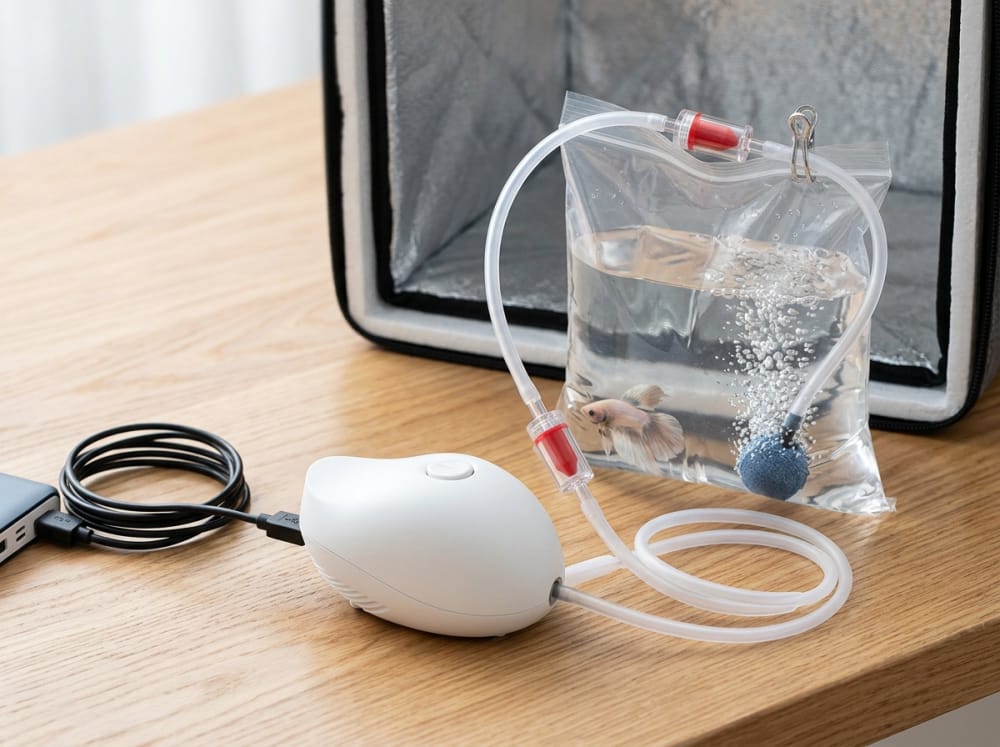
Shrimp do not need violent bubbling to stay healthy, but they do need dependable dissolved oxygen levels. In a shrimp tank, oxygen supports respiration, beneficial bacteria, biofilm stability, and overall water quality. Unlike flashy fish species that may visibly react to low oxygen by gasping, shrimp often show subtler stress: reduced activity, poor feeding response, climbing behavior, weakened molts, lower breeding success, or unexplained losses after warm weather or heavy feeding.
Stable oxygen matters even more in tanks with dense moss, carpeting plants, leaf litter, active substrate, and heavy microbial life. During the day, plants can help oxygenate the water, but at night they consume oxygen too. In warm U.S. regions such as Texas, Arizona, and Florida, higher room temperatures can lower dissolved oxygen availability, making consistent aeration especially useful. In heavily stocked breeding tanks, a mini air pump can be one of the simplest insurance policies against overnight oxygen dips.
A steady air supply also supports sponge filters, which are among the safest filtration choices for shrimp. Sponge filters provide biological filtration, create a grazing surface, and reduce the risk of baby shrimp being sucked into an intake. Because the air pump drives the sponge filter, pump consistency directly influences filtration stability.
| Tank Condition | Oxygen Demand | Risk Without Stable Air | Practical Pump Need | Best Use Case | Explanation |
|---|---|---|---|---|---|
| Lightly stocked 5-gallon tank | Low to moderate | Nighttime oxygen dip | Low-output single outlet | Beginner desktop tank | Even small tanks benefit from steady aeration because water volume changes quickly. |
| Heavily planted shrimp tank | Moderate | Oxygen swing between day and night | Stable, controllable airflow | Nature-style aquascape | Plants help by day but can increase oxygen competition after lights out. |
| Breeding rack system | Moderate to high | Reduced survival of shrimplets | Reliable continuous pump | Multi-tank breeder setup | Breeding systems need steady biological filtration and consistent water conditions. |
| Warm room in summer | High | Lower dissolved oxygen capacity | Efficient pump with nonstop operation | Southern U.S. indoor tanks | Warmer water holds less oxygen, increasing the value of constant aeration. |
| High feeding schedule | Moderate to high | Bacterial oxygen consumption spike | Sponge filter support | Grow-out tanks | More food means more microbial activity and more oxygen demand. |
| Tank during transport or resale prep | Variable | Stress-related losses | Portable mini pump or backup setup | Breeders shipping livestock | Temporary oxygen support improves resilience before or after transport. |
The key point is simple: shrimp thrive in consistency. A pump that runs steadily with modest output is often better than a larger unit that creates fluctuating flow or gets switched off because it is too noisy for an indoor room.
The market growth pattern shown here reflects a realistic trend in the United States: more nano tanks, more home-based aquatics, and stronger demand for small, reliable aeration tools. Growth is especially visible in metro areas where compact living spaces encourage quiet, low-power aquarium equipment.
Low Flow Requirements Explained
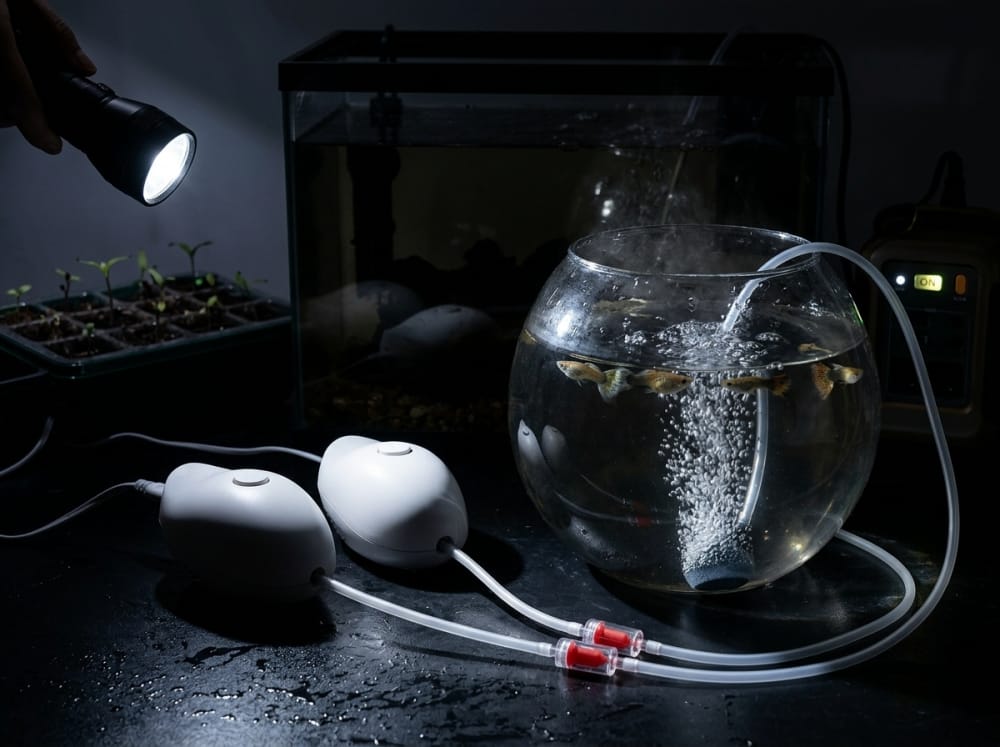
Shrimp tanks usually do better with low to moderate airflow. Shrimp are constant foragers. They like to walk across substrate, moss, driftwood, and sponge surfaces looking for biofilm, microorganisms, and leftovers. Strong current can interrupt natural feeding behavior, tire them out, and scatter fine foods before shrimp can consume them. That is why low flow requirements matter so much when choosing an air pump.
In many U.S. retail stores, air pumps are marketed by power and tank size, but those labels often target general aquarium use rather than specialized shrimp systems. A pump rated for a 10-gallon community tank may still be too aggressive for a 5-gallon shrimp cube if paired with a very open air stone or a lightly weighted sponge filter uplift tube. This is not because the pump is poor quality; it is because shrimp setups prioritize control over force.
Low flow is particularly important for Caridina shrimp, which are often kept in carefully managed tanks with soft water, buffering substrate, and stable conditions. Neocaridina are more forgiving, but they also show better feeding and calmer behavior in tanks without harsh turbulence. If you notice shrimp clustering in sheltered corners while the center of the tank looks like a boiling pot, your airflow is probably too high.
| Tank Size | Common Shrimp Type | Ideal Airflow Style | Too Little Flow Sign | Too Much Flow Sign | Explanation |
|---|---|---|---|---|---|
| 2.5 to 5 gallons | Neocaridina | Very gentle | Weak sponge lift | Shrimp avoid open areas | Small water volume magnifies pump impact, so subtle output works best. |
| 5 to 10 gallons | Neocaridina or Caridina | Gentle and steady | Surface film persists | Food blows around rapidly | This range is common for breeding and display shrimp tanks. |
| 10 to 20 gallons | Mixed colony | Low to moderate | Dead spots in corners | Moss waves constantly | Moderate aeration can work if distributed through sponge filtration. |
| Rack tanks with sponge filters | Breeding colonies | Balanced, adjustable | Uneven filter performance | Different tanks receive unstable flow | Air valves help distribute output across multiple tanks. |
| Planted shrimp aquascapes | Caridina | Soft micro-bubbling | Reduced circulation behind hardscape | Substrate debris constantly lifts | Planting layout can trap debris but also amplifies turbulence. |
| Grow-out tanks | Juveniles | Gentle but consistent | Waste accumulates | Young shrimp struggle to rest | Juveniles need clean water but should not be pushed around by flow. |
A practical solution is to choose a mini air pump that is slightly adjustable or easy to tame with a valve. That gives you room to fine-tune airflow as livestock density, room temperature, and filtration needs change over time.
Avoiding Excessive Water Disturbance
Excessive water disturbance is one of the most common setup mistakes in shrimp tanks. Many beginners assume more bubbles always mean more health. In reality, shrimp often need a calmer environment than fish-only tanks. While surface agitation is useful for gas exchange, violent bubbling can uproot fine plants, move powdered foods into filter corners, stress freshly molted shrimp, and create unnecessary evaporation.
Water disturbance usually comes from one of three issues: the pump is oversized, the air stone is too coarse, or the outlet is placed poorly. A coarse air stone produces large bubbles that break hard at the surface. A very open uplift tube can create a strong vertical lift. Position also matters. If the bubbling column rises directly into a shallow zone or hits hardscape in a narrow tank, it can create circular turbulence far beyond what the shrimp need.
In cities with dry indoor climates such as Denver, Phoenix, and Salt Lake City, excessive surface disturbance can also increase evaporation rates, concentrating minerals faster in top-off cycles. For Caridina keepers who aim for stable TDS and conductivity, this becomes more than a comfort issue; it is a water chemistry issue.
| Cause of Disturbance | What You See | Effect on Shrimp | Best Fix | Recommended Accessory | Explanation |
|---|---|---|---|---|---|
| Oversized pump | Strong boiling bubbles | Stress and hiding | Use control valve or smaller pump | Airline valve | Reducing air volume often improves shrimp behavior immediately. |
| Coarse air stone | Large noisy bubbles | Uneven circulation | Switch to fine-pore stone | Ceramic air stone | Smaller bubbles are usually quieter and more controlled. |
| Poor placement | Constant spinning current | Feeding disruption | Move to rear corner | Suction cup clip | Placement changes can calm the whole tank without changing equipment. |
| Shallow waterline | Surface splashing | Evaporation increase | Raise water level | Top-off routine | Deeper bubble travel reduces splash intensity. |
| Unbalanced splitter | One tank surges | Inconsistent conditions | Rebalance outlets | Gang valve | Multi-tank systems need equalized airflow to prevent instability. |
| Dirty stone or sponge | Irregular bubble bursts | Flow instability | Clean or replace media | Spare stone set | Clogging changes pressure and can suddenly alter disturbance levels. |
If your goal is a natural shrimp environment, think in terms of controlled circulation rather than dramatic aeration. The best setup is one where bubbles help oxygen exchange and filtration while leaving moss pads, feeding dishes, and resting zones relatively calm.
Silent Operation for Indoor Tanks
Silent operation matters more than many buyers expect. Shrimp tanks are often kept indoors in bedrooms, home offices, kitchens, dorm rooms, or reception spaces. A loud pump that hums against the stand or rattles through thin furniture can quickly become annoying, especially in small apartments in cities such as Boston, San Francisco, and Washington, D.C. That often leads owners to switch the pump off at night, which defeats the purpose of stable oxygenation.
Quiet performance depends on more than the pump motor itself. Noise can come from diaphragm vibration, hard contact with furniture, resonance through hollow cabinets, rigid airline routing, and bubble noise at the air stone. A well-designed mini air pump with good casing, internal dampening, and rubber feet can reduce much of this. Suspending the pump slightly above the floor or placing it on a soft pad often helps too.
For indoor shrimp tanks, “silent” should really mean “low-vibration and low-bubble-noise under real use.” That is why many hobbyists prefer specialized quiet units over generic high-output pumps. If your setup is in a living area, a quiet air pump for indoor shrimp tanks is not just a luxury purchase. It directly improves consistency because you are more likely to leave it running 24/7.
From a product engineering standpoint, technological capability plays a major role here. Companies focused on compact aeration often refine diaphragm balance, airflow path design, outlet pressure stability, and housing insulation over many product cycles. That specialization matters because a pump for shrimp tanks needs to be small and quiet without sacrificing continuous-duty reliability.
This bar chart highlights the strongest demand center: home hobby use. That is why silent operation and low energy draw receive so much attention in the U.S. market. Breeders and stores also value quiet equipment because multi-pump systems amplify background noise quickly.
Air Stone Compatibility
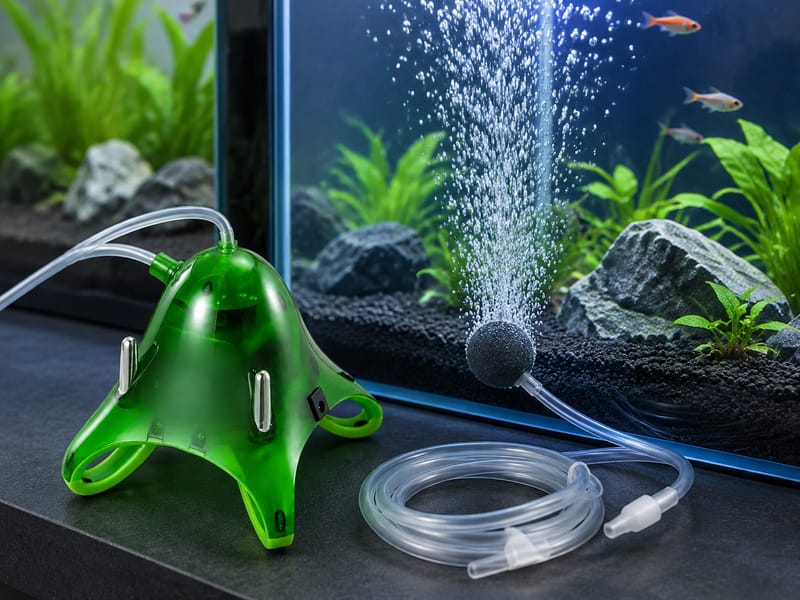
A mini air pump only performs as well as the device attached to it. Air stone compatibility is crucial because different stones, sponge filters, and uplift tube designs create different resistance levels. A weak pump may struggle with a dense fine-pore stone. A stronger pump may overpower a basic stone and produce loud, coarse bubbles. Matching pump pressure and accessory resistance helps create a stable, gentle output.
Fine-pore ceramic stones usually produce smaller bubbles, which can improve gas exchange and reduce splash. However, they may require slightly higher pressure to operate well. Standard blue stones are easier to drive but often create larger bubbles. Sponge filters add another layer of variation depending on sponge density, uplift tube diameter, and water depth. In deeper tanks or systems with longer airline runs, pressure needs increase.
For shrimp tanks, many hobbyists choose either a sponge filter alone or a small air stone used for supplemental circulation. A sponge filter is often the safer all-around option because it combines aeration and biological filtration with gentle flow. An air stone can work well in bare-bottom breeding tubs, plant-heavy tanks needing extra nighttime oxygen, or quarantine setups.
| Accessory Type | Bubble Size | Pressure Requirement | Best for Shrimp? | Key Benefit | Explanation |
|---|---|---|---|---|---|
| Fine-pore ceramic stone | Very small | Moderate | Yes | Gentle oxygen distribution | Works well when paired with a stable pump capable of consistent pressure. |
| Standard air stone | Medium to large | Low | Sometimes | Easy startup | Affordable and common, but bubble size can be less refined. |
| Single sponge filter | Moderate | Low to moderate | Excellent | Filtration plus aeration | One of the most shrimp-safe choices for display and breeding tanks. |
| Double sponge filter | Moderate | Moderate | Excellent | Larger bio-media area | Good for 10 to 20 gallon shrimp colonies needing more filtration. |
| Long bubble wall | Variable | Moderate to high | Usually no | Wide visual effect | Often creates more disturbance than necessary in shrimp-focused tanks. |
| Micro diffuser disc | Very small | High | Conditional | Fine aeration pattern | Useful only if the pump has enough pressure and the tank needs this format. |
Manufacturing capability also influences accessory compatibility. A supplier with strong pump and air stone specialization can better tune diaphragm output, outlet size, pressure stability, and material durability so the system performs reliably across common shrimp tank accessories. That kind of focused manufacturing becomes especially important for U.S. buyers who want consistent quality across repeat orders, whether they are hobbyists, retailers, or small breeders.
Single vs Dual Outlet Choice
Choosing between a single-outlet and dual-outlet mini air pump depends on how you use your shrimp setup. If you run one tank and want the simplest, quietest, most efficient solution, a single-outlet pump is often the right answer. It usually costs less, consumes less power, and is easier to tune. For a 5-gallon, 10-gallon, or even many 15-gallon shrimp tanks, one outlet can be more than enough when connected to a sponge filter or fine-pore stone.
A dual-outlet pump makes more sense in multi-tank situations. For example, if you maintain a breeding pair of 10-gallon tanks in Dallas, split a rack of nano cubes in New Jersey, or run a display and cull tank in Portland, dual outlets provide flexibility. You can dedicate one line to each tank or split one line for filtration and the other for supplemental aeration. That said, airflow balancing matters. Without valves, one side may receive more air than the other.
Dual outlets can also be useful as a growth path. A hobbyist may start with one tank, then add another shrimp colony or a quarantine tank later. Buying a compact dual-outlet model upfront can reduce future equipment clutter. Still, for very small indoor setups, a single-outlet quiet pump usually offers the most elegant experience.
| Feature | Single Outlet | Dual Outlet | Best User Type | Main Advantage | Explanation |
|---|---|---|---|---|---|
| Initial simplicity | High | Moderate | Beginners | Easy installation | Fewer parts and fewer balancing adjustments make setup straightforward. |
| Noise control | Often better | Good | Bedroom users | Lower vibration potential | Compact single-outlet units are frequently the quietest option. |
| Multi-tank use | Limited | Excellent | Breeders | Two independent air lines | Useful for rack systems and parallel shrimp colonies. |
| Energy efficiency | Very good | Good | Budget-conscious users | Lower ongoing power draw | For one tank, a single outlet avoids unused output capacity. |
| Future expansion | Lower | Higher | Growing hobbyists | More flexibility | Dual outlets leave room for an additional tank or accessory. |
| Flow management | Simple | Needs balancing | Intermediate users | Flexible distribution | Dual lines benefit from valves to maintain even, gentle airflow. |
For most shrimp keepers in the United States, the choice comes down to one question: are you building a single quiet display tank, or are you supporting multiple shrimp systems? Answer that honestly, and the outlet decision becomes much easier.
Energy Efficient Setup
Energy efficiency matters because air pumps are usually continuous-duty devices. Even a small difference in wattage adds up over a year when the pump runs 24 hours a day. U.S. aquarium hobbyists are paying more attention to this in regions with higher utility costs such as California, Massachusetts, and parts of the Northeast. For shrimp keepers with several tanks, efficient pumps help lower operating costs without compromising oxygen stability.
Efficient setup is not only about the pump motor. It also includes minimizing wasted output, avoiding oversized units, selecting accessories with suitable resistance, and installing the system so it performs properly the first time. A pump that is too strong and constantly throttled down can still be less practical than a right-sized model that naturally matches the tank.
Service capability is another important part of long-term value. U.S. buyers increasingly look for suppliers that can support product selection, specification matching, replacement guidance, and responsive after-sales help. When a company has experience serving aquarium equipment customers and understands small air systems deeply, it becomes easier to choose the correct unit, troubleshoot noise, and maintain performance across home and commercial use cases.
The area chart shows a realistic trend shift in the U.S. market: hobbyists are moving away from oversized utility pumps and toward quieter, lower-power, specialized mini pumps. This is likely to accelerate in 2026 as sustainability preferences, apartment living, and premium nano aquatics continue to rise.
Looking ahead to 2026, three trends stand out. First, mini air pump technology will likely improve in vibration control, smart airflow consistency, and compact materials. Second, sustainability will matter more, including lower power consumption, longer service life, and reduced packaging waste. Third, policy and retail standards may place stronger emphasis on energy labeling, material safety, and dependable product documentation for U.S. importers and distributors. Buyers who select focused, well-engineered equipment today are more likely to stay aligned with those future expectations.
Recommended Shrimp Tank Pumps
The best shrimp tank pumps are not defined by maximum output alone. They are defined by the balance of pressure, silence, control, durability, and efficiency. For most U.S. shrimp hobbyists, the recommended categories are compact single-outlet pumps for one tank, low-noise dual-outlet pumps for two tanks or split applications, and specialized quiet models designed for indoor use.
When evaluating products, look at real usage conditions: tank size, airline length, accessory type, room placement, and whether you need the pump to power a sponge filter, an air stone, or both. A bedroom tank in San Diego has different practical needs from a shrimp rack in a Houston garage fish room or a retail nano display in downtown Chicago.
One strong option for hobbyists prioritizing indoor comfort is an ultra-quiet mini air pump for shrimp aquariums. It suits buyers who want a clean, low-disturbance setup with dependable day-and-night aeration. This type of product is especially attractive for shrimp keepers who value compact design, stable oxygen delivery, and low vibration in homes and offices.
From a company standpoint, expertise matters. A manufacturer with about a decade of focused experience in compact aeration, dozens of successful client collaborations, and a design-led approach to precise pump and air stone development is often better positioned to deliver reliable shrimp tank solutions than a generalist supplier. Specialization in mini and mid-sized air pumps and air stones tends to produce better pressure matching, quieter housings, and more consistent production quality.
This comparison chart explains why specialized pumps usually perform better in shrimp applications. Generic pumps may still work, but focused designs tend to deliver superior quietness, more stable airflow, and better compatibility with shrimp-safe filtration accessories.
U.S. Market, Product Types, and Buying Advice
In the United States, shrimp tank aeration products move through a mix of online marketplaces, aquarium specialty shops, aquascaping boutiques, importer networks, and direct supply partnerships. Major distribution and logistics routes often connect through Los Angeles and Long Beach on the West Coast, Houston on the Gulf Coast, Savannah in the Southeast, and New York/New Jersey on the East Coast. These hubs affect availability, lead times, and pricing for retailers and bulk buyers.
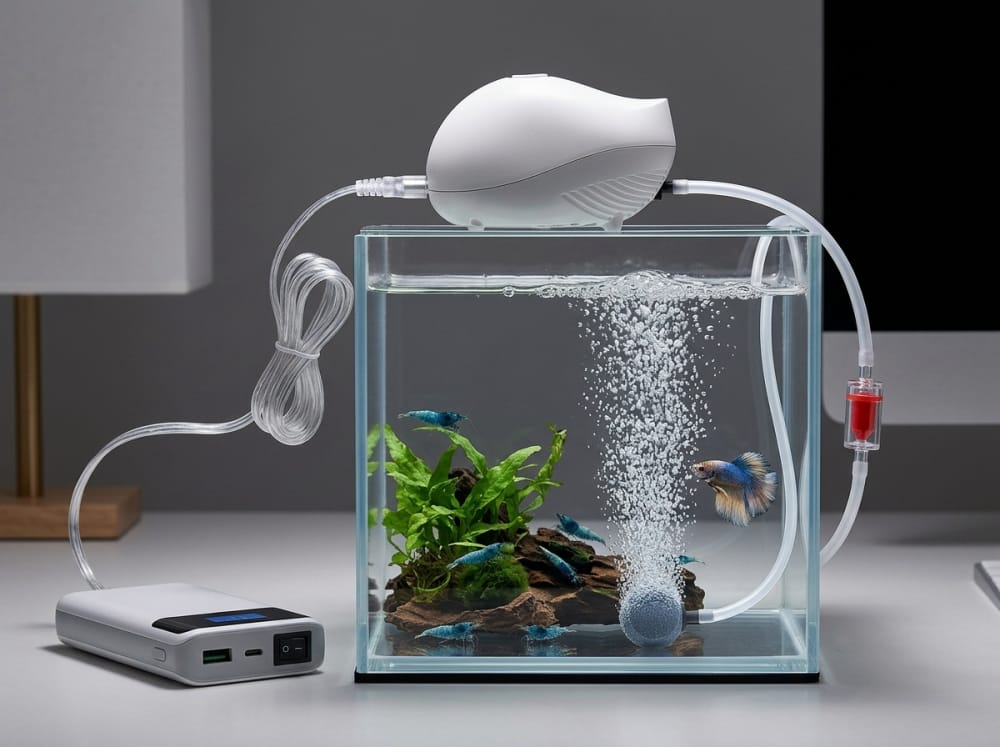
Product types generally fall into five groups: entry-level hobby pumps, quiet indoor pumps, dual-outlet breeder pumps, battery backup or portable pumps, and air systems sold with matching stones or sponge filters. For shrimp tanks, the best buying advice is to ignore oversized tank claims and focus on low-noise performance, stable pressure, controllability, and accessory compatibility.
Check whether the product includes or supports check valves, splitter valves, silicone airline tubing, and common U.S. plug standards. If you are buying for resale or store use, ask about consistency across production lots, packaging quality, and after-sales response. If you are buying for home use, read real-world feedback about vibration, nighttime noise, and long-run durability.
| Buyer Type | Top Priority | Best Pump Style | Common Mistake | Recommended Fix | Explanation |
|---|---|---|---|---|---|
| Beginner hobbyist | Ease of use | Quiet single outlet | Buying by maximum power | Match pump to shrimp tank size | Beginners usually need simplicity and stability, not excess output. |
| Shrimp breeder | Consistency across tanks | Dual outlet or rack setup | Uneven line balancing | Use gang valves | Breeders benefit from repeatable airflow control in every tank. |
| Aquascaper | Low visual and sound impact | Compact silent model | Choosing coarse bubble output | Select fine-pore accessories | Aquascapes need calm presentation and controlled circulation. |
| Retail store | Reliability and display comfort | Quiet durable pump | Ignoring shelf noise | Test in real display conditions | Store noise affects customer experience and livestock stability. |
| Classroom or office user | Low maintenance | Simple efficient pump | Turning pump off after hours | Choose quieter continuous-use model | Stable aeration is easier when the pump is unobtrusive. |
| Importer or distributor | Quality consistency | Specialized supply partner | Focusing only on unit cost | Evaluate support and production capability | Stable quality and service reduce long-term claims and returns. |
Industries, Applications, and Case Examples
Although shrimp tank mini air pumps are mainly associated with hobby aquariums, their applications stretch further. They are used in ornamental livestock breeding, aquascaping retail, educational science labs, temporary holding systems, and specialty pet product distribution. In each case, gentle and reliable aeration matters more than dramatic output.
A practical case example is a two-rack Neocaridina breeding setup in suburban Atlanta. The breeder runs multiple 10-gallon tanks with sponge filters and chooses dual-outlet pumps distributed through balancing valves. Quiet operation matters because the rack is inside a converted home office. By reducing vibration and maintaining stable oxygen overnight, the breeder improves comfort and consistency at the same time.
Another example is a planted Caridina display tank in Seattle. The owner uses a quiet single-outlet pump with a fine sponge filter because nighttime oxygen stability is a concern in a densely planted aquascape. The setup avoids excessive flow and keeps the visual presentation clean enough for a living room display.
A third example is a local aquarium retailer in northern New Jersey that maintains nano shrimp sales tanks near the checkout area. Switching from louder general pumps to specialized mini pumps reduces customer-facing noise while improving the appearance of calm, healthy livestock. The store also benefits from lower energy use across multiple display systems.
Local Suppliers and Sourcing Considerations
For U.S. buyers, local sourcing can mean buying from domestic aquarium shops, U.S.-based warehouses, or importers with stock already landed in regional distribution centers. Faster fulfillment often comes from inventory positioned near ports and transport corridors such as Los Angeles, New York/New Jersey, Houston, and Savannah. This matters when stores or breeders need quick replacement stock without waiting on long overseas lead times.
However, “local supplier” does not always mean “local manufacturer.” Many strong products come from specialized overseas production partners that work closely with U.S. clients on product specifications, quality checks, and brand support. What matters most is whether the supplier can provide stable product performance, clear communication, practical accessory matching, and dependable after-sales service.
When comparing suppliers, look beyond price. Ask about production specialization, diaphragm life testing, noise control methods, airflow consistency, packaging options, and customer support. Buyers in the U.S. market increasingly value suppliers that understand both technical performance and retail presentation.
Our Company
Our approach is built around focused specialization rather than broad, unfocused catalog expansion. On the technology side, we concentrate on high-performance mini and mid-sized air pumps and matching air stones, refining airflow stability, compact structure, and low-noise operation for demanding aquarium applications such as shrimp tanks. That focused engineering mindset helps translate practical use requirements into precise product design.
On the manufacturing side, years of category-specific experience support consistent production quality and repeatable performance. Instead of trying to cover every equipment type in aquatics, we stay centered on the products we know best, allowing tighter control over pump construction, component selection, and compatibility with small-scale aeration systems. This is especially useful for U.S. buyers who need dependable quality in home, retail, or private-label channels.
On the service side, long-term project collaboration has shaped a responsive and practical way of working with clients. Whether the need involves selecting a quiet pump for indoor shrimp tanks, matching airflow to an air stone, or evaluating single versus dual outlet options for a retail or breeder program, the goal is to support a solution that performs well in the real market, not just on paper.
FAQ
Do shrimp tanks always need an air pump? Not always, but many shrimp tanks benefit from one. Tanks with sponge filters, heavy planting, warmer temperatures, dense stocking, or limited surface movement usually gain stability from gentle aeration.
Can an air pump be too strong for shrimp? Yes. Too much airflow can create excessive turbulence, disturb feeding, increase stress, and make the tank less stable for freshly molted shrimp and shrimplets.
Is a sponge filter better than an air stone for shrimp? In many cases, yes. A sponge filter combines biological filtration with gentle aeration and is widely considered one of the safest filtration choices for shrimp tanks.
Should I choose a single or dual outlet? Choose a single outlet for one tank and the simplest quiet setup. Choose a dual outlet if you run two tanks, want to split airflow, or expect your shrimp setup to expand.
How do I make my air pump quieter? Place it on a soft pad, prevent it from touching hard surfaces, use flexible airline tubing, keep the air stone clean, and choose a model designed for low vibration.
What should U.S. buyers watch for in 2026? Expect more demand for energy-efficient compact pumps, better noise control, stronger sustainability preferences, and greater attention to product documentation and long-term operating value.
For shrimp keepers in the United States, the best mini air pump is the one that supports stable oxygen, low flow, quiet operation, and efficient long-term use. If you match the pump to the tank instead of chasing raw output, your shrimp are far more likely to thrive.