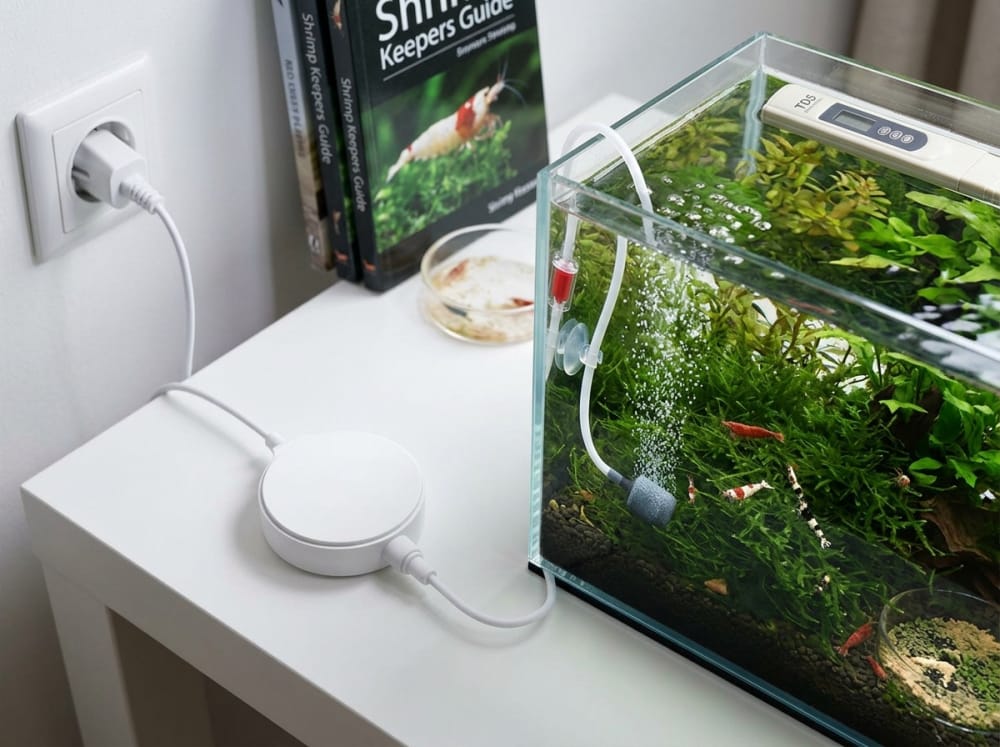
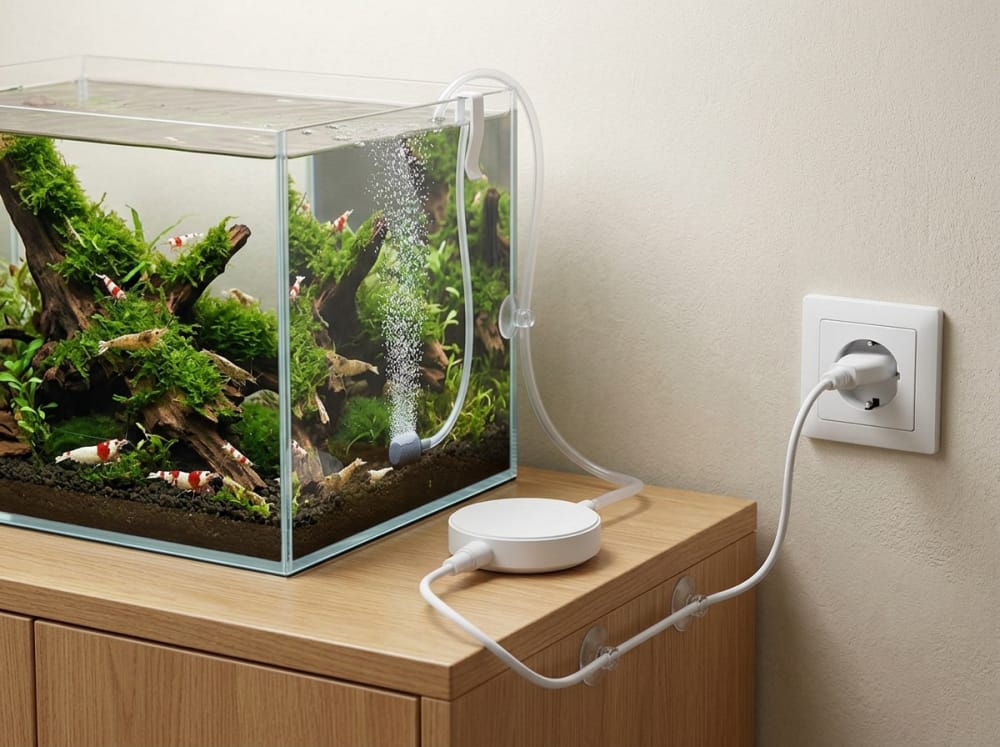
A mini aquarium air pump is not just an accessory for a small tank. In many real-world situations, it becomes the difference between stable fish health and rapid oxygen stress. Across the United States, hobbyists, breeders, classroom keepers, mobile vendors, and quarantine setups rely on compact aeration when full-sized systems are impractical, when electricity is interrupted, or when fish need immediate support. In warm-weather states such as Texas, Florida, Arizona, and California, oxygen levels can fall faster than many aquarists expect. In dense urban apartments in New York, Chicago, and Seattle, compact tanks are common, and those tanks often have less oxygen reserve than larger aquariums.
The key reason is simple: fish, shrimp, and beneficial bacteria all consume oxygen. As water temperature rises, dissolved oxygen availability drops. As stocking density increases, oxygen demand rises. As treatments reduce circulation or fish become stressed, oxygen needs become more urgent. That is why a reliable mini aquarium air pump for compact tank aeration is often treated as backup life support rather than a decorative add-on.
For the United States market, this topic also connects to buyer behavior. More consumers now keep nano tanks, desktop aquariums, temporary fry containers, and hospital tanks. More online fish shipments move through hubs near Los Angeles, Miami, Dallas, Atlanta, and Newark. More households prepare for hurricane outages on the Gulf Coast and thunderstorm-related grid interruptions in the Midwest. A mini air pump fits these realities because it is portable, efficient, easy to store, and fast to deploy.
This guide explains the most critical situations where small aquarium aeration matters, what types of products are used in the U.S. market, how to buy wisely, which industries depend on compact oxygen support, and what trends are shaping aquarium air systems through 2026.
Direct Answer: Why Mini Air Pumps Become Critical
A mini aquarium air pump becomes critical whenever a tank has limited gas exchange, rising biological demand, or interrupted normal filtration. The most dangerous situations include filtration failure, heat spikes, heavy stocking, medication periods, overnight oxygen declines, and temporary holding. In each of these cases, a small pump paired with an air stone can increase surface agitation, support dissolved oxygen stability, reduce fish stress, and buy valuable time for corrective action.
| Situation | Main Risk | Why Oxygen Drops | Mini Pump Benefit | Urgency | Typical U.S. Use Case |
|---|---|---|---|---|---|
| Filter outage | Rapid oxygen decline | Loss of circulation and surface exchange | Immediate aeration backup | Very high | Apartment tanks during storms |
| Heatwave | Thermal and oxygen stress | Warm water holds less oxygen | Improves gas exchange | Very high | Summer tanks in Texas and Arizona |
| Overstocking | Fish gasp at surface | More animals consume more oxygen | Adds support without major hardware | High | Retail holding tanks |
| Medication tank | Reduced fish resilience | Stress increases oxygen need | Keeps treatment tank stable | High | Home quarantine systems |
| Nighttime planted tank | Morning oxygen slump | Plants respire in darkness | Supports overnight aeration | Moderate to high | Nano planted aquariums |
| Transport box | Crowding stress | Minimal water volume and circulation | Portable oxygen support | High | Fish swaps and local delivery |
The table shows why compact aeration is especially important in small volumes of water. A five-gallon tank has far less margin for error than a seventy-five-gallon aquarium. That is why many experienced keepers in the United States treat mini pumps as preventive insurance.
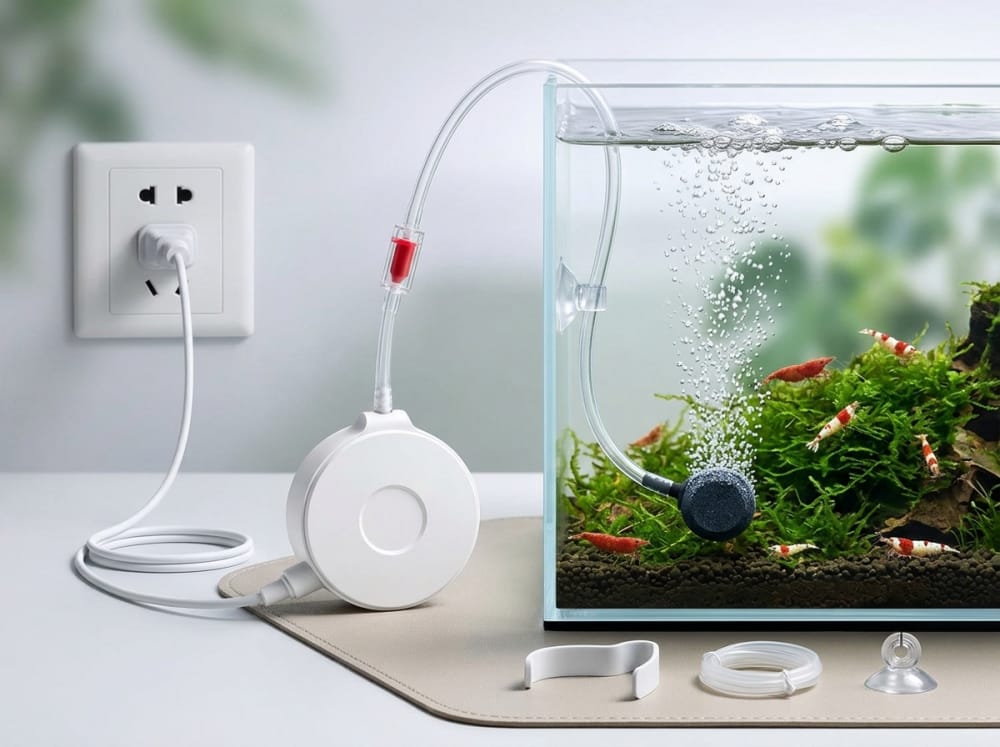
Market Overview in the United States
The U.S. market for compact aquarium aeration continues to grow alongside nano aquarium ownership, shrimp keeping, betta care, quarantine practices, and emergency preparedness. Consumers in coastal and hurricane-prone regions often prioritize battery-capable or low-wattage devices. In metro areas with limited space, compact pumps appeal to renters and office users. In trade hubs such as Los Angeles, Miami, and Houston, portable aeration is also relevant to temporary holding, fish acclimation, and livestock transport.
Market demand is not driven only by hobby aesthetics. It is increasingly driven by practical risk management. Wildfire-driven utility shutoffs in parts of California, hurricane season in Florida and the Gulf Coast, winter storm disruptions in the South, and summer heatwaves across the Midwest all reinforce the value of a compact oxygen source.
This market growth line reflects a realistic pattern seen in related aquarium accessory segments: steady replacement demand, stronger awareness of emergency preparedness, and expansion in small-tank ownership. Looking toward 2026, sustainability and lower power consumption are likely to become stronger purchase criteria, especially in states with higher utility costs and stricter efficiency expectations.
| Driver | Impact on Demand | Regions Most Affected | Buyer Type | Preferred Feature | 2026 Outlook |
|---|---|---|---|---|---|
| Nano tank growth | Higher demand | New York, California, Illinois | Apartment hobbyists | Quiet operation | Continued growth |
| Heatwaves | Seasonal spikes | Texas, Arizona, Nevada | Home aquarists | Stronger airflow | Rising importance |
| Power outages | Backup purchases | Florida, Louisiana, Carolinas | Preparedness buyers | Portable and efficient design | High relevance |
| Fish shipping and swaps | Professional use | Los Angeles, Miami, Dallas | Sellers and breeders | Transport-friendly size | Steady demand |
| Quarantine awareness | Routine accessory demand | Nationwide | Experienced keepers | Reliable startup | Expanding |
| Energy efficiency focus | Model upgrades | California, Washington, Massachusetts | Value-conscious buyers | Low wattage | Major buying factor |
The chart and table together show that the U.S. market is not shaped by a single type of aquarium owner. Instead, demand comes from emergency use, everyday small-tank care, and commercial livestock handling. That broad base helps explain why compact air systems remain relevant even as filtration technology improves.
Product Types and Selection Basics
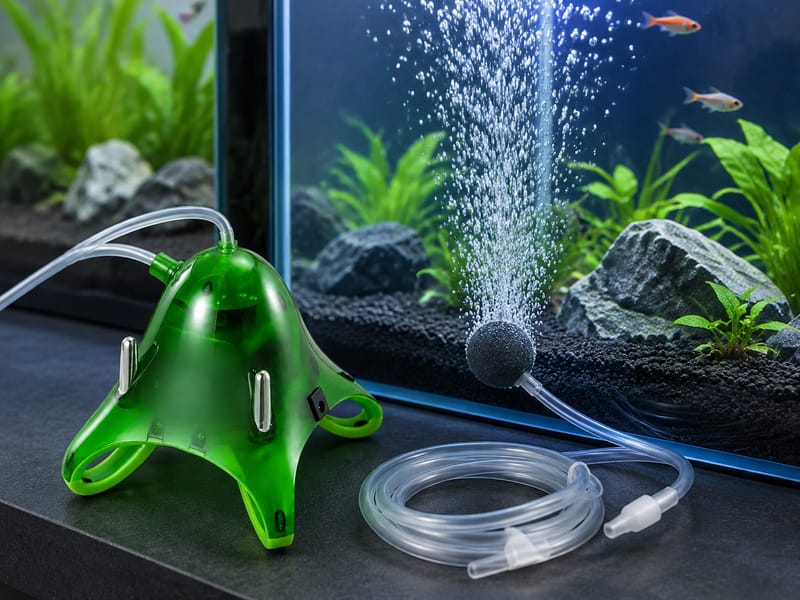
Mini aquarium air pumps are not all designed for the same job. Some are intended for desktop aquariums and gentle air stone use. Others are better for sponge filters in hospital tanks or temporary holding containers. Some emphasize low noise for bedroom and office setups, while others emphasize portability and emergency readiness. Matching the pump to the use case matters more than choosing the smallest or cheapest option.
| Type | Best For | Strength | Limitation | Typical Tank Size | Buyer Profile |
|---|---|---|---|---|---|
| Ultra-quiet desktop pump | Office or bedroom tanks | Low noise | Limited pressure | 1 to 10 gallons | Nano tank owner |
| Compact sponge-filter pump | Hospital tanks | Stable biological support | Less decorative output | 5 to 20 gallons | Quarantine-focused hobbyist |
| Portable travel pump | Transport and temporary tubs | Easy to move | Not for long-term display style | Buckets to small tanks | Breeder or seller |
| Dual-outlet mini pump | Two containers at once | Flexible setup | May be louder | 10 to 30 gallons combined | Retail and fish room users |
| Battery-ready backup unit | Outage planning | Emergency use | May have lower runtime without backup cells | Small to medium emergency use | Storm-prone households |
| Micro pump with USB power | Flexible home use | Convenient power options | Performance varies widely | 2 to 15 gallons | Modern compact-tank buyer |
Buyers in the United States often ask whether a mini pump can replace a full filtration system. In most cases, the answer is no for permanent heavy-load setups, but yes for critical support, quarantine, or low-bioload tanks when used correctly. It is best viewed as a targeted aeration tool that solves oxygen and circulation gaps quickly.
Buying Advice for U.S. Aquarists
When selecting a mini aquarium air pump, evaluate six things first: airflow consistency, noise level, heat output, energy use, portability, and compatibility with your air stone or sponge filter. A model that looks compact on a product page may still underperform if it cannot push air through finer media. Likewise, a very powerful unit can be unnecessary or too disruptive for a betta tank or fry box.
For U.S. households, local climate matters. If you live in Phoenix, Orlando, Houston, or Las Vegas, stronger warm-season aeration support may matter more than ultra-low noise. If you live in Boston, Portland, or Minneapolis and keep tanks indoors year-round, your bigger concern may be quiet daily performance and dependable restarts after power flickers. If you attend fish swaps in New Jersey or Southern California, portability becomes more important.
| Buying Factor | Why It Matters | Good Choice For | Watch Out For | U.S. Market Relevance | Recommended Priority |
|---|---|---|---|---|---|
| Noise level | Matters in bedrooms and offices | Desktop aquariums | Marketing claims without testing | High in urban apartments | High |
| Airflow pressure | Needed for stones and sponge filters | Hospital tanks | Weak output in deeper tanks | Very high | Very high |
| Power efficiency | Reduces operating cost | Continuous use | Hot-running units | Growing factor | Medium to high |
| Portability | Useful in transport and outages | Travel and emergency kits | Bulky adapters | High in storm zones | High |
| Build quality | Improves lifespan | Frequent users | Thin housings and vibration | Very important | Very high |
| Accessory fit | Ensures proper use from day one | Beginners | Poor tubing or weak connectors | Medium | Medium |
For buyers who want a specialized compact solution rather than a general-purpose pet accessory, a focused product line often provides more consistent performance. That is one reason many U.S. aquarists prefer manufacturers that concentrate on mini and mid-sized air pumps instead of trying to cover every aquarium category at once.
Industries and Professional Applications
Mini aeration is not only a hobby product. Several industries in the United States use compact air pumps in routine operations. Aquarium stores use them in temporary holding systems. Importers and wholesalers use them during receiving and sorting. Aquaculture support operations use them in fry, juvenile, and observation containers. Research labs and classrooms use compact aeration where space, noise, and simplicity matter. Mobile fish vendors, event displays, and educational outreach teams also depend on portable oxygen support.
The bar chart indicates that home hobby demand is still the largest share, but quarantine use is rising strongly because experienced keepers increasingly isolate new livestock before adding it to display tanks. Retailers and breeders continue to rely on compact units because they need affordable aeration across many small containers at once.
Emergency Oxygen Failure
When oxygen delivery fails unexpectedly, response time matters. This is the classic moment when a mini aquarium air pump becomes critical. If a main canister filter stops, a hang-on-back filter loses prime, or an internal powerhead fails, fish may lose both circulation and surface agitation. In tanks with high stocking levels, warm water, or dense biological load, visible distress can appear quickly.
Signs of emergency oxygen failure include fish breathing rapidly, gathering near filter returns, hovering at the surface, or becoming unusually still. Bottom dwellers may abandon shelter. Shrimp may crowd higher surfaces. In a city apartment in Miami during a summer thunderstorm outage, or in a Sacramento suburb during a utility interruption, a small backup pump can stabilize conditions long enough for the keeper to restore filtration or reduce bioload stress.
The best practice is not to wait until failure happens. Keep a compact pump, tubing, and an air stone or sponge filter assembled in advance. For a quarantine shelf or nano tank rack, this can be one of the lowest-cost but highest-value pieces of insurance you own.
| Step | Action | Why It Helps | Time Sensitivity | Common Mistake | Best Result |
|---|---|---|---|---|---|
| 1 | Turn on mini air pump immediately | Restores gas exchange fast | Immediate | Waiting for fish to gasp | Stabilized breathing |
| 2 | Lower feeding | Reduces waste and oxygen demand | Same day | Continuing normal feeding | Lower bioload pressure |
| 3 | Check temperature | Warm water worsens oxygen shortage | Fast | Ignoring overheating | Improved oxygen retention |
| 4 | Reduce crowding if possible | Lowers total demand | Moderate | Moving fish without aeration | Safer temporary relief |
| 5 | Restore main filtration safely | Returns system balance | High | Restarting dirty equipment blindly | Long-term recovery |
| 6 | Observe for 24 hours | Confirms stability | Follow-up | Stopping aeration too early | Reduced relapse risk |
The explanation here is practical: emergency aeration does not need to be large to be effective. In many tanks, restoring surface movement quickly matters more than adding a bulky device later.
Heatwave Tank Stress
Heatwaves across the United States are making compact aeration more important every year. Warm water naturally carries less dissolved oxygen. At the same time, fish metabolism can increase, meaning fish need more oxygen while less is available. This double pressure is one of the most common summer causes of aquarium distress, especially in small tanks near windows, in upper-floor apartments, or in rooms without strong climate control.
States such as Arizona, Texas, Nevada, and parts of inland California see this problem frequently, but it also affects the Midwest and Northeast during sudden summer spikes. A five- or ten-gallon tank in Chicago or Philadelphia can heat faster than many owners realize. During a heatwave, a mini aquarium air pump can improve surface agitation, reduce stagnant zones, and help protect fish until temperature control measures catch up.
For U.S. buyers, this is one of the clearest seasonal reasons to own a compact air pump even if it is not used daily. It works well alongside cooling strategies such as room AC, open lids where appropriate, reduced lighting, and careful feeding.
Overstocked Aquarium Conditions
Overstocking is not always intentional. A tank can become oxygen-limited after juvenile fish grow out, after breeding events produce more fry than expected, or after a retailer combines shipments. Overstocked conditions are especially common in temporary sales tanks, cichlid grow-out setups, shrimp racks, classroom tanks, and mixed community aquariums where filtration was sized for a lighter bioload.
In these situations, a mini pump helps by boosting aeration without requiring a complete system rebuild. It is not a permanent fix for poor stocking practices, but it is a highly useful buffer. In aquarium stores near logistics corridors such as Los Angeles ports, Newark distribution areas, or Miami import channels, compact pumps are often used to support holding systems during busy intake periods when livestock density briefly rises.
For home aquarists, the lesson is simple: if fish load increases, oxygen support may need to increase as well. A mini pump is often the fastest upgrade available.
Fish Medication and Hospital Tanks
Hospital tanks are one of the strongest use cases for mini air pumps. When fish are stressed, injured, or recovering from disease, they often benefit from excellent oxygen availability. Some medications can also change fish behavior, reduce activity tolerance, or make stable water conditions even more important. In addition, hospital tanks are often bare-bottom, small, and temporary, making compact sponge-filter or air-stone aeration an ideal solution.
A hospital tank in a U.S. home is often set up quickly in a spare room, laundry area, or garage workspace. In these situations, a small pump is easier to deploy than full display equipment. It can also reduce cross-contamination because a dedicated quarantine pump can be kept separate from main-tank gear.
This is also a good place to understand manufacturer specialization. Companies with long experience in high-performance mini and mid-sized pumps often refine pressure stability, noise control, and compact design more precisely than broad catalog brands. That kind of technical specialization matters when a quarantine system needs dependable output in a small footprint.
Night-Time Oxygen Drops
Many aquarists focus on daytime tank appearance and forget that oxygen can be more limited overnight. In planted tanks, photosynthesis stops when lights go out, and plants then consume oxygen like other living organisms. In heavily planted nano tanks, particularly those with high fish load and gentle filtration, the early morning hours may be the lowest oxygen period of the day.
This issue appears often in stylish desktop aquariums common in U.S. homes and offices, especially where owners prioritize low-flow aesthetics. A mini air pump running at night can provide a simple correction without changing the entire daytime display. Many keepers choose a timer-based approach, adding aeration only during dark hours to maintain better overnight stability.
The area chart reflects an important trend shift: more U.S. aquarists are using compact aeration preventively instead of reactively. That is especially true in planted nanos, shrimp systems, and mixed quarantine spaces where oxygen balance can change quickly.
Small Tank Oxygen Limitations
Small aquariums are appealing because they are affordable, space-efficient, and easy to place on desks or countertops. But they have a major limitation: low margin for error. A small tank has less water volume to dilute waste, less thermal stability, and less oxygen reserve during sudden stress. This is why a mini aquarium air pump is often more important in a three-gallon or five-gallon setup than in a large, well-circulated display.
Beginners in the United States often underestimate this issue when purchasing betta tanks, shrimp cubes, or compact all-in-one aquariums. A mini pump can add valuable circulation and surface movement without occupying much space. When paired with a suitable air stone or tiny sponge filter, it can help make a small tank far more forgiving.
Manufacturing quality also matters here. In compact equipment, precision design affects vibration, pressure consistency, and thermal efficiency. Manufacturers with strong production discipline can deliver better reliability in small form factors, which is especially important when a pump may run continuously in a confined living space.
Power Outage Survival
Power outages are one of the most practical reasons to own a mini aquarium air pump. In the United States, regional weather risks vary, but the aquarium challenge is the same: once circulation stops, oxygen starts declining. In Florida and Louisiana, hurricane season can bring prolonged disruptions. In the Midwest, severe thunderstorms can knock out service for hours. In California, wildfire-related utility shutoffs have made backup planning more common. In the Northeast, winter events can affect older grid infrastructure.
For short outages, manual water agitation may help temporarily, but it is not a dependable plan. A compact pump that can be deployed quickly is much safer. Even where full battery systems or generators are not practical, a small emergency aeration setup can protect fish during the highest-risk window. For households with several small tanks, having multiple mini units can be easier and more affordable than building one large backup system.
Service support is another factor that buyers increasingly value. In the U.S. market, reliable after-sales guidance on replacement parts, setup compatibility, and use scenarios helps owners prepare more effectively for outages before they happen.
Transport and Temporary Tanks
Transport containers, temporary bins, event displays, acclimation tubs, and fish swap holding boxes are all situations where a mini air pump can become essential. These setups usually have limited water depth, high stocking density for short periods, and little built-in circulation. Fish moving through Atlanta, Los Angeles, Houston, or Chicago for sale, relocation, school events, or breeding exchanges often spend time in temporary systems where compact aeration is the simplest way to improve survival and reduce stress.
This matters for both professionals and hobbyists. A breeder attending a weekend event, a classroom moving livestock between buildings, or a family temporarily housing fish during tank maintenance can all benefit from small portable aeration. Because mini pumps are easy to store and deploy, they fit well into mobile fish-care kits.
Case Studies from the U.S. Market
Consider a Houston apartment keeper with two nano tanks during a summer AC outage. Room temperature rises, internal filters slow, and fish begin surfacing. A mini air pump adds immediate agitation and buys enough time for temperature management. In another example, a breeder in Southern California uses compact pumps on temporary fry tubs during sorting. The system is not glamorous, but it prevents oxygen collapse when density rises. A Miami retailer receiving tropical shipments after a delayed freight arrival adds portable aeration to holding bins to offset stress from transport and warm weather.
These are not edge cases. They are routine aquarium realities in the United States. Compact aeration is often most valuable precisely when the situation is temporary, urgent, and inconvenient.
Local Supplier and Product Comparison View
U.S. buyers often compare mini air pumps by supplier type rather than by brand alone. Some buy from mass marketplaces, some from aquarium specialists, and some from focused manufacturers serving compact aeration niches. The right source depends on whether the priority is speed, technical fit, or long-term consistency.
The comparison chart highlights why specialized suppliers are attractive in a technical niche. General pet accessory sellers may offer convenience, but focused manufacturers often deliver better performance in compact pressure systems, quieter housings, and more reliable fit for mini and mid-sized aquarium use.
| Supplier Type | Main Advantage | Main Limitation | Best For | Typical Buyer | Overall Fit |
|---|---|---|---|---|---|
| Large online marketplace | Fast selection | Quality variation | Quick replacement | General consumer | Convenient |
| Local aquarium shop | Practical advice | Limited model range | Immediate local purchase | Beginner and hobbyist | Helpful |
| Focused aeration manufacturer | Technical specialization | Narrower catalog | Performance-focused buyers | Serious keeper | Strong fit |
| Pet superstore | Easy access | Less specialized support | Basic tank setups | New aquarium owner | Moderate |
| Wholesaler or distributor | Bulk purchase potential | Not ideal for one-off buyers | Retailers and fish rooms | Business customer | Good for scale |
| Specialty aquatic e-commerce site | Curated compatibility | Shipping time varies | Informed equipment purchase | Intermediate to advanced user | Very good |
This table helps explain why U.S. customers often move toward specialist channels after one or two disappointing general-accessory purchases. In a compact life-support product, consistency matters more than flashy packaging.
Our Company Approach
In the United States market, our approach is built around doing one category exceptionally well. Rather than spreading across every aquarium product type, we focus on high-performance mini and mid-sized air pumps and air stones for users who care about practical reliability.
On the technology side, our design work centers on compact pressure efficiency, stable airflow, and refined small-format engineering for real aquarium conditions such as quarantine systems, nano tanks, emergency aeration, and temporary holding. That focus reflects years of translating field experience into precise product design choices that support dependable oxygen delivery where small equipment has to work hard.
On the manufacturing side, we emphasize repeatable build quality for compact aeration products. In mini pump production, small deviations can create noticeable vibration, heat, or inconsistency. A disciplined manufacturing process helps maintain dependable output across product runs, which matters for both U.S. hobbyists and commercial buyers needing reliable units at scale.
On the service side, we support customers who need clear application guidance rather than generic claims. Buyers often want to know whether a mini pump fits a hospital tank, a small sponge filter, an outage kit, or a transport container. That practical service mindset is especially valuable in the U.S. market, where use cases vary from New York desktop aquariums to Florida storm-readiness setups. If you are evaluating options for a compact aeration solution, you can explore a mini aquarium air pump designed for small and mid-sized aquarium needs that aligns with these priorities.
2026 Trends: Technology, Policy, and Sustainability
Looking toward 2026, three trends are likely to shape the mini aquarium air pump segment in the United States. First is smarter efficiency. Buyers increasingly want compact devices that deliver dependable air output with lower wattage, lower vibration, and lower heat. Second is resilience planning. Weather instability and regional grid concerns are encouraging more aquarium owners to maintain backup aeration options. Third is sustainability. Consumers and retailers are paying closer attention to product lifespan, materials quality, and reduced waste from frequent equipment replacement.
Policy trends may also matter indirectly. Energy awareness standards, state-level environmental expectations, and transportation efficiency pressures can all influence packaging, power consumption, and supply-chain decisions. For import-oriented distribution centers near Long Beach, Savannah, New York/New Jersey, and Houston, logistics reliability will remain part of the final product value equation. At the consumer level, the likely result is a stronger market preference for durable, efficient, purpose-built compact aeration products instead of disposable low-cost units.
FAQ
Is a mini aquarium air pump enough for a small tank? For many small tanks, yes, especially when paired with an air stone or sponge filter. It is often enough for aeration support, quarantine, and emergency use, though not always a full substitute for proper filtration in heavily stocked setups.
Does a small aquarium need extra oxygen at night? It may, especially if the tank is planted, warm, or densely stocked. Night-time oxygen drops are more common than many beginners realize.
Can a mini air pump help during a power outage? Yes. It is one of the most practical backup tools for short-term oxygen support when normal circulation stops.
Are mini pumps only for hobbyists? No. Retailers, breeders, schools, labs, and transport operators in the United States also use compact aeration regularly.
What is the biggest mistake buyers make? Choosing based only on size or price, without checking airflow stability, noise, and real compatibility with the intended tank or air stone.
Why are specialist manufacturers attractive in this category? Because compact aeration performance depends on precision. Focused experience in mini and mid-sized pumps often leads to better consistency, quieter operation, and more suitable design for small-tank applications.
A mini aquarium air pump becomes critical when the aquarium has little room for error: during oxygen emergencies, summer heat, crowding, medication, overnight oxygen slumps, short-term holding, and outage recovery. For aquarists and aquatic businesses across the United States, compact aeration is not just convenient. It is a practical safeguard that supports healthier fish, more stable water conditions, and faster response when problems appear.