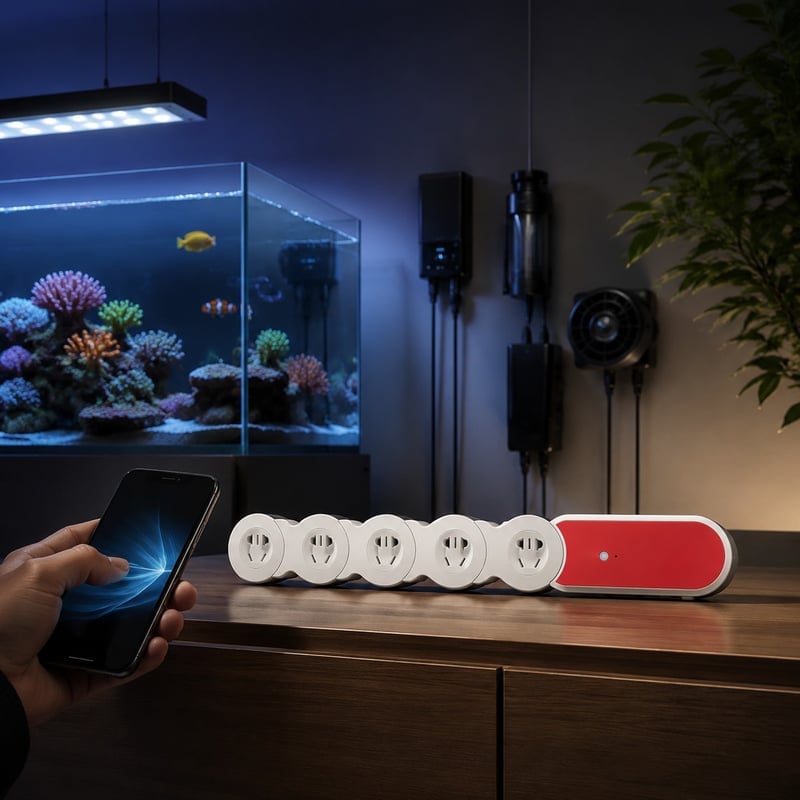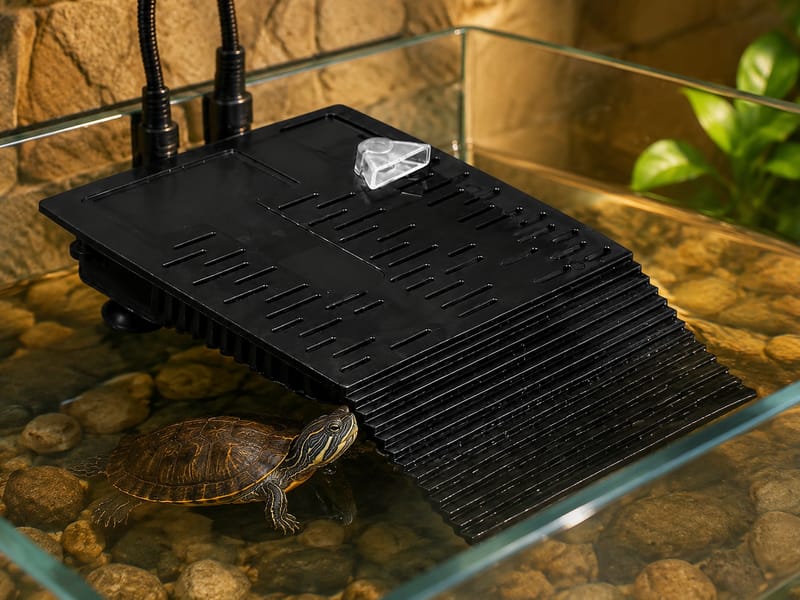
A turtle basking platform with heater should create a dry, stable resting area while supporting safe, controllable warming above the waterline. For retailers and sourcing teams, the right choice is not simply the largest platform or highest-wattage heat source. It must fit the intended tank range, support the animal’s expected weight, provide reliable traction, and keep heat, cords, and electrical connections away from splash zones.
The phrase “heater” can refer to two different products: a heat source for the basking zone, such as a lamp fixture or heat lamp, or a submersible water heater that maintains water temperature. These functions should be specified separately. A warm water heater does not replace a properly designed basking area, and a basking heat source does not control water temperature.
What a Heated Turtle Basking Platform Does
A heated turtle basking platform gives aquatic and semi-aquatic turtles a place to leave the water and dry their shell and skin under a controlled source of warmth. In a complete habitat setup, the platform typically works alongside water filtration, water heating where needed, lighting, and a securely fitted tank cover or screen top.
For product selection, separate the system into its functional components:
| Component | Primary role | Key buyer check |
|---|---|---|
| Basking platform or dock | Provides a dry haul-out and resting surface | Tank fit, load capacity, stability, traction |
| Heat source above the platform | Warms the basking zone | Lamp clearance, temperature control, burn protection |
| UVB lighting, when specified for the enclosure | Supports light exposure requirements | Fixture compatibility, safe mounting, replacement guidance |
| Water heater | Maintains aquarium water temperature | Tank volume range, voltage, thermostat function |
| Mounting hardware | Holds the platform or fixture in position | Secure attachment, corrosion resistance, adjustment range |
Some products are sold as integrated platforms with a lamp mount, while others are platforms intended to be paired with a separate fixture. A sourcing brief should state which configuration is required. Calling every combination a “heated platform” can create avoidable confusion in product listings, instructions, and customer support.
A platform must remain usable as water levels change within the intended operating range. Floating docks, hanging platforms, ramp systems, and fixed-height designs each solve this differently:
- Floating platforms can rise and fall with the water level, but need dependable anchoring and enough buoyancy for the intended turtle size.
- Hanging or rim-mounted platforms preserve swimming space below, but require tank-wall compatibility and secure brackets.
- Fixed platforms with ramps can be simple to use, though the usable surface height may be affected by water-level changes.
- Above-tank basking areas can offer more dry space, but need a secure enclosure interface and clear installation instructions.
For an assortment, it is often more practical to offer distinct size and mounting options than to present one platform as suitable for every species, turtle size, or aquarium.
Basking Temperature and Aquatic Turtle Needs
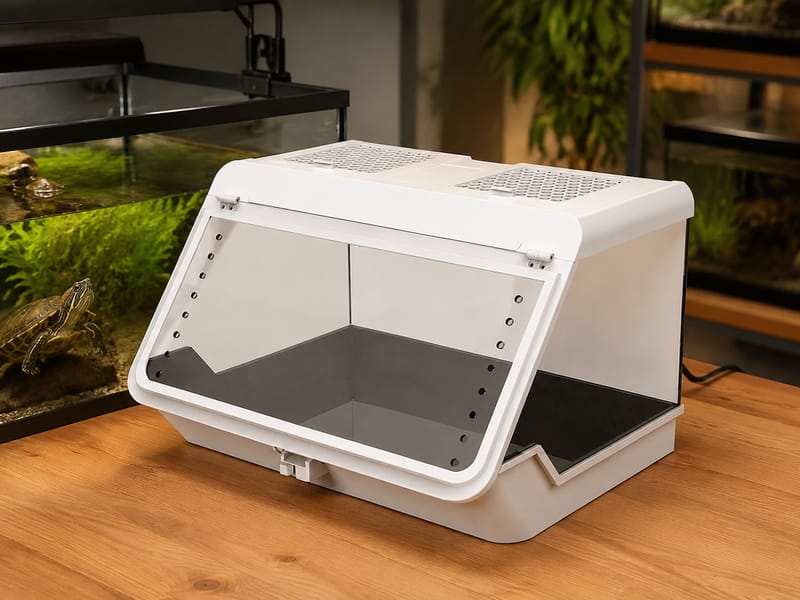
The goal is a usable basking zone, not a heat source that is merely labeled for reptiles or aquariums. Temperature at the turtle’s actual resting surface depends on the bulb or emitter, fixture design, mounting height, room temperature, ventilation, platform color and material, and whether a screen lid sits between the lamp and basking area.
Because those variables change by enclosure, retailers should avoid giving one universal surface-temperature claim unless it has been verified for the exact product configuration. Instead, product instructions should tell users to measure the basking surface with an appropriate thermometer after installation and adjust the fixture height or heat source according to the animal-care guidance for their species.
A practical product listing should distinguish between:
- Heat lamp compatibility: What fixture type, bulb base, mounting arrangement, and maximum permitted lamp rating are appropriate, if applicable.
- Fixture-to-platform clearance: The minimum and maximum practical mounting distance, based on the manufacturer’s confirmed instructions.
- Water heater compatibility: Whether a separate submersible heater can be installed safely in the same aquarium without interfering with the platform, ramp, or filtration intake.
- Environmental limitations: Whether drafts, unusually cool rooms, enclosed canopies, or low tank ventilation may change real-world temperatures.
Why an adjustable setup is usually easier to retail
An adjustable lamp stand, bracket, or fixture position can help users fine-tune the basking area as their enclosure layout changes. However, adjustment is only beneficial if it remains secure and if the instructions make safe positioning clear. A movable fixture without a cord-management plan can create a pinch, pull, splash, or tipping hazard.
For private-label programs, ask whether the platform, fixture, lamp, and temperature-measurement guidance are sold as separate items or packaged as a defined kit. Combining components may improve basket value, but it also increases the importance of clear compatibility instructions.
Platform Size, Load Capacity, and Tank Fit
A basking platform should provide enough dry area for the intended turtle to climb up, turn, and rest without crowding the edge. The ramp must be accessible, and the platform should not sag, roll, detach, or become partially submerged under the animal’s weight.
Buyers should not rely on broad labels such as “small,” “medium,” or “large” alone. Request measurable dimensions and define the intended use case.
Core fit measurements to confirm
Before selecting a model, compare the following information with the target aquarium and turtle category:
-
Platform length, width, and usable dry surface area
Decorative edges, guards, and mounting pieces may reduce the actual usable basking area. -
Ramp length, width, and angle
A ramp that is too steep or too smooth can discourage climbing, especially for smaller turtles or animals with limited mobility. -
Minimum and maximum supported water level
This is especially important for floating, adjustable, or hanging docks. -
Tank interior dimensions and rim style
A platform may fit the nominal tank volume but still conflict with braces, lids, filter returns, crossbars, or unusually thick rims. -
Confirmed load capacity or intended turtle-size range
This should be based on product-specific supplier information, not assumed from platform dimensions. -
Clearance above the platform
The turtle needs enough room to reach and use the dry area, while the heating fixture needs safe separation.
A large platform may sound more appealing at retail, but it can reduce the swimming area in smaller tanks and interfere with equipment placement. Conversely, a compact dock can be easier to merchandise but may not meet the needs of larger turtles. The best assortment usually matches platform dimensions to realistic tank footprints rather than promoting a one-size-fits-all solution.
When comparing related aquarium product options, buyers can review the available details for WK055 aquarium equipment and WK124 product specifications as part of a broader compatibility review. Confirm each model’s actual dimensions, intended application, and included components before assigning it to a turtle-care assortment.
Heating Controls, Placement, and Burn Prevention
The largest safety risk in a basking setup is usually incorrect heat-source placement, not the concept of a dry platform itself. Lamps, ceramic emitters, fixtures, and water heaters all require different handling and installation guidance.
A heat source over the basking zone should be mounted so the turtle cannot directly touch the hot bulb, emitter, socket, or fixture. It should also be positioned so splash water cannot reach hot glass or electrical components. A protective screen or guard may be appropriate in some setups, but it must be evaluated for heat buildup, lamp compatibility, and cleaning access.
Key placement checks
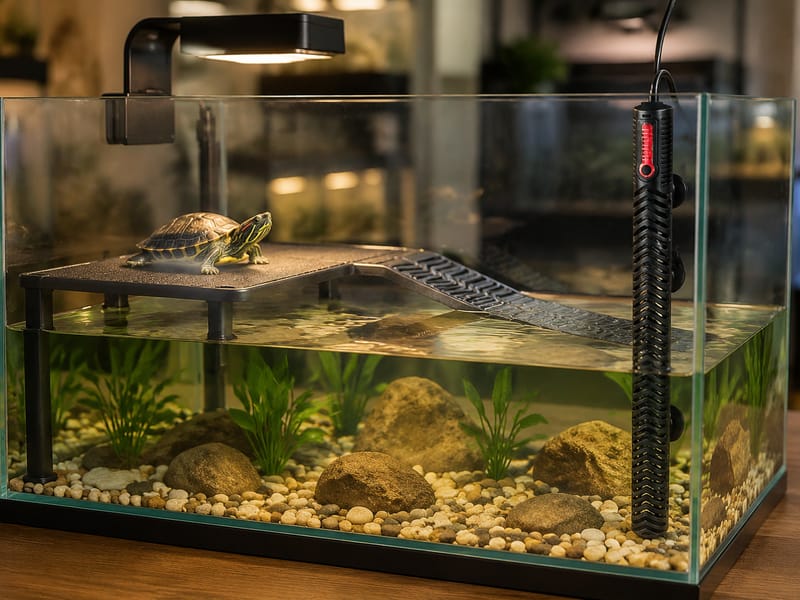
- Keep electrical fixtures and connections outside likely splash paths.
- Use a secure mounting method rather than balancing a fixture on a tank lid.
- Confirm the lid or screen top can safely support the selected fixture, if that installation method is permitted.
- Keep cords routed so they cannot be pulled into water.
- Use a drip loop in each power cord where appropriate to help prevent water from traveling toward an outlet.
- Avoid placing a heat source directly against plastic platform sections, tank frames, covers, or décor unless the product instructions specifically allow it.
- Make sure the turtle cannot climb onto a fixture, cable, or unstable support.
Temperature regulation may be provided by fixture height, a thermostat-compatible control system, a timer, or a combination of these depending on the setup. Buyers should not imply that every heat lamp includes a thermostat or that every water heater is compatible with every external control. These are model-specific details that need confirmation.
A submersible water heater should also be located where water circulation supports even heating and where the turtle cannot easily dislodge it. Guarded heater designs, mounting suction cups, and cable exits should be evaluated as part of the complete enclosure layout rather than as isolated accessories.
Materials, Grip, Cleaning, and Daily Care
A turtle dock is exposed to constant humidity, mineral deposits, food residue, algae, waste, and scratching. Material selection affects how the platform looks in a retail package, but it also determines cleaning difficulty, traction, durability, and long-term hygiene.
Useful evaluation questions include:
- Is the surface textured enough to provide grip when wet?
- Are there narrow grooves that trap waste or algae?
- Can the platform be removed and rinsed without disassembling the full aquarium?
- Do seams, hollow areas, or attached ramps collect water?
- Are corners and edges smooth enough for the intended turtle-care use?
- Will the material discolor, warp, or become slippery with routine cleaning and exposure to aquarium conditions?
- Are replacement suction cups, brackets, or fasteners available if the product uses them?
A highly textured ramp can improve traction, but deeply molded texture may take longer to clean. Smooth acrylic-style surfaces can be easier to wipe down, but may require a carefully designed climbing surface. Natural-looking resin décor can be visually appealing, yet weight, cleaning access, and mounting stability need close review.
Product instructions should advise users to clean the platform regularly with an aquarium-safe method and rinse thoroughly before returning it to the enclosure. Avoid making generic claims that a material is “non-toxic,” “antibacterial,” or “safe for all turtles” unless those statements are supported by product-specific documentation.
Electrical Protection and Product Documentation
For a turtle basking platform with heater, electrical documentation is a core purchasing requirement, not a secondary packaging detail. Products intended for U.S. retail should be reviewed for the applicable electrical and market requirements before purchase, particularly where lamps, fixtures, adapters, water heaters, or powered pumps are included.
The exact requirements depend on the item, how it is sold, the voltage version, the destination channel, and the buyer’s compliance program. Do not assume that a platform itself needs the same documentation as a powered heat fixture, or that a fixture has the same requirements as a water heater.
Documentation checklist for buyers
Request and review, as applicable:
- Product model number and revision identification
- Rated voltage, frequency, wattage, and plug configuration for powered items
- Electrical safety documentation relevant to the product and sales channel
- Test reports or certification evidence requested by the importer, retailer, or marketplace
- User instructions, warnings, and installation diagrams
- Required labeling and traceability information
- Materials declarations or restricted-substance documentation when required by the buyer’s program
- Packaging artwork and warning-label placement
- Inspection criteria for finished goods and retail packaging
Clear instructions should explain that users must disconnect powered equipment before servicing the aquarium, inspect cords and housings for damage, and follow all product-specific warnings. For combined kits, the instruction manual should state which parts are electrical, which are structural, what is included, and which compatible items must be purchased separately.
Documentation quality also affects returns. A customer who cannot tell whether the product is a basking dock, a lamp fixture, or a complete heating kit is more likely to install it incorrectly or return it as incomplete.
Retail Packaging, Instructions, and Accessories
Retail packaging should accurately show the configuration in the box. If a product includes only the platform, do not use imagery that makes a lamp, bulb, aquarium, turtle, or water heater appear included unless the package clearly identifies those items as display-only or sold separately.
For combined systems, front-panel messaging should answer the basic buying questions quickly:
- What does the package include?
- Is the product for a basking area, water heating, or both?
- What aquarium dimensions or installation format does it suit?
- How does it mount?
- Is a bulb, fixture, thermometer, or water heater included?
- What accessories are required before use?
Accessories that may support a clearer assortment
The appropriate accessory mix depends on the model, but buyers may consider complementary categories such as:
- Heat-lamp fixtures or compatible mounting hardware
- Thermometers for checking basking and water conditions
- Water heaters suited to the intended aquarium setup
- Filter systems and circulation products
- Replacement suction cups, brackets, or mounting hardware
- Maintenance tools for removing algae and cleaning around the platform
- Tank covers or screen tops designed for safe equipment placement
The accessory strategy should prioritize compatibility over bundle size. A package with many loosely related items can create confusion if users cannot determine which parts are necessary, optional, or compatible.
For assortment planning, WK127 product information and WK126 product information may be useful starting points for reviewing related product options. Verify current specifications, packaging contents, and compatibility before using any model in a retail set or private-label program.
Questions for Samples and Bulk Orders
Samples are the best opportunity to check actual usability rather than relying only on catalog images. Evaluate the complete configuration you plan to sell, including the intended tank type, water level, ramp access, mounting method, and any compatible heat fixture.
Sample evaluation checklist
Ask the supplier to confirm:
- Exact product dimensions, net weight, and package dimensions
- Platform material, ramp texture, and mounting method
- Intended water-level range
- Confirmed load capacity or intended turtle-size guidance
- Whether the platform floats, hangs, mounts to the rim, or requires a specific tank structure
- Included accessories and replacement-part availability
- Compatibility limits for heat fixtures, lamps, or water heaters
- Maximum permitted heat exposure or fixture placement guidance, if applicable
- Electrical ratings and documentation for powered components
- Instruction language, warning labels, and installation diagrams
- Packaging options for retail, private label, or bundled sets
- Branding, color, logo, insert, and user-manual options where available
- Sample terms, minimum order quantity, production schedule, and current lead time
During the sample review, check whether the platform remains level at the intended load, whether the ramp remains accessible, whether mounting parts hold securely on the target tank, and whether cleaning can be done without excessive disassembly. If the item is intended to work with a lamp, assess the fixture’s clearance and cord routing with the actual enclosure setup.
For OEM or private-label sourcing, WKAQOO can help buyers coordinate product selection, compatibility review, packaging requirements, and sourcing communication across aquarium product categories. Availability, customization options, technical specifications, order terms, and documentation should be confirmed for the selected model before an order is placed.
A strong turtle basking assortment begins with a clear product definition: dry platform only, platform with fixture support, or a coordinated habitat kit. Confirm the tank fit, load guidance, traction, heat-source clearance, electrical documentation, packaging contents, and sample performance before finalizing a purchase. For a current specification review, sample discussion, private-label packaging request, MOQ, or lead-time confirmation, contact WKAQOO at sales@wkaqoo.com.