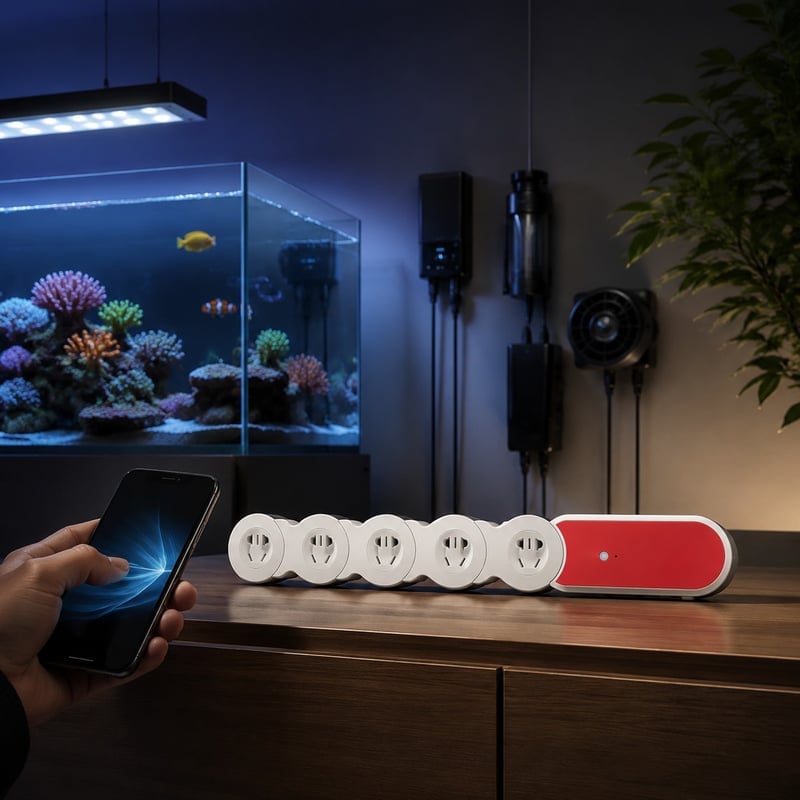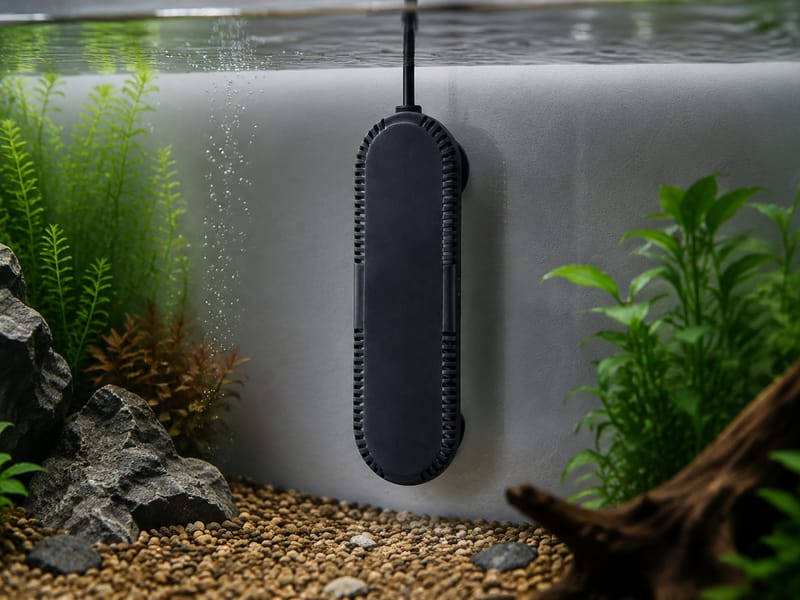
Compact digital aquarium heater wholesale decisions should start with the aquarium sizes, customer skill levels, and retail price bands you plan to serve—not with wattage alone. A well-chosen range pairs easy-to-read controls with appropriate heating capacity, dependable sensor behavior, safe installation requirements, and packaging that clearly communicates use limitations.
For professional buyers, the goal is usually to offer a compact heater line that is easy to merchandise and simple for end users to understand. Confirm every model’s actual electrical rating, suitable tank-volume guidance, temperature range, included components, safety functions, and market-specific documentation before placing an order.
Why Buyers Choose Compact Digital Heaters
Compact digital heaters appeal to retailers because they combine a small physical footprint with a feature set that is easy to explain at the shelf. A digital display can help users see the selected or measured temperature without relying solely on a separate thermometer, while button-based adjustment may feel more precise than a mechanical dial.
From a range-planning perspective, compact formats can be useful for:
- Small freshwater aquariums, quarantine tanks, breeding setups, and planted tanks
- Retail displays where package size and shelf efficiency matter
- Customers replacing basic preset or analog heaters
- Product lines positioned around clearer temperature visibility and adjustment
- Bundling with thermometers, filters, air pumps, water conditioners, or aquarium kits
However, “compact” does not automatically mean suitable for every small aquarium. Heater selection still depends on the tank’s water volume, room temperature, desired setpoint, lid configuration, water movement, and placement. A small heater operating close to its limit may run for long periods, while an oversized heater requires dependable control and appropriate safety protection.
A balanced assortment often includes more than one power level and may separate entry-level adjustable options from display-equipped models. Avoid building an assortment around a single stated tank-size claim. Instead, ask suppliers for the intended operating range and the assumptions behind it, including the expected difference between ambient room temperature and target water temperature.
Display Controls and Temperature Adjustment
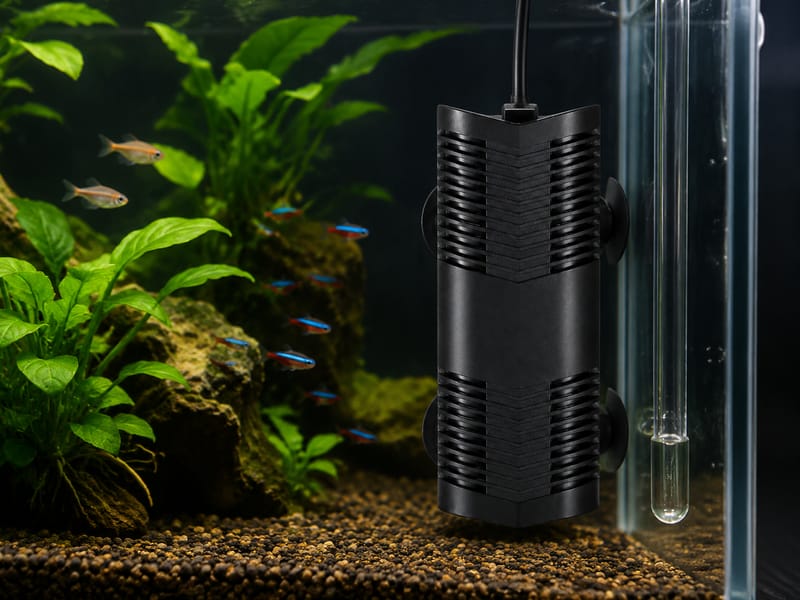
Digital controls can improve product usability, but buyers should evaluate what the display actually shows and how the controls behave in normal use. A display may indicate the programmed set temperature, the current detected water temperature, or both. These are different functions and should be communicated accurately on packaging and instructions.
Questions to ask about the display
Before selecting a model, confirm:
- Whether the screen shows current water temperature, set temperature, or alternating readings
- The available adjustment range and adjustment increments
- Whether the setpoint can be changed while the heater is submerged and operating
- How long controls must be pressed to prevent accidental changes
- Whether the display is readable in typical aquarium cabinet or shelf lighting
- Whether temperature units are fixed or selectable between Fahrenheit and Celsius
- What happens after a brief power interruption
- Whether the display, indicator light, and heating status are clearly distinguished
For the U.S. market, Fahrenheit visibility or clear Fahrenheit conversion guidance can reduce confusion for many consumers. If a model uses Celsius-only controls, make sure its retail instructions explain how users should select a suitable setpoint for their livestock.
Control design affects returns and support needs
Controls that are difficult to interpret can create avoidable returns. A customer may believe a heater is malfunctioning if they are viewing the target setting rather than the actual water temperature, or if the heating indicator turns off after reaching the setpoint. Clear iconography, plain-language instructions, and an easy setup sequence are often as important as the display itself.
For private-label programs, review the screen labels, button markings, quick-start instructions, and warning language early. Changes to artwork or instructions should be confirmed against the final production version rather than assumed from a preliminary sample.
Wattage, Aquarium Volume, and Heating Speed
Wattage is a starting point for comparing compact heaters, not a complete compatibility answer. Heating performance depends on the heat loss from the aquarium and the temperature increase required above the room environment. A heater that maintains a tropical setpoint in a warm room may be inadequate in a cooler room, near a draft, or in an open-top aquarium.
| Buying factor | Why it matters | What to confirm with the supplier |
|---|---|---|
| Heater wattage | Indicates potential heating output | Rated wattage, voltage, and frequency |
| Intended aquarium volume | Helps position the model in an assortment | Recommended volume range and operating assumptions |
| Ambient-to-target temperature difference | Higher differences require more heating capacity | Maximum recommended temperature rise, if provided |
| Water circulation | Reduces hot and cool zones in the tank | Placement guidance and circulation requirements |
| Aquarium shape and lid | Affects heat retention and heat distribution | Any limits for shallow, tall, open-top, or covered tanks |
| Recovery performance | Matters after water changes or room-temperature drops | Practical testing method and expected operating conditions |
Higher wattage may increase heating speed, but it does not automatically create a better retail product. For a very small aquarium, excessive output combined with poor placement or weak temperature control can increase the consequences of a malfunction. For a larger aquarium, too little output may cause the heater to run continuously and still miss the target temperature.
A useful assortment framework is to group models by practical aquarium-volume bands, then review the exact tank guidance for each SKU. Keep labels conservative and ensure that the recommended volume reflects realistic indoor use, not ideal conditions only.
Retail buyers should also consider whether the heater will be sold as a standalone item or as part of a bundled solution. A compact digital heater paired with a separate thermometer can give users a second point of verification, which is particularly helpful during initial setup and seasonal temperature changes.
Sensors, Accuracy, and Overheat Protection
Temperature sensing and heater shutoff behavior are central to product evaluation. Digital display resolution should not be confused with real-world accuracy. For example, a display that changes in small increments does not by itself prove that the detected water temperature and actual water temperature match closely.
Ask suppliers to define the following clearly:
- Temperature control tolerance or accuracy, if specified for the model
- Location of the temperature sensor within the heater design
- Conditions used to evaluate temperature performance
- Whether the heater cycles on and off near the setpoint
- Behavior if the unit is exposed to air during operation
- Any dry-run, overheating, or abnormal-temperature protection functions
- Reset behavior after a protection mode activates
- Whether the product requires manual inspection before reuse after an event
Verify safety claims carefully
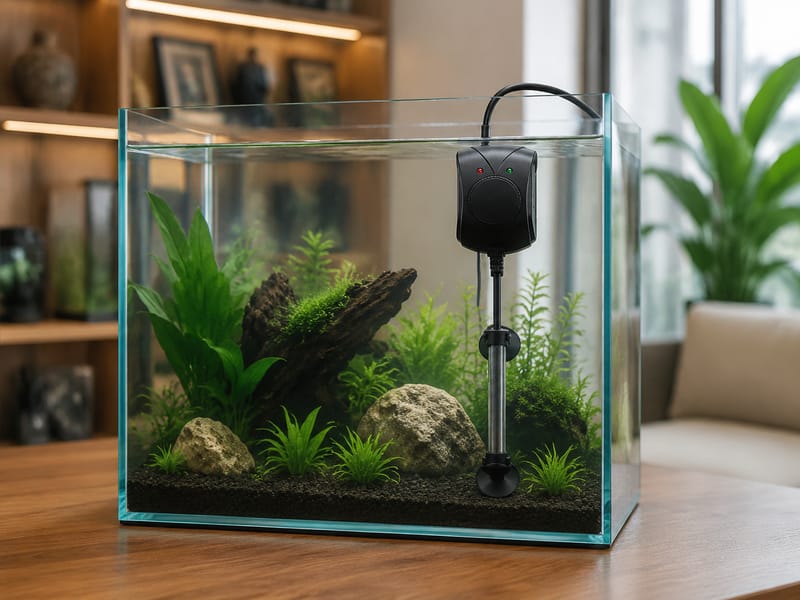
Do not use broad terms such as “fail-safe” or “fully protected” unless the model documentation supports them. Protective features vary by design, and their limitations should be stated in the user instructions. For example, a thermal cutoff, sensor-based shutoff, or dry-run detection may reduce certain risks, but it does not eliminate the need for correct installation, routine observation, and use within the stated application.
For sample evaluation, compare the heater’s displayed reading against a separate calibrated or known-reliable aquarium thermometer after the aquarium has stabilized. Test at more than one setpoint where appropriate, and observe whether readings remain consistent at different locations in the tank. The purpose is not to create an unsupported universal accuracy claim; it is to identify whether the model performs consistently enough for its intended position in your product line.
Installation Position and Tank Compatibility
Heater placement has a direct effect on temperature stability and customer satisfaction. Even a capable compact heater can perform poorly if it is installed where water movement is weak, where it contacts substrate or decor, or where the water level regularly falls below the product’s required operating level.
Installation points to review
A buyer should confirm whether each heater is intended for:
- Fully submerged use, partially submerged use, or a specific mounting orientation
- Horizontal, vertical, or angled placement
- Placement near filter discharge or circulating water
- Glass, acrylic, or other tank materials, if restrictions apply
- Freshwater use only or additional aquarium applications
- Use in tanks with turtles or other animals that may move, damage, or contact equipment
- Use with guards, mounting brackets, or suction cups, if included or required
The installation instructions should explain the minimum water level, cooling period before handling, and requirement to disconnect power before maintenance or water changes. These basics can materially reduce misuse.
Tank compatibility also includes physical fit. A compact heater may be short enough for a small aquarium but still require clearance around its mounting position. Review the complete installed dimensions, cable exit direction, mounting hardware, and any required space around the unit. If a retail range includes nano tanks or unusual aquarium shapes, request dimensional drawings or physical samples before finalizing compatibility claims.
Housing Durability, Cleaning, and Maintenance
A heater’s outer housing must withstand normal aquarium conditions, routine handling, and cleaning without creating avoidable maintenance issues. Material type, cable flexibility, seal construction, mounting components, and guard design can all affect perceived quality and long-term usability.
Instead of assuming that one housing material is universally best, evaluate the intended use. A customer with a planted community aquarium may prioritize a discreet appearance and easy cleaning. A turtle setup may place greater importance on physical protection and placement security. A retailer focused on starter kits may prioritize simple installation and clear instructions.
Practical durability checks for samples
During sample review, inspect:
- Housing seams, edges, and surface finish
- Cable entry point and strain relief
- Button response after normal wet-hand handling, following the stated use instructions
- Suction cup grip and bracket fit on the intended tank surface
- Ease of removing algae or mineral deposits from accessible surfaces
- Whether the display remains legible after normal cleaning
- Fit and stability of any protective guard or mounting accessory
- Clarity of instructions on unplugging and cooling before removal
Do not recommend abrasive cleaning tools, harsh chemicals, or disassembly unless the product documentation specifically permits them. Care instructions should be consistent across the package, manual, listing copy, and retailer training material.
OEM Branding, Packaging, and Documentation
For OEM and private-label buyers, the heater itself is only part of the sourcing decision. Packaging and instructions influence shelf conversion, correct setup, returns, and brand credibility. A compact unit with clear retail communication may be more suitable than a more complex model with vague setup instructions.
Typical areas to discuss include:
- Brand name, logo placement, and color preferences
- Retail box structure and print artwork
- Product name and feature hierarchy
- Voltage and electrical information for the intended market
- Temperature unit presentation
- Included mounting accessories and guards
- User manual, safety warnings, and quick-start content
- Barcode, carton markings, and retailer-required labeling
- Language, artwork, and instruction review process
- OEM sample approval and order-specific packaging requirements
The available options, minimum order quantities, artwork requirements, and packaging formats vary by inquiry. Confirm what is possible for the specific model rather than building a launch plan around generic customization assumptions.
When reviewing possible models, a WKAQOO WK073 aquarium product listing or WKAQOO WK028 aquarium product listing can serve as a starting point for a product-specific specification discussion. Confirm that the current model configuration matches your target voltage, packaging, accessory, and documentation needs.
How to Evaluate Heater Samples and Suppliers
A structured sample process helps buyers compare heater options fairly. Evaluate each candidate using the same aquarium volume, ambient conditions, water circulation, thermometer reference, and observation period whenever possible. Changing several variables at once makes it harder to identify whether a difference comes from the heater or the test setup.
A practical sample evaluation checklist
-
Confirm the supplied specification sheet. Verify model number, rated voltage, frequency, wattage, temperature range, dimensions, cable details, and included accessories.
-
Inspect packaging and documentation. Check that the manual, warnings, and setup steps match the physical sample. Look for unclear claims, missing electrical information, or conflicting temperature guidance.
-
Test basic installation. Mount the heater according to its instructions and assess bracket stability, cable routing, clearance, and display visibility.
-
Compare temperature readings. Use a separate reliable aquarium thermometer and allow the system to stabilize before drawing conclusions.
-
Observe cycling behavior. Note whether the heater reaches and maintains the intended setpoint without excessive visible fluctuation under the test conditions.
-
Review cleaning and removal procedures. Confirm that the instructions explain cooling time, power disconnection, and safe handling.
-
Assess retail readiness. Consider package size, shelf communication, visual differentiation, instructions, and likely customer questions.
-
Discuss commercial details before commitment. Confirm sample terms, MOQ, branding options, packaging approval, testing requirements, production schedule, and current lead time for the exact configuration.
Supplier evaluation should also include communication quality. A capable sourcing partner should be able to help clarify specifications, compatibility questions, branding needs, and order preparation steps without presenting variable details as fixed promises. WKAQOO supports business buyers across aquarium equipment and accessory categories, which can be useful when a heater range is being sourced alongside related filtration, air, lighting, maintenance, or aquarium-system products.
Common buying mistakes to avoid
- Treating a digital display as proof of temperature accuracy
- Using one tank-size recommendation in every retail channel without reviewing ambient conditions
- Comparing samples in different test environments
- Forgetting to confirm U.S.-appropriate electrical specifications
- Assuming a protective feature applies to every model in a product family
- Approving packaging before reviewing the final manual and warning content
- Selecting a heater based only on unit cost instead of expected usability and support burden
A compact digital aquarium heater range should make it easy for customers to select the right capacity, install it correctly, and understand what the display is telling them. For a focused sourcing decision, shortlist models by aquarium-volume band and control style, then verify model-specific specifications, sample performance, packaging, MOQ, customization options, and current lead time with WKAQOO at sales@wkaqoo.com.