A successful freshwater aquarium equipment wholesale assortment is built around compatible systems, not isolated products. Start with the aquarium sizes and customer skill levels you intend to serve, then match filtration, lighting, heating, aeration, and maintenance accessories to those use cases.
For retailers, distributors, and private-label buyers, the most practical approach is to create a small number of clear product tiers: dependable essentials for beginners, higher-capacity options for established hobbyists, and specialized products for planted or larger freshwater aquariums. Each tier should make it easy for customers to understand what works together.
Start With Aquarium Size and Customer Skill Level
Tank size is the most useful organizing principle for a freshwater product range because it affects filter capacity, heater wattage, lighting coverage, air output, circulation needs, and accessory fit. Customer experience level matters just as much: a first-time fishkeeper generally needs straightforward setup and maintenance, while an experienced planted-tank customer may prioritize adjustable output, visual design, and more precise control.
Build your assortment around common tank segments rather than trying to stock every possible configuration.
| Tank and Buyer Segment | Typical Customer Need | Priority Equipment | Common Buying Risk |
|---|---|---|---|
| Small desktop and nano tanks | Simple care, limited space, lower cost | Compact filtration, low-profile lighting, thermometer, small heater where appropriate | Oversized flow or unsuitable heater output |
| Standard community tanks | Reliable everyday fishkeeping | Filter, heater, LED light, air pump or circulation option, maintenance tools | Selling components with mismatched tank ratings |
| Medium and large display tanks | Higher biological load and greater water volume | Higher-capacity filtration, stronger circulation, multiple heating options, larger light coverage | Underestimating flow, heating, or service requirements |
| Planted freshwater tanks | Plant growth plus attractive fish display | Plant-capable lighting, suitable circulation, nutrient and maintenance accessories | Treating all LED fixtures as equivalent for plants |
| Beginner kits and gift buyers | Convenience and clear instructions | Coordinated core equipment, replacement media, basic test and cleaning tools | Too many complex choices or missing replacement items |
For a wholesale buyer, this framework supports cleaner merchandising. A retailer can group products by tank size, while a distributor can create a catalog structure that helps downstream customers identify compatible products quickly.
Before finalizing a product mix, define:
- The aquarium sizes your customers most commonly purchase or already own.
- Whether the assortment is focused on fish-only, planted, shrimp, turtle, or mixed freshwater use.
- The expected voltage and plug requirements for the intended sales market.
- Whether customers need replacement parts and consumables alongside durable equipment.
- The desired price architecture for entry, mid-range, and premium selections.
Avoid assuming that a product labeled for a certain tank size will fit every setup in that range. Aquarium shape, stocking level, plant density, room temperature, and filtration style can materially change equipment needs.
Core Filtration Products for Freshwater Tanks
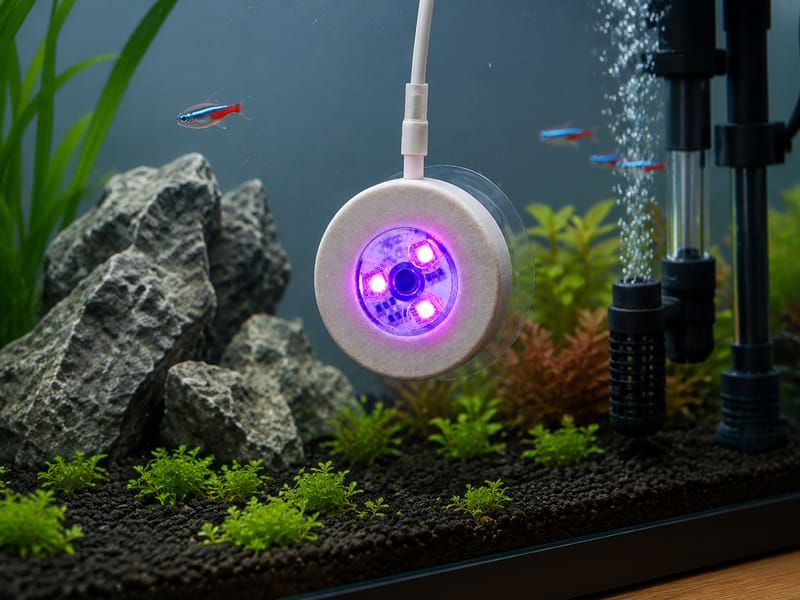
Filtration is the foundation of a freshwater aquarium equipment wholesale range because it affects water clarity, biological stability, maintenance routines, and customer satisfaction. A good assortment should cover the main filtration formats used by your customers while making their intended applications clear.
Common freshwater filtration categories include:
- Internal filters: Often chosen for compact aquariums and customers who want an all-in-one submerged unit.
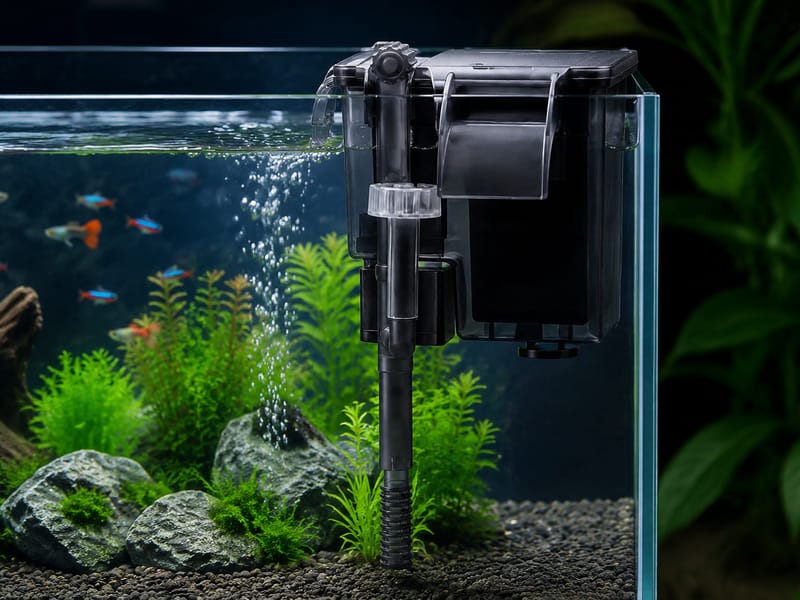
- Hang-on-back filters: Common for accessible maintenance and visible water movement in compatible open-top aquariums.
- Canister filters: Usually considered for larger tanks, higher filtration needs, or customers who prefer equipment stored outside the aquarium.
- Sponge filters: Frequently used in breeding, quarantine, shrimp, fry, and low-flow applications when paired with an air pump.
- Media and replacement components: Mechanical, biological, and chemical media can encourage repeat business, but compatibility must be clearly identified.
The right filter is not simply the one with the highest stated flow rate. Buyers should compare usable media volume, flow adjustability, intake protection, noise expectations, maintenance access, hose or tube compatibility, and the effect of livestock and decor on circulation.
Match filtration to biological load, not tank volume alone
A lightly stocked planted aquarium and a heavily stocked community tank of the same volume may require very different filtration approaches. Likewise, a filter’s nominal water flow can decline as media becomes loaded with debris or as lift height and plumbing resistance increase.
When evaluating filters for wholesale, request or confirm:
- Recommended aquarium size range and the conditions behind that rating.
- Rated flow and whether it is adjustable.
- Included media, replacement-media availability, and media dimensions.
- Intake and outlet configuration.
- Noise-related design features, if any are claimed for the specific model.
- Electrical requirements and plug configuration.
- Cleaning access and instructions for routine service.
- Whether the unit is designed for freshwater use, saltwater use, or both.
A common retail mistake is to stock filters without compatible replacement cartridges, sponges, impellers, or media. Even if replacement items are not part of the first purchase, they can be essential to the product’s long-term usefulness. Plan the durable equipment and consumables together.
Lighting Options for Fish and Planted Aquariums
Freshwater aquarium lighting should be selected by use case: basic viewing, fish coloration, low-demand plants, or more demanding planted displays. A bright-looking fixture is not automatically the right choice for plant growth, and a plant-focused fixture may be unnecessary for a simple fish-only aquarium.
For straightforward community tanks, buyers often need reliable illumination, suitable fixture length, moisture resistance appropriate to the design, and a practical on/off schedule. Planted-tank customers may also evaluate spectrum, intensity, coverage, mounting style, dimming, and timer compatibility.
Compare lighting by application
| Lighting Application | What Buyers Usually Need to Evaluate | Assortment Consideration |
|---|---|---|
| Fish-only freshwater display | Fixture length, coverage, appearance, daily operating routine | Maintain affordable options for standard tank sizes |
| Low-light planted tank | Plant-suitable output, even spread, photoperiod control | Pair with plant-care and maintenance accessories where relevant |
| Higher-light planted display | Output, heat management, adjustability, mounting, algae-management planning | Make suitability claims only when model-specific data is confirmed |
| Lid-integrated or tank-system lighting | Tank fit, replacement options, cable routing, splash exposure | Confirm compatibility with the specific aquarium system |
| T5 HO lighting | Fixture dimensions, lamp compatibility, heat, reflectors, replacement lamps | Explain operating and replacement requirements clearly |
LED fixtures are popular because they can offer compact form factors and flexible visual presentation. T5 HO lighting remains relevant in some setups where a buyer specifically wants that format. Neither technology is universally better; fixture design, aquarium depth, plant requirements, operating schedule, and customer preferences determine the better fit.
Lighting should not be sold without discussing photoperiod. More light or longer lighting hours can increase the risk of algae when plant nutrition, carbon availability, maintenance, and stocking are not balanced. For beginner-facing assortments, simple operating guidance can reduce avoidable returns and dissatisfaction.
Confirm model-specific details such as wattage, fixture length, mounting method, timer function, water-resistance design, power supply, and included accessories before listing products. These characteristics vary by model and should not be generalized across a full lighting range.
Heating and Temperature Monitoring Essentials
Freshwater tropical fish generally need stable temperatures appropriate to their species, making heaters and thermometers core products for many aquarium retailers. The correct heater depends on water volume, desired temperature, ambient room conditions, tank shape, and the aquarium’s heat loss.
A wholesale assortment should usually include:
- Heaters for the tank sizes your customers most often keep.
- Thermometers in formats appropriate to the aquarium type and customer preference.
- Heater guards or protective accessories where compatible and relevant.
- Replacement or backup heating choices for larger aquarium systems.
- Clear instructions on placement, submersion requirements, and routine temperature checks.
Heater selection needs more than a wattage label
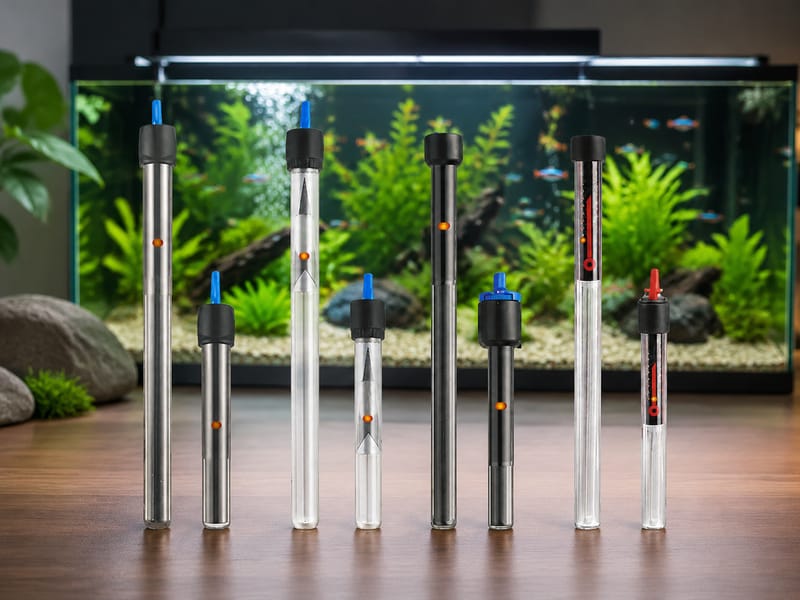
Wattage is a starting point, not a complete suitability test. A tank in a cool room may need more heating capacity than the same aquarium in a consistently warm indoor environment. Larger tanks may also benefit from redundant heating strategies, but the appropriate configuration depends on the aquarium and equipment design.
When sourcing aquarium heaters, verify:
- The stated tank-size guidance and operating temperature range.
- The electrical rating, voltage, and plug format for the target market.
- Whether temperature adjustment is manual, preset, or externally controlled.
- The intended mounting orientation and submersion requirements.
- Any model-specific safety features, protective components, or operating instructions.
- How users should check actual water temperature independently.
A thermometer is not a minor add-on. It is the practical way for the customer to verify whether the aquarium is operating at the intended temperature. Encourage retailers to merchandise thermometers next to heaters rather than treating them as unrelated accessories.
Do not present a heater as fail-safe or assume that a thermostat reading replaces independent monitoring. Aquarium equipment should be inspected regularly, and customers should follow the product’s instructions for installation, cleaning, and safe operation.
Aeration and Water Circulation Accessories
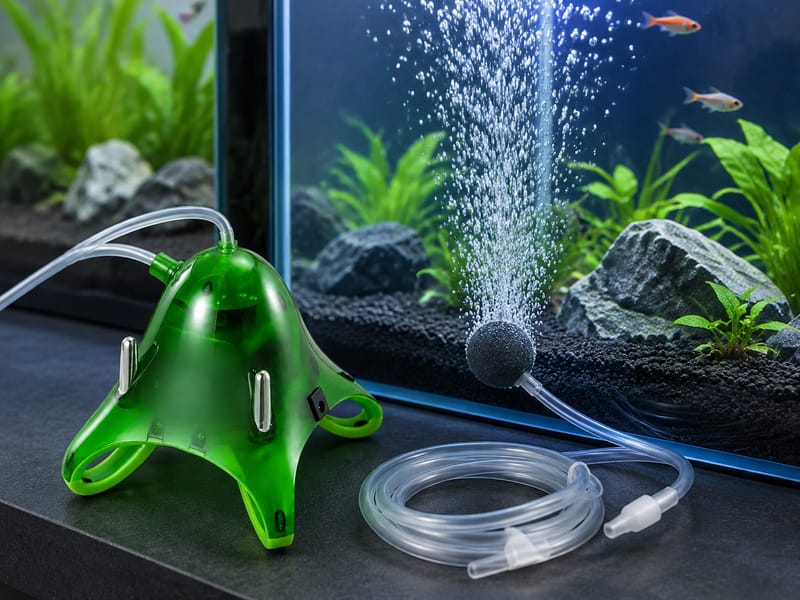
Aeration and circulation products solve different but related aquarium needs. Air pumps and air stones create visible bubbles and surface disturbance, while circulation pumps move water through the tank. Depending on the design and placement, both can help reduce stagnant areas, but neither replaces correctly sized filtration.
Air equipment is especially useful for sponge filters, quarantine tanks, breeding applications, transport-related setups, decorative bubble effects, and situations where additional surface agitation is desired. Water circulation pumps are more commonly considered when a larger aquarium, dense decor, or uneven flow pattern requires better internal movement.
Build a practical air-pump assortment
A focused air category can include:
- Air pumps sized for common aquarium segments.
- Air stones in different shapes or lengths.
- Airline tubing.
- Check valves.
- Valves, connectors, and splitters.
- Sponge filters and replacement sponges.
- Decorative aeration accessories when they match the buyer’s market.
Compatibility is critical. The pump output must suit the number of outlets, airline length, water depth, and accessories connected to it. An air stone with very fine pores may create more resistance than a simpler design, and multiple connected devices can reduce visible output at each point.
For circulation pumps, confirm flow rating, directional adjustment, mounting style, tank-size guidance, power consumption, cord length, and freshwater suitability for each model. Flow patterns matter: strong direct current may be unsuitable for slow-swimming fish, fry, or certain planted layouts even when the nominal flow looks appropriate.
A frequent merchandising gap is selling an air pump without the tubing and valves needed for installation. Bundling or cross-merchandising these small components improves usability and reduces confusion at the point of sale.
Compatibility, Safety, and Maintenance Checks
Compatibility checks protect both the buyer and the end customer. Before building a range or placing an order, evaluate each product as part of a complete aquarium system.
Use this checklist for filters, heaters, lights, pumps, and tank systems:
- Tank fit: Does the equipment fit the aquarium dimensions, rim style, lid arrangement, and water level?
- Electrical suitability: Are voltage, frequency, plug type, and power requirements suitable for the target market?
- Performance fit: Does the equipment’s output suit the tank size, livestock, plant density, and intended use?
- Physical interfaces: Are hose diameters, airline sizes, connectors, media trays, brackets, and replacement parts compatible?
- Operating environment: Is the product intended for indoor aquarium use, and what are its water-exposure or mounting requirements?
- Maintenance access: Can the customer clean the intake, change media, inspect the impeller, or replace consumables without excessive disassembly?
- Instructions and labeling: Are installation, use, cleaning, safety, and disposal instructions appropriate for the sales channel?
- Packaging readiness: Does packaging protect the product and communicate the key selection information without unsupported claims?
Retailers should also avoid confusing “water movement” with “oxygen level,” or “high light” with “good planted-tank results.” Equipment works within a biological system. Overstocking, poor maintenance, incorrect feeding, inadequate water changes, or an unsuitable lighting schedule can create problems that no single product will solve.
For private-label and OEM programs, product claims, instructions, warnings, test requirements, and packaging artwork should be reviewed carefully for the actual model and intended market. Certifications, included accessories, materials, safety features, and test documentation must be confirmed by inquiry rather than assumed.
Good, Better, Best Assortment Planning
A good-better-best structure helps customers compare options without forcing every buyer into the same equipment level. The goal is not to make the premium product appear necessary for all tanks; it is to explain what additional capability or convenience each tier provides.
| Tier | Customer Profile | Typical Product Characteristics | Merchandising Message |
|---|---|---|---|
| Good | First-time and value-focused fishkeepers | Core function, simple operation, standard fit for common tanks | A practical starting point for routine freshwater care |
| Better | Established hobbyists | More capacity, adjustability, refined maintenance features, broader application range | More flexibility for a growing or more carefully managed aquarium |
| Best | Advanced, display, or specialty users | Specialized performance, system integration, advanced control, or premium presentation | Designed for specific higher-demand applications, not every aquarium |
The same logic applies across categories. For example, an entry-level filter might suit a lightly stocked standard tank, while a higher-capacity option may offer more media space or stronger circulation for a more demanding setup. A basic LED can support viewing, while a more configurable fixture may better serve a planned planted display.
Keep the comparison honest. “Better” should describe a relevant difference—such as capacity, control, material, serviceability, or included functionality—not vague claims of superior quality. If model-specific specifications do not support a comparison, do not make it.
A balanced freshwater assortment often performs better with a limited number of clearly differentiated choices than with many near-identical SKUs. This reduces inventory complexity, simplifies staff training, and makes compatibility easier to communicate.
OEM Packaging and Supplier Coordination
OEM and private-label aquarium products require coordination beyond selecting the equipment itself. The product, branding, packaging, instructions, accessories, and inspection requirements need to work together before production begins.
A useful supplier brief should identify:
- Product category and intended end use.
- Target customer and aquarium size segment.
- Required voltage, plug, and market-specific labeling.
- Desired colors, logo treatment, and brand placement.
- Retail packaging format and artwork requirements.
- User manual and warning-label requirements.
- Included components, replacement parts, and accessory bundles.
- Sample expectations and approval process.
- Quality checks, testing expectations, and documentation requirements.
- Order quantity, production timing, and shipping coordination needs.
WKAQOO supports business buyers sourcing aquarium equipment and accessories across multiple categories, including filtration, air products, water pumps, heaters, lighting, tank systems, maintenance items, and aquascaping products. That can be useful when planning a coordinated range rather than purchasing a single standalone item.
However, a broad category offering does not mean every model, specification, branding option, or packaging format is available for every inquiry. Confirm the exact model, material, dimensions, electrical specifications, included accessories, packaging, MOQ, sample terms, testing requirements, and current lead time before committing to an order.
For a more effective sourcing discussion, send a category list organized by tank size and tier, then identify the products that need private-label packaging or custom features. This gives the supplier enough context to check compatibility and commercial terms without relying on assumptions.
Build the Range Around Complete Freshwater Setups
The most effective freshwater aquarium equipment wholesale strategy is to sell a compatible pathway: filtration for water quality, appropriate lighting for the aquarium’s purpose, stable heating where needed, suitable aeration or circulation, and the maintenance accessories required to keep the system running.
Begin with the tank sizes and buyer types you serve, choose a manageable good-better-best structure, and verify every model-specific detail before listing or ordering. For a multi-category assortment or private-label project, contact WKAQOO at sales@wkaqoo.com to confirm specifications, samples, MOQ, packaging options, and current production timing.