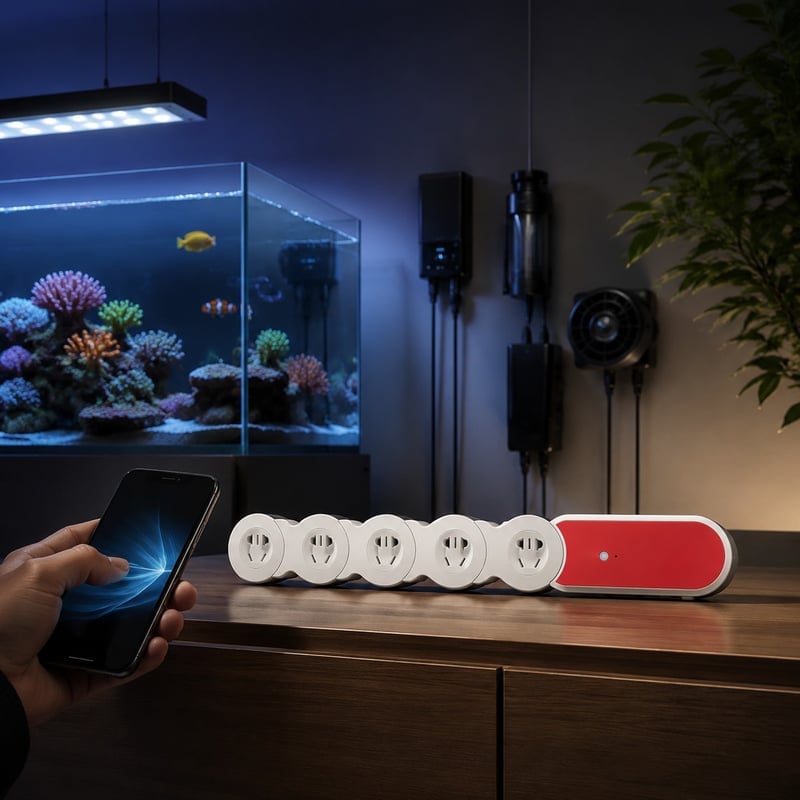
Choosing an aquarium products supplier for OEM requires more than finding a catalog with the right-looking products. The best fit is a supplier that can clearly confirm product specifications, category compatibility, branding options, quality expectations, packaging details, and commercial terms for your specific program.
Start by defining the assortment and customer you serve, then compare suppliers using the same written requirements. This approach helps retailers, importers, distributors, and private-label teams avoid common problems such as mismatched voltage, unclear tank-size guidance, incompatible accessories, incomplete packaging files, or lead-time assumptions that were never confirmed.
Define Your Product and Market Requirements
A supplier comparison is only as useful as the brief you provide. Before requesting quotations or samples, turn your general idea—such as “a beginner aquarium line” or “a premium filtration range”—into a practical sourcing requirement.
Document the following points for each product family:
- Target customer: First-time aquarium owners, planted-tank hobbyists, reef keepers, turtle owners, or professional maintenance buyers.
- Sales channel: Independent retail, e-commerce, pet-store chains, distributor inventory, or a marketplace program.
- Product position: Entry-level, mid-range, feature-focused, or value-oriented.
- Target aquarium size range: State usable tank dimensions or water volume ranges where applicable.
- Electrical market: Confirm the voltage, plug configuration, frequency, wattage, and labeling needed for the markets where products will be sold.
- Core functions: For example, adjustable flow, quiet operation expectations, timer features, heater controls, replaceable media, or lighting modes.
- Assortment role: Identify whether the item is a primary product, add-on accessory, replacement part, bundle component, or seasonal item.
- Brand requirements: Logo placement, product color, retail packaging, instructions, barcodes, and private-label presentation.
- Commercial limits: Preliminary order quantity, target cost range, sample needs, and preferred shipment timing.
A supplier cannot responsibly confirm that a product is suitable until these details are clear. “Suitable for small tanks,” for example, is too broad for an air pump, circulation pump, heater, or filter. The appropriate choice depends on tank volume, livestock, water movement needs, filtration design, and the accessories included in the final kit.
For an OEM project, separate requirements into three groups:
- Non-negotiable requirements — electrical configuration, required safety documentation, branding format, or product dimensions.
- Preferred features — color options, control style, packaging finish, or accessory combinations.
- Open decisions — optional product upgrades, bundle contents, or future line extensions.
This separation prevents a sourcing discussion from stalling because every preference is treated as mandatory.
Assess Category Coverage and Product Compatibility
A broad catalog can simplify assortment planning, but breadth alone does not prove that products will work well together. Evaluate whether the supplier can communicate how related items connect within a retail range.
For aquarium products, compatibility can affect returns, customer satisfaction, and replacement-part sales. Review these relationships carefully:
| Product category | Compatibility questions to ask | Common sourcing risk |
|---|---|---|
| Filters and filter media | Which media formats fit the filter? Are replacement cartridges or media sizes identified? | Selling a filter without a clear replenishment path |
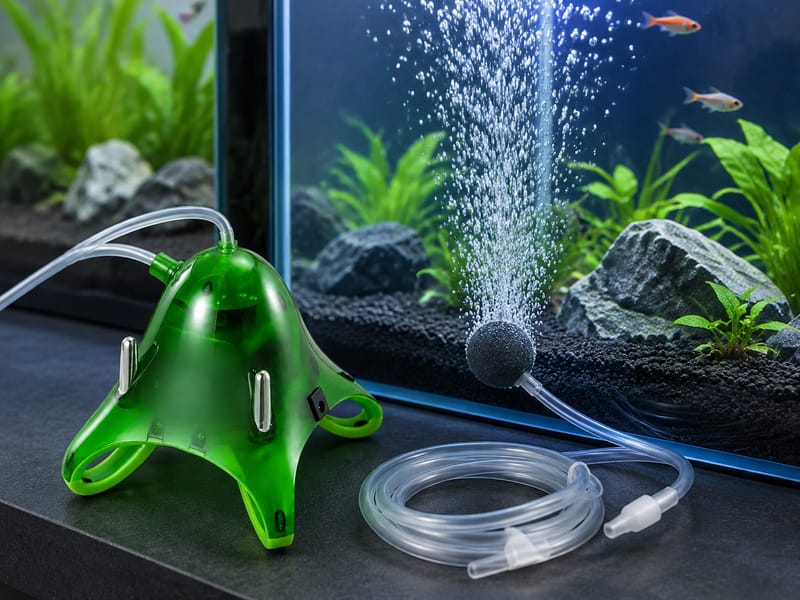
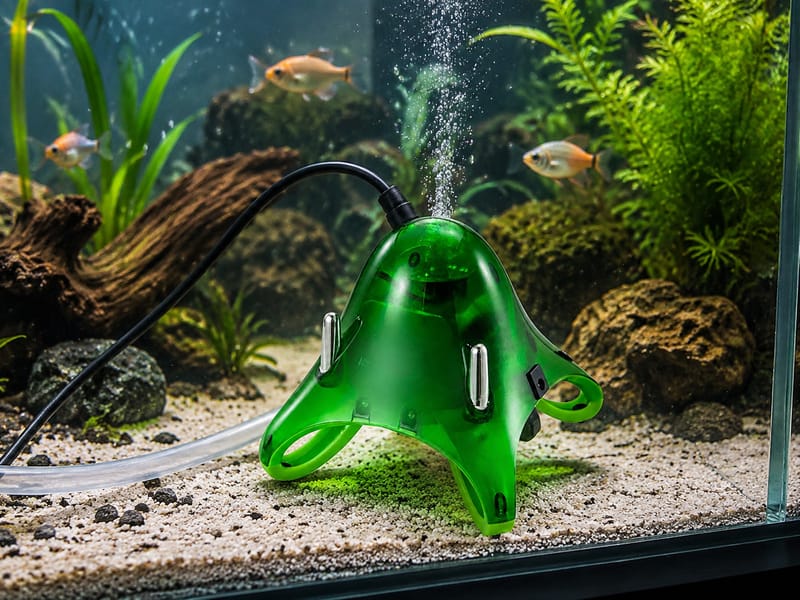
| Air pumps and air stones | What tubing size, outlet type, check valve, and diffuser options are needed? | Accessories do not connect without extra adapters |
| Water circulation pumps | What flow range, mounting method, direction adjustment, and tank-use guidance apply? | Pump output is inappropriate for the intended aquarium setup |
| Heaters | What tank-size guidance, wattage, temperature range, and safety features apply to the model? | Heater selection is based on an assumed, unconfirmed tank range |
| LED or T5 HO lighting | What fixture length, mounting arrangement, power input, and lighting use case apply? | Fixture does not fit the tank or align with the intended plant or display use |
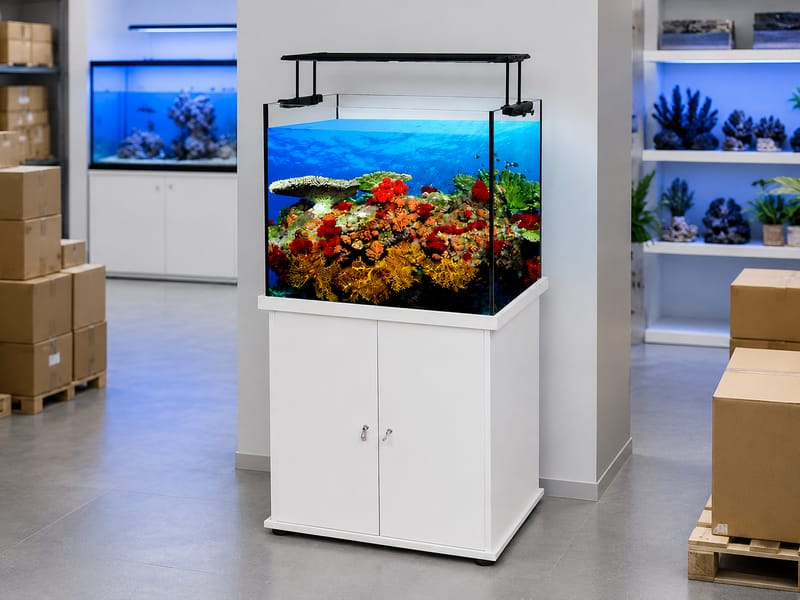
| Tank systems and accessories | Which lid, lighting, filtration, maintenance, and décor components are included or compatible? | Buyers assume a complete set when components are sold separately |
Ask the supplier to distinguish between included accessories, optional accessories, and compatible accessories sold separately. This is especially important for retail packaging and online listings, where unclear “what is in the box” information can lead to avoidable customer complaints.
When comparing catalog communication, inspect several individual product pages rather than relying only on category images. For example, a buyer can use a WK004 product listing and a WK035 product listing as examples of the type of model-level information that should be reviewed during initial product selection. The goal is not to assume that two listed items work together, but to identify what must be confirmed in writing.
A focused supplier may be a stronger choice than a broad supplier if your program needs deep technical support in one category. Conversely, a supplier that can support multiple categories may reduce coordination work when you are building a coordinated range of filtration, aeration, circulation, lighting, maintenance, and aquascaping products. The right choice depends on whether assortment convenience or category specialization matters more to your business.
Request Specifications, Samples, and Documentation
Do not make a final selection from photos, general descriptions, or a quotation line alone. Request a model-specific specification sheet or confirmation document for every item under serious consideration.
At a minimum, verify:
- Model number and product name
- Product dimensions and retail-package dimensions
- Material details where relevant
- Voltage, frequency, plug type, wattage, and power supply information
- Flow rate, lift height, or air output when applicable
- Intended tank-size guidance and operating conditions
- Included accessories and replacement parts
- Net weight and shipping weight
- Installation and operating instructions
- Required labeling and applicable documentation for your market
- Color, finish, and logo location options
- Carton quantity and master-carton information
Specifications should be tied to the exact sample and final production model. A common mistake is approving a sample based on one configuration while the purchase order refers to a similar but different model, plug, finish, or packaging version.
Use Samples to Test Your Actual Selling Conditions
A sample is not just a visual approval step. It should be evaluated according to how the product will be sold, installed, and supported.
For functional equipment, inspect:
- Assembly and installation clarity
- Fit with intended aquarium sizes or accessories
- Noise, vibration, or mounting behavior where relevant
- Adjustment controls and user accessibility
- Power-cord, plug, and electrical-label accuracy
- Packaging protection during handling
- Completeness of instructions and warning information
- Product appearance after normal setup and cleaning
For décor, maintenance tools, air stones, and other accessories, assess finish consistency, dimensions, retail presentation, and compatibility with the intended product bundle.
Sample terms, sample availability, and sample costs vary by supplier and product. Confirm them before treating a sample review as an approved production standard.
Make Documentation Part of the Approval Process
Documentation is a sourcing tool, not an administrative afterthought. It gives your purchasing, compliance, marketing, and customer-service teams a shared reference point.
Ask whether the supplier can provide or coordinate the documentation needed for the exact product and destination market. Do not assume a general statement, a document for another model, or a prior document automatically applies to the item you plan to import.
For example, reviewing a WK071 product listing can help a buyer identify model details to request, but it does not replace confirmation of current specifications, test requirements, certifications, or commercial terms for an order.
Evaluate OEM Branding and Packaging Support
OEM sourcing is successful when branding and packaging decisions are controlled early. A logo alone is not a complete private-label program. The finished product must reflect a clear retail identity while preserving technically accurate product information.
Discuss these areas with potential suppliers:
- Logo method and available placement locations
- Product colors and surface finishes
- Brand marks on accessories, power components, instructions, or labels
- Retail box size, artwork format, inserts, and protective packing
- Barcode placement and SKU identification
- User instructions, warnings, and assembly diagrams
- Master-carton markings and shipping labels
- Language requirements for packaging and instructions
- Whether existing packaging can be adapted or new artwork is required
The more changes you request, the more important it becomes to document approvals. Keep an approval file containing the product photo or sample reference, logo artwork version, color reference, packaging dieline or artwork, instruction version, and final list of included items.
Balance Differentiation With Program Complexity
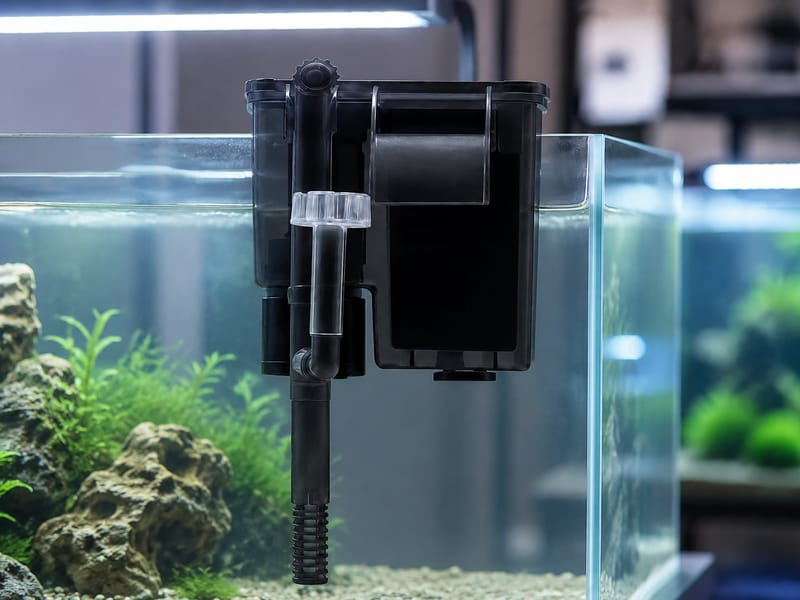
Private-label differentiation can improve shelf recognition, but excessive variation creates operational risk. A new enclosure color, customized insert, unique accessory bundle, and custom box may all be possible discussion points, yet each change can affect cost, minimum order quantity, approval time, and production planning.
For a first order, many buyers reduce risk by prioritizing the most visible changes:
- Branded retail packaging
- Accurate user instructions and labels
- Logo application where appropriate
- A limited, controlled color selection
- A clearly defined accessory set
Once the product is selling consistently, more extensive customization may make commercial sense. Confirm what is available for the exact model rather than assuming every catalog product supports every branding or packaging option.
Confirm MOQ, Pricing, and Lead-Time Variables
MOQ, price, and lead time should be treated as variables that depend on the product configuration and order structure. They should never be assumed from a previous quote, a different model, or another buyer’s program.
Request a quotation that separates the major cost and scheduling drivers:
- Product model and configuration
- Electrical version, plug, and power requirements
- Branding method and packaging level
- Accessories, replacement parts, and bundle contents
- Order quantity per SKU and total order quantity
- Sample requirements
- Carton configuration
- Labeling and artwork requirements
- Inspection or test requirements
- Shipping terms and destination details
A lower unit price may not be the lowest total-cost option. It can be offset by larger MOQ requirements, more inventory exposure, separate accessory purchases, artwork charges, repackaging work, or higher risk of selling a poorly matched product.
Compare Quotes on an Equal Basis
Use a quote comparison sheet that forces each supplier to answer the same questions. If one quote includes a branded color box and another includes only a plain box, the prices are not directly comparable. If one pump quote states a particular electrical configuration and another does not, do not assume equivalence.
Also distinguish between:
- Production lead time: Time needed to prepare goods after order details are finalized.
- Artwork approval time: Time required to review logos, instructions, and retail packaging.
- Testing or inspection time: Time needed for agreed quality checks.
- Transit time: Time after the shipment is released, which is separate from production.
Current production schedules and lead times must be confirmed for each inquiry. A realistic buying plan leaves room for sample approval, artwork revision, order confirmation, quality control, freight booking, and inbound receiving.
Plan Quality Control and Pre-Shipment Checks
Quality control should be written into the sourcing plan before production begins. Waiting until goods arrive in the United States leaves fewer practical options if there is a problem.
Your inspection plan should reflect the product category and the risk level. For example, electrical equipment, water-contact products, glass tank systems, and retail-ready packaged goods may require different checks.
A practical pre-shipment checklist can include:
- Correct model, color, voltage, plug, and branding
- Product quantity and carton count
- Visual finish, assembly, and included accessories
- Packaging artwork, labels, barcode placement, and instruction inserts
- Functional checks appropriate to the product type
- Measurements and weight checks against approved specifications
- Carton condition and packing method
- Master-carton marks and shipment identification
- Random checks against the approved sample or golden sample
A golden sample is the approved reference sample used to compare production goods. It should be labeled clearly and aligned with the purchase order, specification sheet, and approved packaging artwork.
Do not use vague language such as “good quality” or “standard inspection.” Define what will be checked, which defects are unacceptable, who performs the inspection, when it occurs, and what evidence will be provided. The specific inspection scope, testing methods, and acceptance criteria should be agreed before the order is finalized.
Review Export Communication and Order Coordination
A capable supplier should make it easier to track open questions from the initial inquiry through order preparation. This matters especially when your order combines several aquarium categories, customized packaging, and multiple SKUs.
Evaluate communication using practical criteria:
- Are questions answered by model number rather than vague catalog language?
- Does the supplier identify unknowns instead of making assumptions?
- Are revisions to artwork, specifications, and quantities documented?
- Can product, packaging, and shipping discussions be kept organized?
- Is there a clear process for sample feedback and final approval?
- Are changes to product configuration highlighted before production?
- Can the supplier coordinate information across multiple categories?
An aquarium supply partner such as WKAQOO may be relevant when a buyer needs to coordinate a broader product range, including filtration, aeration, pumps, heating, lighting, tank systems, maintenance items, décor, and turtle-care products. However, buyers should still verify model-specific compatibility, customization options, documents, MOQ, packaging, pricing, and delivery timing before placing an order.
Clear coordination is particularly valuable when one retail range contains connected products. A WK139 product listing can be used as another model-level reference during your review, alongside written confirmation of what is included, how the product is configured, and whether it fits your program requirements.
Build a Repeatable Supplier Scorecard
A repeatable scorecard turns supplier selection from a subjective process into a comparable decision. Score each supplier against the same weighted requirements, then record the evidence behind every score.
| Evaluation area | What to measure | Suggested evidence |
|---|---|---|
| Product fit | Suitability for your customer, channel, and assortment | Model-level specifications and product comparison notes |
| Category compatibility | Ability to define related accessories and replacement items | Compatibility chart and included-accessory list |
| Specification clarity | Completeness and consistency of technical details | Data sheets, drawings, labels, and written confirmations |
| Sample quality | Fit, function, appearance, and packaging performance | Sample review checklist and approval record |
| OEM capability | Branding, color, instruction, and package options for the model | Artwork process, packaging proposal, and sample discussion |
| Commercial fit | MOQ, pricing structure, payment terms, and inventory risk | Like-for-like quotation comparison |
| Quality-control readiness | Defined inspection points and response process | Inspection checklist and golden-sample plan |
| Communication | Accuracy, response organization, and change control | Written correspondence and revision records |
| Order coordination | Ability to manage multiple SKUs and approval stages | Order tracker, packing details, and project workflow |
Assign higher weight to the factors that create the greatest risk for your business. A retailer launching a branded starter kit may weight packaging accuracy and user instructions heavily. A distributor may place more weight on multi-category coordination, replacement parts, carton efficiency, and consistent specification data. An importer of electrical products may prioritize documentation, electrical configuration, and inspection controls.
Avoid selecting solely on the lowest initial quote. A supplier with clearer specifications, better approval discipline, and stronger compatibility communication may reduce the downstream costs of returns, repackaging, rework, and customer-service issues.
Before moving forward, send your shortlisted supplier a concise request that lists the models, target market, required electrical version, branding needs, packaging expectations, sample request, projected quantities, and desired quality checks. For OEM or wholesale inquiries with WKAQOO, buyers can contact sales@wkaqoo.com to confirm current specifications, customization options, samples, MOQ, packaging, and lead-time details for the products under consideration.