Choosing a private-label aquarium accessories supplier is not just a matter of adding a logo to existing products. A successful program starts with a focused customer segment, products that fit together technically, packaging that explains use clearly, and quality controls that match the risk level of each item.
For importers, retailers, and private-label buyers, the best approach is to build a manageable assortment first, validate samples and specifications, then establish repeatable requirements for branding, packaging, inspections, and reorders. This reduces costly problems such as incompatible fittings, unclear instructions, damaged retail packaging, or a product range that is too broad to stock effectively.
Define the Target Customer and Product Category
Start with the customer you expect to serve, not with a long supplier catalog. Aquarium buyers have different needs depending on their experience level, tank type, livestock, budget, and preferred shopping channel.
For example, a beginner-focused retail line may prioritize simple maintenance tools, air accessories, basic filtration media, and easy-to-understand tank-care products. A specialty aquascaping range may place more importance on display-oriented tools, decor, water circulation, lighting-related accessories, and premium-looking packaging. Reptile and turtle customers may require a separate product plan because their setup needs and safety considerations differ from those of fishkeepers.
A useful first step is to define:
- Buyer level: first-time aquarium owner, hobbyist, or experienced enthusiast
- Tank environment: freshwater, planted aquarium, marine aquarium, turtle habitat, or mixed-use range
- Retail position: entry-level value, mid-range everyday use, or specialty products
- Sales channel: aquarium store, pet retailer, online marketplace, distributor network, or private-label program
- Product role: replacement item, routine consumable, add-on accessory, or core equipment
- Merchandising goal: high-turn essentials, bundled kits, seasonal promotions, or a complete category range
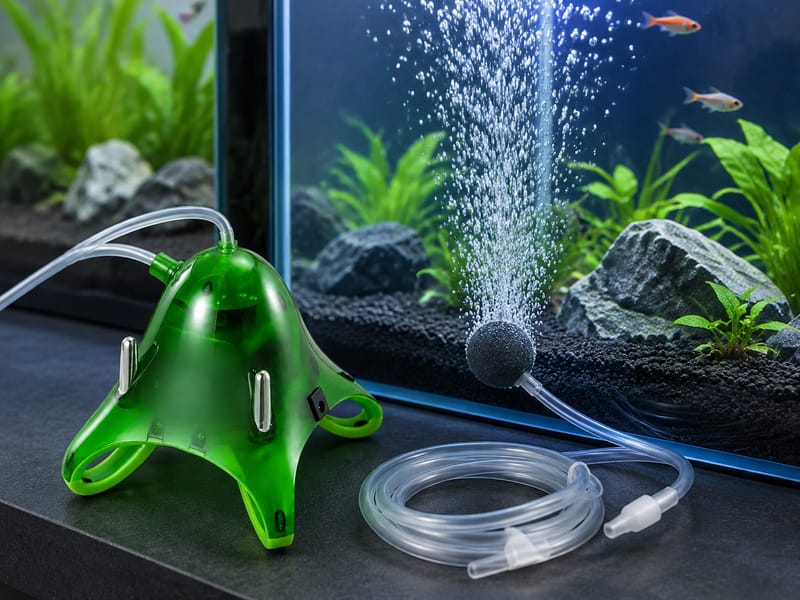
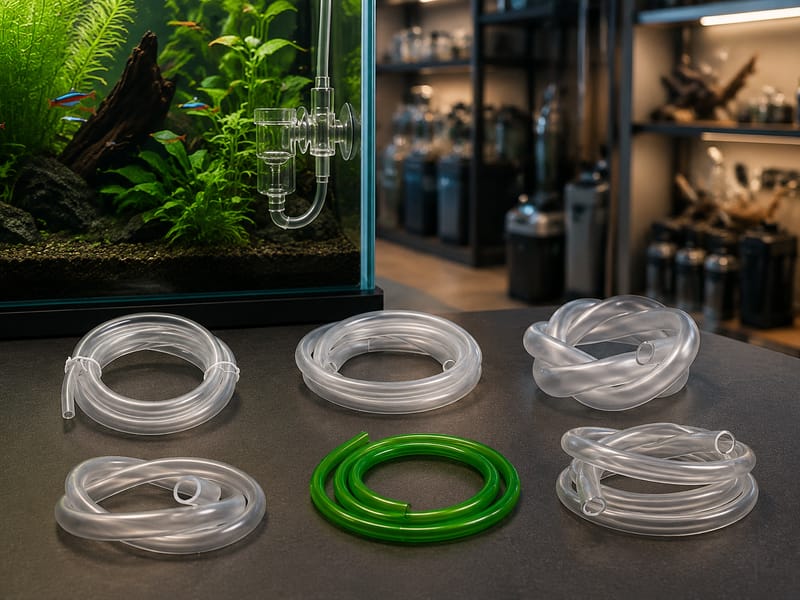
Avoid launching too many unrelated products at once. A small, connected assortment is easier to explain, stock, forecast, and reorder. For instance, an air-care category can combine an air pump, airline tubing, check valves, connectors, and air stones. Each product supports the others, making cross-selling more natural while reducing the chance of confusing customers.
When evaluating a private-label aquarium accessories supplier, ask whether the supplier can help organize products into practical assortments rather than treating each SKU as an isolated purchase. That planning support matters when you are combining accessories, equipment, packaging, and branding across multiple categories.
Choose Products with Clear Compatibility Information
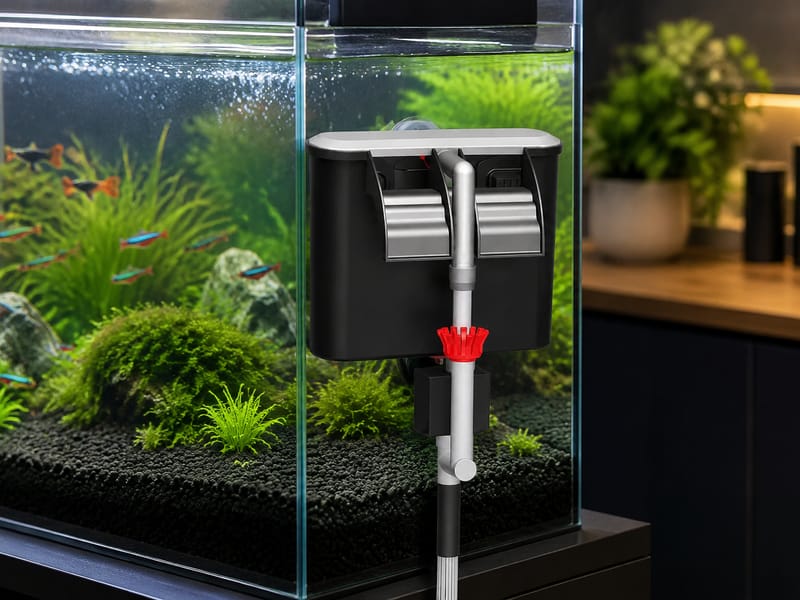
Compatibility is one of the most important factors in aquarium product sourcing. A product can look well made and still create customer returns if its connections, power requirements, sizing, or intended use are unclear.
For every SKU, create a specification sheet that states what the product works with, what it does not work with, and what the customer needs to use it correctly.
| Product category | Compatibility details to confirm | Common sourcing risk |
|---|---|---|
| Air pumps and air stones | Airline diameter, outlet count, check-valve requirements, recommended tank use | Mismatched tubing or unclear setup instructions |
| Water circulation pumps | Flow rate, outlet fittings, mounting method, freshwater or marine suitability | Flow that is unsuitable for the intended tank or livestock |
| Filters and filter media | Filter type, cartridge or media dimensions, replacement interval guidance | Customers buying a replacement that does not fit |
| Aquarium heaters | Voltage, wattage, temperature range, tank-size guidance, mounting method | Incorrect electrical version or inadequate heating capacity |
| Lighting products | Fixture length, mounting arrangement, voltage, wattage, intended aquarium type | Improper fit or expectations that do not match output |
| Maintenance accessories | Handle length, material, intended cleaning task, safe-use limitations | Tool damage or misuse on acrylic, glass, or delicate surfaces |
The information should be specific enough for a retail buyer, product manager, and end customer to understand the product’s intended use. It should also be consistent across the product page, carton, instructions, master carton markings, and marketplace listing.
Build a compatibility matrix before approving SKUs
A compatibility matrix is a simple document that maps products to the equipment or setup they support. It can include fields such as:
- Product name and internal SKU
- Compatible tank range or application
- Hose, tubing, or connector dimensions
- Electrical version and plug requirements, where applicable
- Required accessories sold separately
- Items included in the package
- Relevant warnings or installation limitations
- Replacement part compatibility
- Packaging language requirements
This process is especially useful for bundled ranges. If you intend to sell a pump with tubing and air stones, confirm that the included parts physically connect and that the installation instructions match the actual package contents.
Do not rely on assumptions based on product photos, a similar prior model, or a supplier’s general category description. Model-specific dimensions, voltage, wattage, flow rate, included accessories, and tank suitability should be confirmed for the exact item under consideration.
Evaluate Samples, Materials, and Workmanship
Samples are the point where a product concept becomes a sourcing decision. They allow you to check whether the item matches the specification, packaging plan, target price position, and customer expectations.
A sample review should go beyond appearance. Inspect the product as a retailer would, but also evaluate it as an end user would after opening the package.
What to inspect on physical samples
Use a consistent checklist across products:
- Dimensions and fit: Measure the item and test it with relevant tubing, fittings, mounts, tanks, or accessories.
- Materials: Confirm that the actual material matches the proposed product description and is appropriate for its intended aquarium use.
- Workmanship: Check seams, molding, edges, caps, suction cups, fasteners, welds, and moving parts.
- Assembly: Make sure components fit together without excessive force, instability, or misalignment.
- Operation: For powered equipment, discuss the applicable electrical version and test requirements for your market before proceeding.
- Packaging protection: Evaluate whether the retail box, inner protection, and product placement prevent scuffs, cracks, bending, or loose parts.
- Documentation: Review the draft instructions against the sample, not against an earlier image or generic template.
For accessories such as nets, scrapers, tweezers, tubing, and air stones, physical fit and finish may be the main evaluation areas. For pumps, heaters, filters, and lighting, the review must also cover model-specific operating specifications, safety expectations, labeling, and test requirements.
Compare samples against an approved standard
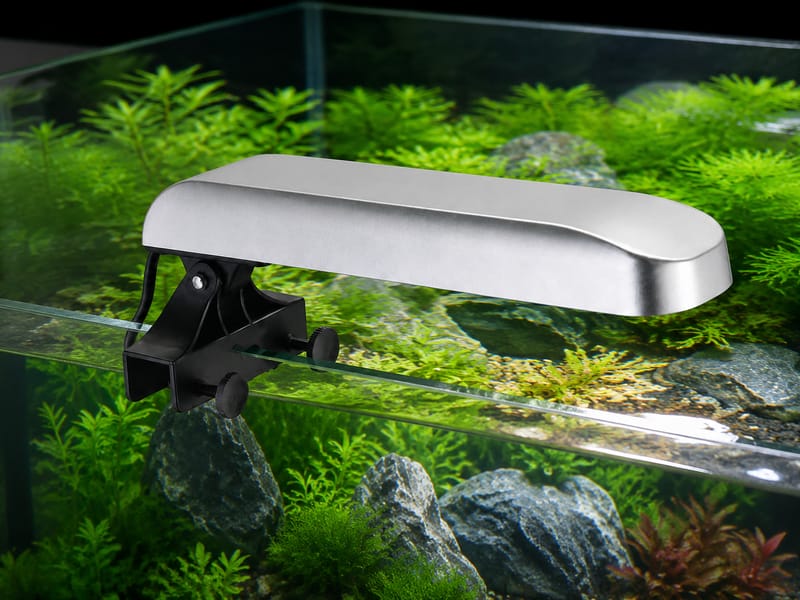
Once you approve a sample, document it as the reference standard. Record its photos, dimensions, colors, parts, packaging layout, and any agreed changes. This helps prevent ambiguity later, especially when multiple people are involved in sourcing, purchasing, quality control, and artwork approval.
If you approve a sample with exceptions—for example, a different color is planned for production—list those exceptions clearly. A sample that is “generally acceptable” is not a reliable production standard.
Confirm Branding, Colors, and Customization Scope
Private label can range from a simple branded sticker to a fully developed retail presentation. The right level depends on your assortment strategy, budget, order volume, and how differentiated you need the line to be.
Before requesting artwork, define which elements are actually being customized:
- Product color or color combinations
- Printed logo placement
- Molded or embossed branding, if available for the model
- Retail box design
- Hang tag, label, or insert card
- Instructions and warning sheets
- Barcode placement
- Bundle configuration
- Inner packaging and protective materials
- Master carton markings
Not every model supports every type of branding change. Some options may require a different minimum order quantity, additional setup work, new packaging materials, or a longer approval process. Ask for the customization scope by SKU rather than assuming a branding method applies to an entire product category.
Keep colors controlled and repeatable
Color is a frequent source of disagreement because screens, digital files, printed cartons, plastics, and coatings can appear different under varying lighting. Provide a clear color reference where possible and confirm whether the color applies to the product body, trim, logo, packaging, or all of these elements.
For a multi-SKU range, create a basic brand guide that includes:
- Logo files and approved usage
- Primary and secondary colors
- Font choices for packaging
- Product naming format
- Icon style and warning style
- Required claims and prohibited claims
- Barcode and item-number conventions
- Version control for artwork files
This does not need to be a large corporate manual. Even a concise approval document can prevent inconsistent packaging across filters, pumps, tools, and decor items.
Plan Packaging, Labels, and User Instructions
Packaging must do more than look shelf-ready. It should protect the product, communicate the intended use, and give customers enough information to make a correct purchase.
For aquarium accessories, unclear packaging often leads to avoidable returns. A customer may buy a replacement part that does not fit, install an air accessory incorrectly, or use a cleaning tool on an unsuitable surface because the limitations were not stated.
Information to include on retail packaging
The exact requirements depend on the product and sales channel, but a useful package review often includes:
- Product name and model or SKU
- Brand name
- Product photo or accurate illustration
- Key compatibility information
- What is included in the package
- Basic dimensions or size information, where useful
- Electrical information for applicable powered products
- Installation or use icons
- Care and maintenance guidance
- Appropriate warnings and limitations
- Country-of-origin and other required market information, as applicable
- Barcode and retailer-required labeling
Avoid making broad performance claims unless they have been substantiated for the exact product. Statements such as “fits all tanks,” “silent,” “safe for every aquarium,” or “works with any filter” can create problems if the product has operating limits or compatibility conditions.
Treat instructions as part of the product
User instructions should be easy to follow and consistent with the final product configuration. They should explain setup, routine use, cleaning, troubleshooting, and key warnings in plain language.
For equipment, instructions should also identify:
- The required power version
- Installation position or mounting guidance
- Included and excluded accessories
- Cleaning precautions
- Conditions that require the user to stop operation
- Any limitations related to tank setup, water level, or intended use
Review instructions after final packaging and product changes. A revised pump outlet, different mounting accessory, or altered package bundle can make older instructions inaccurate.
Coordinate Assortments, MOQ, and Reorders
A private-label line succeeds when it can be replenished predictably, not only when the first order looks good. Plan the commercial structure of the range before finalizing every SKU.
Start by grouping products into three tiers:
- Core replenishment items: Practical accessories and replacement products likely to be reordered regularly.
- Supporting add-ons: Items that increase basket size or complete a setup.
- Specialty or trial products: Narrower products that should be ordered cautiously until demand is established.
This approach helps avoid tying up too much inventory in low-turn variations. It can also make it easier to negotiate and plan order quantities around the products that matter most.
Questions to align before placing an order
Confirm these points in writing:
- Minimum order quantity by SKU, color, and packaging version
- Whether mixed models or mixed colors are possible
- Sample cost and sample approval process
- Product-specific customization requirements
- Packaging MOQ and artwork setup needs
- Master carton quantity and dimensions
- Payment structure
- Production schedule and current lead time
- Reorder process and whether the same materials or packaging can be repeated
- What happens if a component, color, or packaging material changes
MOQ is not only a pricing issue. It affects how many colors, product sizes, packaging variations, and niche accessories you can realistically support. A program with fewer, better-defined versions is usually easier to reorder than a broad line with many low-volume variants.
WKAQOO supplies aquarium equipment and accessories across multiple categories and can support business buyers with product selection, specification discussions, branding requirements, packaging coordination, and sourcing communication. Buyers should still confirm MOQ, sample terms, customization options, and current production conditions for each inquiry.
Quality Checks Before Shipment
Pre-shipment quality checks protect your brand at the point where corrections are still possible. The inspection plan should match the product’s risk level: a decorative item needs a different review from electrical equipment or a product with multiple fittings and components.
At minimum, compare production goods against the approved sample, final specification sheet, and approved artwork.
A practical pre-shipment checklist
Check the following before shipment:
- Correct model, quantity, color, and package configuration
- Product dimensions and visible materials
- Logo placement and print clarity
- Retail-box artwork, barcode, and required labels
- Included accessories and instruction sheets
- Basic assembly and fit of components
- Carton count and carton markings
- Packaging condition and protection inside cartons
- Random functional checks appropriate to the product
- Consistency with approved sample and documented revisions
For products involving electrical components, water operation, heating, or circulation, establish the applicable testing and documentation requirements before production. Do not assume that a test process, safety feature, certification, or market-specific electrical configuration is included unless it is confirmed for the exact model and order.
Common quality-control mistakes
The most frequent sourcing errors are often administrative rather than dramatic manufacturing failures:
- Approving artwork without verifying product specifications
- Confirming a product photo instead of an actual sample
- Forgetting to state whether accessories are included
- Using generic instructions for a revised product configuration
- Allowing packaging colors to be approved only on screen
- Failing to identify an approved production sample
- Inspecting only the product and not the retail packaging
- Assuming a previous order’s terms, materials, or lead time still apply
A clear approval trail is valuable. Keep final versions of the specification sheet, packaging artwork, instructions, purchase order, sample approval, and quality checklist together under one SKU record.
Questions to Ask a Private-Label Supplier
The right questions make supplier comparisons more meaningful. Rather than asking only for a catalog and price, ask questions that reveal whether the product can be supplied consistently and presented correctly under your brand.
Product and compatibility questions
- What are the exact dimensions, materials, and included components for this model?
- What equipment, tank type, tubing, or fittings is it compatible with?
- What limitations should be stated on packaging or instructions?
- Are replacement parts or matching accessories available for this item?
- Which specifications vary by model or electrical version?
Sample and quality questions
- Is a sample available for review before production?
- What will the sample include, and will it match planned production materials and accessories?
- What workmanship and functional checks can be confirmed for this product type?
- Can an approved sample be used as the production reference?
- How are product changes communicated before a reorder?
Branding and packaging questions
- Which branding options are available for this specific SKU?
- What logo format and artwork files are required?
- What are the minimum quantities for custom product colors, packaging, or printed components?
- Can packaging, instructions, and carton marks be customized?
- Who approves final artwork, translations, warnings, and barcode placement?
Order planning questions
- What is the MOQ by model, color, and packaging design?
- Can multiple SKUs be combined within a broader order?
- What are the current sample, production, and reorder timelines?
- What carton information is available for freight planning?
- Which commercial terms need reconfirmation for repeat orders?
A capable supplier should be able to answer these questions directly or identify what needs to be verified. If answers remain vague, treat that as a signal to narrow the product scope or request clearer documentation before committing to a branded launch.
A practical next step is to choose a small initial assortment, prepare a SKU-by-SKU compatibility and packaging checklist, and request samples before approving production. If you are evaluating WKAQOO as a private-label aquarium accessories supplier, contact sales@wkaqoo.com to confirm product specifications, sample options, branding scope, MOQ, packaging details, and current lead time for your planned range.