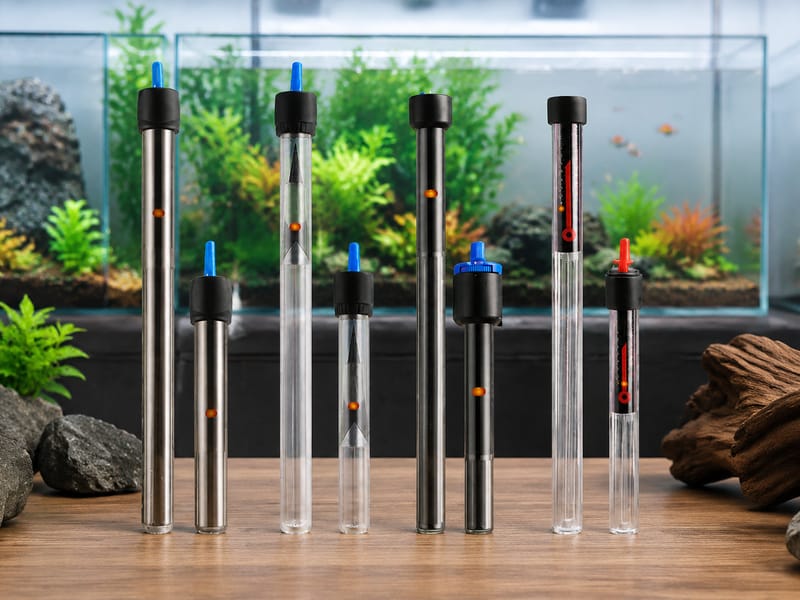
Quartz aquarium heaters wholesale buyers should evaluate more than wattage and price. The right assortment depends on aquarium volume, room temperature, thermostat stability, tube protection, intended livestock, installation method, and the documentation needed for retail sale.
For a practical buying decision, start with the tank sizes and environments your customers serve. Then compare heater ratings, temperature range and control method, installation requirements, electrical details, protective components, packaging, and sample performance. A quartz heater can be a suitable option for many freshwater, marine, and turtle applications, but suitability is always model- and setup-dependent.
How Quartz Aquarium Heaters Operate
A quartz aquarium heater uses an electrical heating element housed inside a quartz glass tube. When the thermostat detects that water temperature is below the selected setting, it supplies power to the heating element. Once the water reaches the target temperature, the thermostat cycles the heater off or reduces heating activity, depending on the design.
Quartz is commonly used because it tolerates rapid temperature changes better than ordinary glass in many heating applications. However, a quartz tube is still a glass component. It can be damaged by impact, incorrect installation, or operating conditions outside the product instructions.
For wholesale planning, it is useful to separate heater construction from heater control:
- Heating tube: The quartz enclosure surrounding the element.
- Thermostat: The control component that regulates the target temperature.
- Temperature adjustment: A manual dial, external controller, digital interface, or preset setting, depending on the model.
- Protective guard: A removable or fixed cover intended to reduce direct contact with the hot tube.
- Mounting system: Suction cups, brackets, clips, or other hardware used to position the heater.
- Indicator light: A visual signal that may show heating status or power status. Its meaning should be clearly stated in instructions.
The thermostat, sensor placement, and water circulation around the heater often have as much effect on practical temperature stability as the quartz tube itself. Buyers should avoid treating “quartz” as a complete quality specification. It describes a key construction material, not a guarantee of accuracy, safety features, or application fit.
Matching Heater Wattage to Aquarium Volume
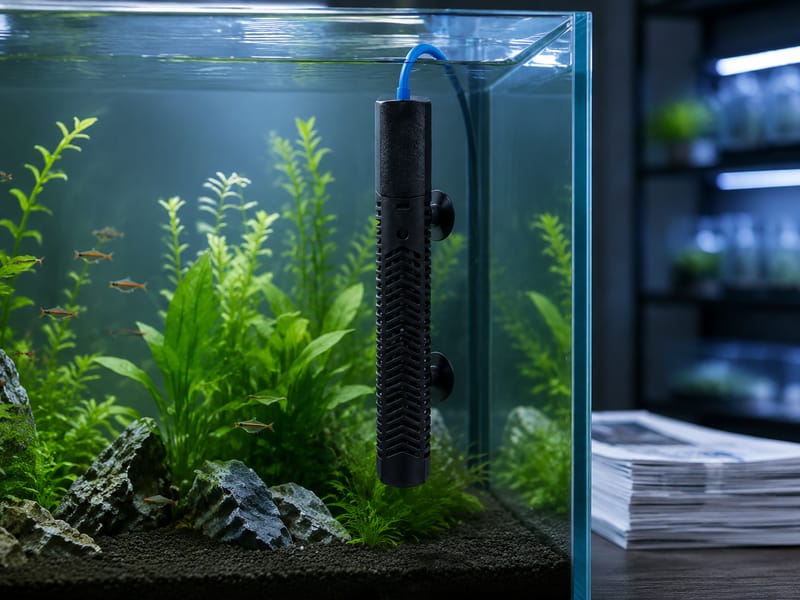
Heater wattage should be matched to the aquarium’s water volume, the desired temperature rise above room temperature, heat loss through the aquarium, and the use of a lid or canopy. A higher-wattage heater is not automatically better. An oversized unit may heat the water quickly, but a poorly controlled or badly placed heater can create wider temperature swings.
As a preliminary planning tool, many buyers use watts per gallon. This is only a starting point—not a substitute for the supplier’s stated tank-size recommendation and sample verification.
| Aquarium environment | Preliminary heating-load consideration | Buyer checks |
|---|---|---|
| Warm indoor room, covered aquarium | Lower heating demand | Confirm the minimum controllable temperature and cycling behavior |
| Typical conditioned retail or home environment | Moderate heating demand | Compare the stated tank-volume range with target setpoint |
| Cool room, drafty location, or large temperature gap | Higher heating demand | Check whether a larger heater or multiple heaters is appropriate |
| Long or tall aquarium with uneven circulation | Heating may be uneven | Confirm pump or filter circulation and heater placement |
| Turtle enclosure or high-impact setup | Heat demand and physical risk can differ | Confirm guard design, mounting security, and water-depth requirements |
A commonly used planning range for enclosed tropical aquariums is roughly 2.5 to 5 watts per gallon, but the correct choice can fall outside that range. For example, a covered aquarium in a warm room may need less heating capacity than the same volume in a cool basement or near a frequently opened door.
When comparing models, ask for the supplier’s stated aquarium-volume suitability at a defined temperature condition. A tank-size claim without a stated ambient temperature, target water temperature, or installation condition is difficult to compare fairly.
Avoid using wattage alone
Two heaters with the same wattage can perform differently because of:
- Thermostat calibration and switching tolerance
- Water flow around the heater
- Heater orientation and immersion depth
- Aquarium shape and surface area
- Room temperature changes
- Use of a cover, canopy, or open-top design
- Electrical voltage and frequency
- The accuracy of the separate thermometer used for verification
For larger aquariums, some professional buyers prefer to assess whether two appropriately sized heaters offer better heat distribution and redundancy than one high-wattage unit. This is a setup decision that should be based on the aquarium application, controller arrangement, and product instructions—not assumed as a universal rule.
Thermostat Accuracy and Temperature Stability
A heater’s set temperature and the aquarium’s actual water temperature are not always identical. The difference may come from thermostat tolerance, sensor location, water circulation, thermometer accuracy, ambient conditions, and the time allowed for the system to stabilize.
For retailers and importers, thermostat performance should be evaluated in terms customers can understand:
- Setpoint range: The temperatures the user can select or the preset temperature the heater targets.
- Control increment: Whether adjustment is broad, dial-based, or made in defined temperature steps.
- Cycling behavior: How the heater turns on and off near the target temperature.
- Temperature stability: How consistently the aquarium remains near the intended temperature after sufficient stabilization.
- Calibration guidance: Whether the instructions tell users to verify temperature with an independent aquarium thermometer.
A clear retail instruction should not imply that the dial setting alone is a precise measurement of aquarium water temperature. A better instruction tells the user to install the heater correctly, allow the tank to stabilize, check temperature with a separate thermometer, and make gradual adjustments as needed.
Questions to ask during product comparison
Before selecting a quartz heater for a wholesale range, confirm:
- Is the thermostat adjustable, preset, analog, or digital?
- What temperature range or setpoint is specified for this model?
- What control tolerance, if any, is stated in the product documentation?
- Where is the temperature sensor located?
- Does the heater require a fully submerged position, a minimum water line, or a specific orientation?
- What does each indicator light mean?
- Is an external thermometer recommended in the user instructions?
Do not assume that a heater marketed for a certain tank volume will hold every aquarium at one exact temperature. The more variable the environment, the more important it is to communicate proper installation and independent temperature monitoring.
Quartz Tube Protection and Installation Position
Quartz heater reliability depends heavily on installation. The tube should be protected from direct impact, should receive adequate water circulation, and must be used only within the immersion and orientation limits stated by the manufacturer.
Common installation errors include placing the heater where water flow is weak, allowing the water level to fall below the required minimum, trapping the heater behind décor, or mounting it where fish, turtles, cleaning tools, or rocks can strike the tube.
Placement principles for retail instructions
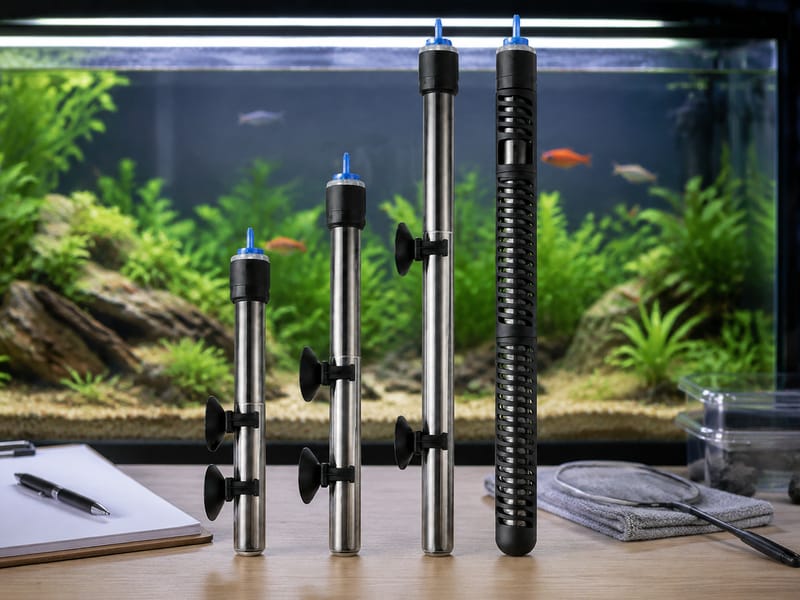
A useful instruction sheet should address these points:
- Install the heater where circulating water can distribute heat through the aquarium.
- Follow the stated mounting orientation, such as horizontal, angled, or vertical, for that specific model.
- Observe all minimum and maximum water-level markings, if provided.
- Keep the heater away from loose gravel, heavy ornaments, and areas where it can be knocked loose.
- Unplug the heater and allow it to cool before removing it from water, following the product instructions.
- Do not use a visibly cracked, chipped, leaking, or damaged heater.
- Do not operate a heater outside its stated water-use and electrical-use conditions.
A protective guard can be especially relevant for tanks with larger, active fish, turtles, or frequent maintenance activity. Still, buyers should confirm what the guard actually covers, whether it is included, whether it is removable, and whether the product’s stated suitability changes with or without the guard.
Why circulation matters
A heater warms the water immediately surrounding it first. If the tank has limited circulation, the area near the heater may become warmer than the opposite end of the aquarium. Positioning the heater near a filter outflow, circulation pump flow path, or other moving water can help distribute heat, provided the product instructions permit that location.
This is also why a heater should be selected as part of the wider aquarium system. Water movement, filtration, tank cover design, and room conditions influence performance.
Freshwater, Marine, and Turtle Tank Compatibility
Quartz aquarium heaters may be considered for freshwater, marine, and turtle-care applications, but the product’s stated compatibility must be confirmed for each use case.
Freshwater aquariums
Freshwater community tanks are often the most straightforward heater application, but buyers should still consider tank volume, fish temperature needs, circulation, décor, and the risk of accidental damage during maintenance.
For a retail range, it can be helpful to match heater options to common aquarium-size bands while providing clear instructions that final selection depends on water volume and room conditions.
Marine and saltwater aquariums
Marine aquariums may expose equipment to salt spray, salt residue, and a more corrosive operating environment around the tank. A heater intended for marine use should have that compatibility stated by the supplier or manufacturer. Do not assume freshwater suitability automatically means every component is suitable for marine systems.
For marine-focused buyers, confirm:
- Stated saltwater or marine compatibility
- Required cleaning and maintenance guidance
- Cable, plug, mounting, and guard details
- Recommended installation position
- Any restrictions involving external controllers or sump use
Turtle tanks and semi-aquatic enclosures
Turtle tanks can place different demands on a heater. Turtles may bump, bite, climb around, or dislodge equipment. Water depth can also vary, particularly in enclosures with basking areas or frequent evaporation.
A turtle-tank heater should be evaluated for physical protection, secure mounting, minimum-water-level requirements, and the intended aquatic setup. A standard aquarium heater should not be presented as turtle-safe unless the relevant model documentation supports that use.
Electrical Safety, Sample Testing, and User Instructions
Electrical safety is a core sourcing issue for quartz aquarium heaters. Buyers should request documentation appropriate to their destination market and sales channel, then verify that the delivered product, plug, labeling, and instructions match the approved specification.
Because requirements vary by product, voltage version, retailer, and market, do not rely on a generic product photo or a previous order’s paperwork.
Sample testing checklist
Before committing to a larger order, evaluate representative samples using a controlled, normal-use aquarium setup and the supplier’s instructions. Record the model number, voltage version, test conditions, thermometer used, and observations.
Check:
- Product identity, model marking, and rated voltage/frequency
- Plug type and cord length
- Packaging condition and included mounting parts
- Tube condition and protective guard fit, if applicable
- Adjustment dial or interface operation
- Heating indicator behavior as described in the instructions
- Temperature performance after adequate stabilization time
- Mounting security under normal aquarium movement
- Readability of safety warnings and user instructions
- Consistency between sample, carton label, product label, and specification sheet
Do not intentionally run an aquarium heater dry, break immersion requirements, or use a damaged unit to test failure behavior. Any specialized safety or electrical testing should follow an applicable test plan, qualified laboratory process, and the product’s documented operating conditions.
Instructions are part of the product
A retail-ready user manual should cover more than setup steps. It should clearly explain:
- Intended use and aquarium type limitations
- Electrical rating and plug information
- Installation orientation and immersion requirements
- Temperature adjustment and verification
- Cleaning and maintenance precautions
- Unplugging and cooldown procedures
- Warnings against use with damaged equipment
- The meaning of indicator lights
- Basic troubleshooting guidance
- Contact or support details required for the sales program
For private-label programs, confirm who reviews the final instruction text, which warnings must remain unchanged, and whether the packaging language matches the destination market requirements.
Packaging, Private Labeling, and Range Planning
Wholesale heater assortment planning works best when the product range is easy for retailers and end users to understand. Rather than offering multiple similar models with unclear differences, organize the range around meaningful distinctions such as wattage, control style, display type, tube protection, intended aquarium size, and packaging tier.
A basic retail assortment may include smaller, medium, and larger wattage positions. A more specialized assortment may add options for compact aquariums, digital temperature control, protected designs, or turtle-oriented applications where supported by product specifications.
Packaging details to confirm
For every model under consideration, confirm:
- Retail box dimensions and master-carton configuration
- Product image and model identification on the package
- Wattage, voltage, and temperature-control information
- Tank-volume guidance and necessary qualification language
- Included parts and accessories
- Barcodes, warning labels, and country-of-origin marking requirements
- User manual format and language needs
- Private-label logo placement, colors, and artwork approval process
- Inner packing and protection against shipping damage
Branding and packaging should never obscure critical safety information. If private-label artwork is requested, make sure the final proof retains the product’s required operating warnings, ratings, and model traceability.
WKAQOO can support aquarium product buyers with sourcing coordination, product selection discussions, packaging, branding, and OEM or private-label requirements. Exact customization options, minimum order quantities, sample terms, and production details should be confirmed for the specific heater program.
Specifications to Confirm Before Ordering
A complete specification sheet reduces avoidable sourcing errors. It also gives your purchasing, quality, packaging, and customer-service teams a shared reference for approving samples and inspecting delivered goods.
Use this checklist before placing a quartz aquarium heater order:
| Specification area | Details to confirm |
|---|---|
| Product identity | Model number, version, color, and product images |
| Electrical rating | Voltage, frequency, wattage, plug type, and cord details |
| Temperature control | Setpoint range, adjustment method, indicator behavior, and stated control tolerance |
| Aquarium suitability | Stated water-volume range, intended water type, and ambient-condition assumptions |
| Construction | Quartz tube dimensions, guard material or design, mounting method, and included accessories |
| Installation | Immersion requirement, orientation, minimum water level, and circulation guidance |
| Safety information | Warnings, instructions, labeling, applicable documentation, and test requirements |
| Packaging | Retail box, inserts, barcodes, carton configuration, and shipping protection |
| Private label | Logo, colors, artwork, instruction content, and approval process |
| Commercial terms | MOQ, samples, pricing, production schedule, lead time, and inspection expectations |
The most common purchasing mistake is approving a product based on a photo, wattage, and target price without locking down the electrical version, control details, instructions, included parts, and packaging. A second common mistake is making broad tank-size claims without considering ambient temperature and aquarium circulation.
FAQ
Are quartz aquarium heaters better than other heater types?
Quartz construction can be a useful feature because the heating element is housed in quartz glass, but it does not by itself determine thermostat accuracy, protection level, or overall suitability. Compare the complete design, documentation, and tested sample performance.
How many watts should an aquarium heater have?
Use aquarium water volume, target temperature, room temperature, tank cover, and circulation to select wattage. A watts-per-gallon estimate can help with early range planning, but the supplier’s stated model guidance and sample evaluation should determine the final choice.
Can one quartz heater work in freshwater and marine aquariums?
Only if the product documentation states compatibility for both environments. Marine use may create additional concerns around salt exposure, installation, and maintenance.
For a quartz aquarium heater range, begin by defining the target tank sizes, electrical version, control style, and packaging level your customers need. Then confirm the final specification, samples, private-label options, MOQ, packaging, and current lead time with WKAQOO at sales@wkaqoo.com.